
BIOL 252 Human Anatomy & Physiology II w/Lab |
Module 2: The Heart | Comprehensive Summary
Notes | Key Concepts & Exam Prep | Latest 2026
STRUCTURE OF THE HEART
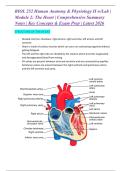
- Divided into four chambers: right atrium, right ventricle, left atrium and left
ventricle.
- Heart is made of cardiac muscles which can carry on contracting regularly without
getting fatigued.
- The left and the right side are divided by the septum which prevents oxygenated
and deoxygenated blood from mixing.
- AV valves are present between atria and ventricle and are connected by papillae.
Semilunar valves are present between the right ventricle and pulmonary artery
and the left ventricle and aorta.
, ACTION OF THE HEART
- The inferior vena cava brings deoxygenated blood from the lower parts of the
body and the superior vena cava brings deoxygenated blood from the upper parts
of the body into the right atrium.
- The pressure of the atrium increases, which causes the tricuspid valves to open
up. Blood enters the right ventricle. The atrium then contracts, pushing the last bit
of blood into the ventricle.
- The right ventricle will then contract causing the tricuspid valves to close. The
pressure inside the ventricle increases and the semilunar valves open. Blood
travels to the pulmonary artery and into the lungs to get oxygenated. The
semilunar valves will then close to prevent backflow of blood.
- The now oxygenated blood returns from the lungs to the heart through the
pulmonary vein into the right atrium.
- When the atrium pressure increases, the bicuspid valves open and blood travels to
the left ventricle. The atrium contracts, pushing the last bit of blood into the
ventricle.
- The ventricle contracts. This causes the bicuspid valves to close preventing
backflow of blood. As it contracts more, the semilunar valves open and blood
enters the aorta. The semilunar valves close to prevent backflow of blood into the
ventricle.
Module 2: The Heart | Comprehensive Summary
Notes | Key Concepts & Exam Prep | Latest 2026
STRUCTURE OF THE HEART
- Divided into four chambers: right atrium, right ventricle, left atrium and left
ventricle.
- Heart is made of cardiac muscles which can carry on contracting regularly without
getting fatigued.
- The left and the right side are divided by the septum which prevents oxygenated
and deoxygenated blood from mixing.
- AV valves are present between atria and ventricle and are connected by papillae.
Semilunar valves are present between the right ventricle and pulmonary artery
and the left ventricle and aorta.
, ACTION OF THE HEART
- The inferior vena cava brings deoxygenated blood from the lower parts of the
body and the superior vena cava brings deoxygenated blood from the upper parts
of the body into the right atrium.
- The pressure of the atrium increases, which causes the tricuspid valves to open
up. Blood enters the right ventricle. The atrium then contracts, pushing the last bit
of blood into the ventricle.
- The right ventricle will then contract causing the tricuspid valves to close. The
pressure inside the ventricle increases and the semilunar valves open. Blood
travels to the pulmonary artery and into the lungs to get oxygenated. The
semilunar valves will then close to prevent backflow of blood.
- The now oxygenated blood returns from the lungs to the heart through the
pulmonary vein into the right atrium.
- When the atrium pressure increases, the bicuspid valves open and blood travels to
the left ventricle. The atrium contracts, pushing the last bit of blood into the
ventricle.
- The ventricle contracts. This causes the bicuspid valves to close preventing
backflow of blood. As it contracts more, the semilunar valves open and blood
enters the aorta. The semilunar valves close to prevent backflow of blood into the
ventricle.


