
C ERT I F I ED
PASS.
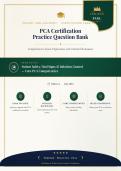
PAT I E N T C A R E A S S I S TA N T · C E R T I F I C AT I O N E X A M P R E P
PCA Certification
Practice Question Bank
Comprehensive Exam Preparation with Detailed Rationales
EXAM FOCUS:
Patient Safety, Vital Signs & Infection Control
— Core PCA Competencies
Edition 1 · July 2026
EXAM FOCUSED DETAILED CORE COMPETENCIES BUILD CONFIDENCE
RATIONALES
Questions aligned with PCA Safety, vitals, mobility, Master your PCA certification
certification standards Clear explanations for every elimination exam
answer
P r e pa r e · P r a c t i c e · Pa s s
Excellence in Patient Care Assistant Certification
,PCA CERTIFICATION · EXAM PREPARATION QUESTIONS 1–25
Section 1: Safety, Vital Signs & Infection Control
1 Which of the following is an important co-worker safety tip for one-on-
one patient interactions?
A Stand with your back to the patient to monitor the hallway
B Stay alert and sit facing the patient
C Keep your cell phone accessible for quick communication
D Position yourself between the patient and the exit
CORRECT ANSWER: B
CLINICAL RATIONALE: Safety during one-on-one interactions requires
maintaining visual contact with the patient and staying alert to behavioral
changes. Sitting facing the patient allows observation while maintaining a safe
position. Cell phones should not be used during patient care, and blocking the
exit or turning your back creates safety risks.
2 When managing a patient's behavior with restrictive restraints, the PCA
should:
A Use restraints only when ordered and follow facility protocol for
application and monitoring
B Apply restraints whenever the patient becomes agitated
C Use restraints as a convenience measure during busy shifts
D Apply restraints without informing the nurse
CORRECT ANSWER: A
CLINICAL RATIONALE: Restraints require a physician's order and must follow
strict protocols. The Joint Commission and CMS regulate restraint use — they are
never for convenience and require continuous monitoring, regular release, and
documentation. PCAs must always follow the nurse's direction regarding restraint
application.
,3 Validation therapy is best described as:
A Trying to understand what is "real" for the person with dementia and
responding accordingly
B Correcting the patient's confusion by stating factual reality
C Ignoring the patient's statements when they seem confused
D Using medication to manage dementia-related behaviors
CORRECT ANSWER: A
CLINICAL RATIONALE: Validation therapy acknowledges the emotional reality of
dementia patients rather than confronting them with factual corrections. This
approach reduces anxiety and agitation by meeting patients in their perceived
reality, maintaining dignity and trust in the caregiving relationship.
4 Which of the following is NOT one of the six factors that could affect a
person's vital signs?
A Injury or illness
B Exercise and emotions
C Medical conditions and age
D Room temperature and lighting
CORRECT ANSWER: D
CLINICAL RATIONALE: The six recognized factors affecting vital signs are
injury/illness, exercise, emotions, medical conditions, age, and gender. Room
temperature and lighting may affect comfort but are not primary factors
influencing vital sign measurements.
, 5 What is the normal blood pressure range for an adult?
A Systolic: 80-120 / Diastolic: 50-80
B Systolic: 90-140 / Diastolic: 60-90
C Systolic: 100-160 / Diastolic: 70-100
D Systolic: 120-180 / Diastolic: 80-110
CORRECT ANSWER: B
CLINICAL RATIONALE: Normal adult blood pressure ranges from 90-140 mmHg
systolic and 60-90 mmHg diastolic. Values outside these ranges should be
reported to the nurse. Low blood pressure reduces oxygen and nutrient delivery
to tissues, while high blood pressure strains the heart and blood vessels.
6 What is the normal oral temperature range for an adult?
A 97.6°F – 99.6°F
B 96.0°F – 98.0°F
C 98.6°F – 101.6°F
D 95.6°F – 97.6°F
CORRECT ANSWER: A
CLINICAL RATIONALE: Normal oral temperature is 97.6°F to 99.6°F.
Temperatures outside this range may indicate infection or other medical
conditions and should be reported to the nurse promptly.
PASS.
PAT I E N T C A R E A S S I S TA N T · C E R T I F I C AT I O N E X A M P R E P
PCA Certification
Practice Question Bank
Comprehensive Exam Preparation with Detailed Rationales
EXAM FOCUS:
Patient Safety, Vital Signs & Infection Control
— Core PCA Competencies
Edition 1 · July 2026
EXAM FOCUSED DETAILED CORE COMPETENCIES BUILD CONFIDENCE
RATIONALES
Questions aligned with PCA Safety, vitals, mobility, Master your PCA certification
certification standards Clear explanations for every elimination exam
answer
P r e pa r e · P r a c t i c e · Pa s s
Excellence in Patient Care Assistant Certification
,PCA CERTIFICATION · EXAM PREPARATION QUESTIONS 1–25
Section 1: Safety, Vital Signs & Infection Control
1 Which of the following is an important co-worker safety tip for one-on-
one patient interactions?
A Stand with your back to the patient to monitor the hallway
B Stay alert and sit facing the patient
C Keep your cell phone accessible for quick communication
D Position yourself between the patient and the exit
CORRECT ANSWER: B
CLINICAL RATIONALE: Safety during one-on-one interactions requires
maintaining visual contact with the patient and staying alert to behavioral
changes. Sitting facing the patient allows observation while maintaining a safe
position. Cell phones should not be used during patient care, and blocking the
exit or turning your back creates safety risks.
2 When managing a patient's behavior with restrictive restraints, the PCA
should:
A Use restraints only when ordered and follow facility protocol for
application and monitoring
B Apply restraints whenever the patient becomes agitated
C Use restraints as a convenience measure during busy shifts
D Apply restraints without informing the nurse
CORRECT ANSWER: A
CLINICAL RATIONALE: Restraints require a physician's order and must follow
strict protocols. The Joint Commission and CMS regulate restraint use — they are
never for convenience and require continuous monitoring, regular release, and
documentation. PCAs must always follow the nurse's direction regarding restraint
application.
,3 Validation therapy is best described as:
A Trying to understand what is "real" for the person with dementia and
responding accordingly
B Correcting the patient's confusion by stating factual reality
C Ignoring the patient's statements when they seem confused
D Using medication to manage dementia-related behaviors
CORRECT ANSWER: A
CLINICAL RATIONALE: Validation therapy acknowledges the emotional reality of
dementia patients rather than confronting them with factual corrections. This
approach reduces anxiety and agitation by meeting patients in their perceived
reality, maintaining dignity and trust in the caregiving relationship.
4 Which of the following is NOT one of the six factors that could affect a
person's vital signs?
A Injury or illness
B Exercise and emotions
C Medical conditions and age
D Room temperature and lighting
CORRECT ANSWER: D
CLINICAL RATIONALE: The six recognized factors affecting vital signs are
injury/illness, exercise, emotions, medical conditions, age, and gender. Room
temperature and lighting may affect comfort but are not primary factors
influencing vital sign measurements.
, 5 What is the normal blood pressure range for an adult?
A Systolic: 80-120 / Diastolic: 50-80
B Systolic: 90-140 / Diastolic: 60-90
C Systolic: 100-160 / Diastolic: 70-100
D Systolic: 120-180 / Diastolic: 80-110
CORRECT ANSWER: B
CLINICAL RATIONALE: Normal adult blood pressure ranges from 90-140 mmHg
systolic and 60-90 mmHg diastolic. Values outside these ranges should be
reported to the nurse. Low blood pressure reduces oxygen and nutrient delivery
to tissues, while high blood pressure strains the heart and blood vessels.
6 What is the normal oral temperature range for an adult?
A 97.6°F – 99.6°F
B 96.0°F – 98.0°F
C 98.6°F – 101.6°F
D 95.6°F – 97.6°F
CORRECT ANSWER: A
CLINICAL RATIONALE: Normal oral temperature is 97.6°F to 99.6°F.
Temperatures outside this range may indicate infection or other medical
conditions and should be reported to the nurse promptly.


