

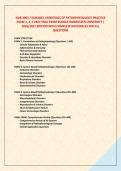
NUR 2063 / NUR2063: ESSENTIALS OF PATHOPHYSIOLOGY PRACTICE
EXAM 1, 2, 3 AND FINAL EXAM BUNDLE RASMUSSEN UNIVERSITY |
2026/2027 EDITION WITH COMPLETE RATIONALES FOR ALL
QUESTIONS
EXAM STRUCTURE
EXAM 1: Foundations of Pathophysiology (Questions 1-100)
- Cellular Adaptation & Injury
- Inflammation & Immunity
- Fluid & Electrolyte Balance
- Acid-Base Regulation
- Genetics & Hereditary Disorders
- Basic Disease Processes
EXAM 2: System-Based Pathophysiology I (Questions 101-200)
- Endocrine Disorders
- Hematologic Disorders
- Cardiovascular Disorders
- Respiratory Disorders
- Renal & Urinary Disorders
- Gastrointestinal Disorders
EXAM 3: System-Based Pathophysiology II (Questions 201-300)
- Neurological Disorders
- Musculoskeletal Disorders
- Integumentary Disorders
- Reproductive & Urinary Disorders
- Shock & Multisystem Failure
- Cancer & Oncologic Disorders
FINAL EXAM: Comprehensive Review (Questions 301-400)
- Comprehensive Review of All Systems
- Integration of Pathophysiological Concepts
- Clinical Application Questions
1
, EXAM 1: FOUNDATIONS OF PATHOPHYSIOLOGY
Questions 1-100
SUB-TOPIC 1.1: CELLULAR ADAPTATION & INJURY (Questions 1-25)
Q1. What is the term for a reversible change in which one adult cell type is
replaced by another adult cell type?
A) Hyperplasia
B) Hypertrophy
C) Metaplasia
D) Dysplasia
✅ Answer: C
Rationale: Metaplasia is a reversible change where one differentiated cell
type is replaced by another. Hyperplasia is an increase in cell number;
hypertrophy is an increase in cell size; dysplasia is abnormal cell growth.
Q2. A patient with chronic acid reflux develops Barrett's esophagus, where
the normal squamous epithelium is replaced by columnar epithelium. This is
an example of:
A) Hyperplasia
B) Metaplasia
C) Dysplasia
D) Anaplasia
✅ Answer: B
Rationale: Barrett's esophagus is a classic example of metaplasia, where
one cell type (squamous) is replaced by another (columnar) in response to
chronic irritation.
Q3. Which type of cellular adaptation involves an increase in the size of
individual cells?
A) Hyperplasia
B) Hypertrophy
C) Metaplasia
2
,D) Atrophy
✅ Answer: B
Rationale: Hypertrophy is an increase in cell size, often in response to
increased workload. Hyperplasia is an increase in cell number.
Q4. A patient with heart failure develops an enlarged heart muscle. This is
an example of:
A) Hyperplasia
B) Hypertrophy
C) Metaplasia
D) Dysplasia
✅ Answer: B
Rationale: Cardiac muscle cells cannot divide, so the heart enlarges through
hypertrophy (increase in cell size) in response to increased workload.
Q5. Which type of cellular adaptation involves an increase in the number of
cells in an organ or tissue?
A) Hyperplasia
B) Hypertrophy
C) Metaplasia
D) Atrophy
✅ Answer: A
Rationale: Hyperplasia is an increase in cell number due to increased cell
division. It can be physiologic (e.g., breast enlargement during pregnancy)
or pathologic.
Q6. A patient with benign prostatic hyperplasia (BPH) has an enlarged
prostate due to:
A) Hypertrophy of individual cells
B) Hyperplasia of prostate cells
C) Metaplasia of prostate cells
D) Atrophy of prostate cells
3
, ✅ Answer: B
Rationale: BPH is caused by hyperplasia (increased number) of prostate
cells, leading to gland enlargement.
Q7. What is the term for a decrease in cell size, often due to disuse or
loss of innervation?
A) Hyperplasia
B) Hypertrophy
C) Metaplasia
D) Atrophy
✅ Answer: D
Rationale: Atrophy is a decrease in cell size, often due to reduced workload,
loss of innervation, or decreased blood supply.
Q8. A patient who has been in a cast for 6 weeks develops muscle wasting.
This is an example of:
A) Physiologic atrophy
B) Pathologic atrophy
C) Hypertrophy
D) Hyperplasia
✅ Answer: B
Rationale: Disuse atrophy from immobilization is pathologic atrophy.
Physiologic atrophy occurs with normal aging.
Q9. Reversible cell injury is characterized by:
A) Permanent damage
B) Cellular swelling and fatty change
C) Cell death
D) Genetic mutation
✅ Answer: B
Rationale: Reversible cell injury is characterized by cellular swelling
(hydropic change) and fatty change. These changes are reversible if the
4
EXAM 1, 2, 3 AND FINAL EXAM BUNDLE RASMUSSEN UNIVERSITY |
2026/2027 EDITION WITH COMPLETE RATIONALES FOR ALL
QUESTIONS
EXAM STRUCTURE
EXAM 1: Foundations of Pathophysiology (Questions 1-100)
- Cellular Adaptation & Injury
- Inflammation & Immunity
- Fluid & Electrolyte Balance
- Acid-Base Regulation
- Genetics & Hereditary Disorders
- Basic Disease Processes
EXAM 2: System-Based Pathophysiology I (Questions 101-200)
- Endocrine Disorders
- Hematologic Disorders
- Cardiovascular Disorders
- Respiratory Disorders
- Renal & Urinary Disorders
- Gastrointestinal Disorders
EXAM 3: System-Based Pathophysiology II (Questions 201-300)
- Neurological Disorders
- Musculoskeletal Disorders
- Integumentary Disorders
- Reproductive & Urinary Disorders
- Shock & Multisystem Failure
- Cancer & Oncologic Disorders
FINAL EXAM: Comprehensive Review (Questions 301-400)
- Comprehensive Review of All Systems
- Integration of Pathophysiological Concepts
- Clinical Application Questions
1
, EXAM 1: FOUNDATIONS OF PATHOPHYSIOLOGY
Questions 1-100
SUB-TOPIC 1.1: CELLULAR ADAPTATION & INJURY (Questions 1-25)
Q1. What is the term for a reversible change in which one adult cell type is
replaced by another adult cell type?
A) Hyperplasia
B) Hypertrophy
C) Metaplasia
D) Dysplasia
✅ Answer: C
Rationale: Metaplasia is a reversible change where one differentiated cell
type is replaced by another. Hyperplasia is an increase in cell number;
hypertrophy is an increase in cell size; dysplasia is abnormal cell growth.
Q2. A patient with chronic acid reflux develops Barrett's esophagus, where
the normal squamous epithelium is replaced by columnar epithelium. This is
an example of:
A) Hyperplasia
B) Metaplasia
C) Dysplasia
D) Anaplasia
✅ Answer: B
Rationale: Barrett's esophagus is a classic example of metaplasia, where
one cell type (squamous) is replaced by another (columnar) in response to
chronic irritation.
Q3. Which type of cellular adaptation involves an increase in the size of
individual cells?
A) Hyperplasia
B) Hypertrophy
C) Metaplasia
2
,D) Atrophy
✅ Answer: B
Rationale: Hypertrophy is an increase in cell size, often in response to
increased workload. Hyperplasia is an increase in cell number.
Q4. A patient with heart failure develops an enlarged heart muscle. This is
an example of:
A) Hyperplasia
B) Hypertrophy
C) Metaplasia
D) Dysplasia
✅ Answer: B
Rationale: Cardiac muscle cells cannot divide, so the heart enlarges through
hypertrophy (increase in cell size) in response to increased workload.
Q5. Which type of cellular adaptation involves an increase in the number of
cells in an organ or tissue?
A) Hyperplasia
B) Hypertrophy
C) Metaplasia
D) Atrophy
✅ Answer: A
Rationale: Hyperplasia is an increase in cell number due to increased cell
division. It can be physiologic (e.g., breast enlargement during pregnancy)
or pathologic.
Q6. A patient with benign prostatic hyperplasia (BPH) has an enlarged
prostate due to:
A) Hypertrophy of individual cells
B) Hyperplasia of prostate cells
C) Metaplasia of prostate cells
D) Atrophy of prostate cells
3
, ✅ Answer: B
Rationale: BPH is caused by hyperplasia (increased number) of prostate
cells, leading to gland enlargement.
Q7. What is the term for a decrease in cell size, often due to disuse or
loss of innervation?
A) Hyperplasia
B) Hypertrophy
C) Metaplasia
D) Atrophy
✅ Answer: D
Rationale: Atrophy is a decrease in cell size, often due to reduced workload,
loss of innervation, or decreased blood supply.
Q8. A patient who has been in a cast for 6 weeks develops muscle wasting.
This is an example of:
A) Physiologic atrophy
B) Pathologic atrophy
C) Hypertrophy
D) Hyperplasia
✅ Answer: B
Rationale: Disuse atrophy from immobilization is pathologic atrophy.
Physiologic atrophy occurs with normal aging.
Q9. Reversible cell injury is characterized by:
A) Permanent damage
B) Cellular swelling and fatty change
C) Cell death
D) Genetic mutation
✅ Answer: B
Rationale: Reversible cell injury is characterized by cellular swelling
(hydropic change) and fatty change. These changes are reversible if the
4


