

AANP FNP
Study online at https://quizlet.com/_4478el
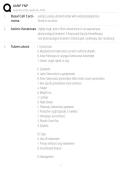
1. Basal Cell Carci- -painless, pearly, ulcerated nodule with overlying telangiectasis
noma -found on sun areas
2. Actinic Keratoses -slightly rough, pink or flesh-colored lesion in sun-exposed area
-pharmacological treatment: 5-fluorouracil (topical chemotherapy)
-non-pharmacological treatment: chemical peel, cryotherapy, laser resurfacing
3. Tuberculosis I. Transmission
A. Mycobacterium tuberculosis carried in airborne droplets
B. Active Pulmonary or Laryngeal Tuberculosis transmitted
1. Sneeze, cough, speak, or sing
II. Symptoms
A. Latent Tuberculosis is asymptomatic
B. Active Tuberculosis presentation often mimics cancer presentation
1. Non-specific presentation (most common)
a. Fatigue
b. Weight loss
c. Cachexia
d. Night Sweats
C. Pulmonary Tuberculosis symptoms
1. Productive cough (typically 2-3 weeks)
2. Hemoptysis (uncommon)
3. Pleuritic Chest Pain
4. Dyspnea
III. Signs
A. Sites of Involvement
1. Primary infection: lung involvement
B. Disseminated Disease
IV. Management
, AANP FNP
Study online at https://quizlet.com/_4478el
A. Latent Tuberculosis
1. Positive PPD without signs of Active Tb
2. Treatment indicated if risk of Tb Progression from latent to active disease
B. Active Tuberculosis
4. Gout I. Pathophysiology
A. *Gout occurs when Uric Acid levels exceed solubility limits*
1. Monosodium urate crystals deposit in joints, Kidney, and soft tissues
2. Crystal deposition triggers a inflammatory response from cytokines and Neu-
trophils
3. Joint space is irreversibly injured with ongoing attacks
II. Risk Factors
A. Most common
1. Obesity
2. Alcohol use (especially beer)
3. High purine diet (red meats, turkey and wild game, organ meats, seafood)
4. Drinks sweetened with high fructose corn syrup
5. Diuretic therapy including Thiazide Diuretics
6. Other risks
a. Diabetes Mellitus
b. Hyperlipidemia
c. Hypertension
d. Atherosclerosis
e. Renal Insufficiency
f. Myeloproliferative disease
III. Symptoms
A. Associated Symptoms
1. Chills
2. Fever as high as 104 F (40 C)
3. Severity: Very severe pain
,AANP FNP
Study online at https://quizlet.com/_4478el
a. Unable to bear weight
b. Too painful to put on socks
c. Intollerant to light touch from blankets
B. Regions Lower extremities
1. *First Metatarsophalangeal joint of great toe* (most common)
a. Known as *Podagra*
i. Affected in 50% of first gout attacks
Mid-tarsal joints
2. Ankle Joints
3. Knee Joints
C. Regions upper extremities
1. Fingers
2. Wrists
3. Elbows
D. Characteristics: Joint Pain
1. Excruciating, crushing type pain
2. Timing: Joint Pain
3. Acute onset of lower extremity Joint Pain
4. Wakens patient from sleep
IV. Signs
A. Acute
1. Joint Inflammation
2. Erythema, tenderness and swelling at affected joint
a. Pain extends well beyond joint
b. Entire foot involved in some cases
3. Asymmetric joint involvement
a. May only involve one side with the first attack
4. Skin over joint is tense and shiny
B. Chronic
1. Gouty Tophi (develop after 10 years)
a. Subcutaneous Nodules of monosodium urate crystals and lipids, proteins and
, AANP FNP
Study online at https://quizlet.com/_4478el
mucopolysaccharides
C. Chronic Arthritis
1. Chronic deposition occurs with recurrent attacks
5. Dix-Hallpike Ma-
neuver
6. Central Vertigo I. Findings: Suggestive of central causes
A. Nystagmus
1. Vertical or torsional Nystagmus (pure Horizontal Nystagmus may occur with
either peripheral or central cause)
2. No Nystagmus on Horizontal Head Impulse Test
3. Persists <6 seconds after Dix-Hallpike Maneuver
4. Fixation of eyes on object does not inhibit Nystagmus
5. Requires weeks to months to resolve
B. Episodes last hours to days
C. Severe imbalance impairs standing and walking
D. No Hearing Loss or Tinnitus in most central cases
E. Acute Vestibular Syndrome (Posterior Circulation in 25% of cases)
1. Rapid onset (<1 hour) of acute, persistent, continuous Vertigo or Dizziness
2. Associated with Nystagmus, Nausea or Vomiting, head motion intolerance, and
gait unsteadiness
F. Positive HiNTs Exam Criteria (at least 1 of 3 positive) are suggestive of cerebellar
CVA or Brainstem CVA (100% sensitive, 96% specific)
1. Normal Horizontal Head Impulse Test (no saccade/correction on head rotation)
OR
2. Nystagmus that changes direction (or Vertical Nystagmus or torsional Nystag-
mus) OR
3. Skew Deviation on Alternate Eye Cover Test in which uncovered eye demon-
strates quick vertical gaze corrections
III. Causes: Central Vertigo
Study online at https://quizlet.com/_4478el
1. Basal Cell Carci- -painless, pearly, ulcerated nodule with overlying telangiectasis
noma -found on sun areas
2. Actinic Keratoses -slightly rough, pink or flesh-colored lesion in sun-exposed area
-pharmacological treatment: 5-fluorouracil (topical chemotherapy)
-non-pharmacological treatment: chemical peel, cryotherapy, laser resurfacing
3. Tuberculosis I. Transmission
A. Mycobacterium tuberculosis carried in airborne droplets
B. Active Pulmonary or Laryngeal Tuberculosis transmitted
1. Sneeze, cough, speak, or sing
II. Symptoms
A. Latent Tuberculosis is asymptomatic
B. Active Tuberculosis presentation often mimics cancer presentation
1. Non-specific presentation (most common)
a. Fatigue
b. Weight loss
c. Cachexia
d. Night Sweats
C. Pulmonary Tuberculosis symptoms
1. Productive cough (typically 2-3 weeks)
2. Hemoptysis (uncommon)
3. Pleuritic Chest Pain
4. Dyspnea
III. Signs
A. Sites of Involvement
1. Primary infection: lung involvement
B. Disseminated Disease
IV. Management
, AANP FNP
Study online at https://quizlet.com/_4478el
A. Latent Tuberculosis
1. Positive PPD without signs of Active Tb
2. Treatment indicated if risk of Tb Progression from latent to active disease
B. Active Tuberculosis
4. Gout I. Pathophysiology
A. *Gout occurs when Uric Acid levels exceed solubility limits*
1. Monosodium urate crystals deposit in joints, Kidney, and soft tissues
2. Crystal deposition triggers a inflammatory response from cytokines and Neu-
trophils
3. Joint space is irreversibly injured with ongoing attacks
II. Risk Factors
A. Most common
1. Obesity
2. Alcohol use (especially beer)
3. High purine diet (red meats, turkey and wild game, organ meats, seafood)
4. Drinks sweetened with high fructose corn syrup
5. Diuretic therapy including Thiazide Diuretics
6. Other risks
a. Diabetes Mellitus
b. Hyperlipidemia
c. Hypertension
d. Atherosclerosis
e. Renal Insufficiency
f. Myeloproliferative disease
III. Symptoms
A. Associated Symptoms
1. Chills
2. Fever as high as 104 F (40 C)
3. Severity: Very severe pain
,AANP FNP
Study online at https://quizlet.com/_4478el
a. Unable to bear weight
b. Too painful to put on socks
c. Intollerant to light touch from blankets
B. Regions Lower extremities
1. *First Metatarsophalangeal joint of great toe* (most common)
a. Known as *Podagra*
i. Affected in 50% of first gout attacks
Mid-tarsal joints
2. Ankle Joints
3. Knee Joints
C. Regions upper extremities
1. Fingers
2. Wrists
3. Elbows
D. Characteristics: Joint Pain
1. Excruciating, crushing type pain
2. Timing: Joint Pain
3. Acute onset of lower extremity Joint Pain
4. Wakens patient from sleep
IV. Signs
A. Acute
1. Joint Inflammation
2. Erythema, tenderness and swelling at affected joint
a. Pain extends well beyond joint
b. Entire foot involved in some cases
3. Asymmetric joint involvement
a. May only involve one side with the first attack
4. Skin over joint is tense and shiny
B. Chronic
1. Gouty Tophi (develop after 10 years)
a. Subcutaneous Nodules of monosodium urate crystals and lipids, proteins and
, AANP FNP
Study online at https://quizlet.com/_4478el
mucopolysaccharides
C. Chronic Arthritis
1. Chronic deposition occurs with recurrent attacks
5. Dix-Hallpike Ma-
neuver
6. Central Vertigo I. Findings: Suggestive of central causes
A. Nystagmus
1. Vertical or torsional Nystagmus (pure Horizontal Nystagmus may occur with
either peripheral or central cause)
2. No Nystagmus on Horizontal Head Impulse Test
3. Persists <6 seconds after Dix-Hallpike Maneuver
4. Fixation of eyes on object does not inhibit Nystagmus
5. Requires weeks to months to resolve
B. Episodes last hours to days
C. Severe imbalance impairs standing and walking
D. No Hearing Loss or Tinnitus in most central cases
E. Acute Vestibular Syndrome (Posterior Circulation in 25% of cases)
1. Rapid onset (<1 hour) of acute, persistent, continuous Vertigo or Dizziness
2. Associated with Nystagmus, Nausea or Vomiting, head motion intolerance, and
gait unsteadiness
F. Positive HiNTs Exam Criteria (at least 1 of 3 positive) are suggestive of cerebellar
CVA or Brainstem CVA (100% sensitive, 96% specific)
1. Normal Horizontal Head Impulse Test (no saccade/correction on head rotation)
OR
2. Nystagmus that changes direction (or Vertical Nystagmus or torsional Nystag-
mus) OR
3. Skew Deviation on Alternate Eye Cover Test in which uncovered eye demon-
strates quick vertical gaze corrections
III. Causes: Central Vertigo


