RASMUSSEN UNIVERSITY
NUR 2474 — Pharmacology Exam 1
NUR 2474 Pharmacology
Academic Year:
Comprehensive Question Bank
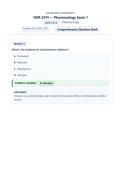
Question 1
What is the antidote for cholinesterase inhibitors?
A. Flumazenil
B. Naloxone
C. Neostigmine
D. Atropine
CORRECT ANSWER: D. Atropine
RATIONALE:
Atropine is an anticholinergic used to reverse the muscarinic effects of cholinesterase inhibitor
toxicity.
, Question 2
What is the purpose of carbidopa?
A. Enhances levodopa effects and decreases GI discomfort; no other effects
B. Acts as a dopamine agonist
C. Blocks dopamine receptors
D. Inhibits serotonin reuptake
CORRECT ANSWER:
A. Enhances levodopa effects and decreases GI discomfort; no other effects
RATIONALE:
Carbidopa inhibits peripheral decarboxylation of levodopa, reducing GI side effects and
increasing central availability; it has no therapeutic effect alone.
Question 3
Which drug is a mood stabilizer?
A. Lithium
B. Fluoxetine
C. Quetiapine
D. Valproic acid
CORRECT ANSWER: A. Lithium
RATIONALE:
Lithium is the prototypical mood stabilizer used for bipolar disorder. It has a narrow
therapeutic range (0.8–1.4 mEq/L) and requires careful monitoring.
, Question 4
What is an intended drug effect?
A. Unwanted secondary effect
B. Therapeutic effect that is desired (e.g., mood change with antidepressant)
C. Severe adverse reaction
D. Opposite of desired effect
CORRECT ANSWER:
B. Therapeutic effect that is desired (e.g., mood change with antidepressant)
RATIONALE:
Intended effects are the primary therapeutic outcomes for which the drug is prescribed; they
are the desired clinical responses.
Question 5
What is the therapeutic level of phenytoin?
A. 10–20 mcg/mL
B. 5–12 mcg/mL
C. 50–100 mcg/mL
D. 0.8–1.4 mEq/L
CORRECT ANSWER: A. 10–20 mcg/mL
RATIONALE:
Phenytoin has a narrow therapeutic range of 10–20 mcg/mL; levels above 20 are toxic and
below 10 may be subtherapeutic.
, Question 6
What is Parkinsonism?
A. Drug-induced Parkinson's: bradykinesia, mask-like face, tremor, rigidity, shuffling gait,
drooling, cogwheeling, stooped posture
B. Only tremor
C. Only rigidity
D. Involuntary movements
CORRECT ANSWER:
A. Drug-induced Parkinson's: bradykinesia, mask-like face, tremor, rigidity,
shuffling gait, drooling, cogwheeling, stooped posture
RATIONALE:
Drug-induced parkinsonism mimics idiopathic Parkinson's disease with bradykinesia, rigidity,
tremor, and postural instability.
Question 7
Which drug is a benzodiazepine-like agent for insomnia?
A. Lorazepam
B. Zolpidem
C. Buspirone
D. Melatonin
CORRECT ANSWER: B. Zolpidem
RATIONALE:
Zolpidem is a non-benzodiazepine hypnotic (Z-drug) that acts on GABA receptors but has a
different structure; used for short-term insomnia.
NUR 2474 — Pharmacology Exam 1
NUR 2474 Pharmacology
Academic Year:
Comprehensive Question Bank
Question 1
What is the antidote for cholinesterase inhibitors?
A. Flumazenil
B. Naloxone
C. Neostigmine
D. Atropine
CORRECT ANSWER: D. Atropine
RATIONALE:
Atropine is an anticholinergic used to reverse the muscarinic effects of cholinesterase inhibitor
toxicity.
, Question 2
What is the purpose of carbidopa?
A. Enhances levodopa effects and decreases GI discomfort; no other effects
B. Acts as a dopamine agonist
C. Blocks dopamine receptors
D. Inhibits serotonin reuptake
CORRECT ANSWER:
A. Enhances levodopa effects and decreases GI discomfort; no other effects
RATIONALE:
Carbidopa inhibits peripheral decarboxylation of levodopa, reducing GI side effects and
increasing central availability; it has no therapeutic effect alone.
Question 3
Which drug is a mood stabilizer?
A. Lithium
B. Fluoxetine
C. Quetiapine
D. Valproic acid
CORRECT ANSWER: A. Lithium
RATIONALE:
Lithium is the prototypical mood stabilizer used for bipolar disorder. It has a narrow
therapeutic range (0.8–1.4 mEq/L) and requires careful monitoring.
, Question 4
What is an intended drug effect?
A. Unwanted secondary effect
B. Therapeutic effect that is desired (e.g., mood change with antidepressant)
C. Severe adverse reaction
D. Opposite of desired effect
CORRECT ANSWER:
B. Therapeutic effect that is desired (e.g., mood change with antidepressant)
RATIONALE:
Intended effects are the primary therapeutic outcomes for which the drug is prescribed; they
are the desired clinical responses.
Question 5
What is the therapeutic level of phenytoin?
A. 10–20 mcg/mL
B. 5–12 mcg/mL
C. 50–100 mcg/mL
D. 0.8–1.4 mEq/L
CORRECT ANSWER: A. 10–20 mcg/mL
RATIONALE:
Phenytoin has a narrow therapeutic range of 10–20 mcg/mL; levels above 20 are toxic and
below 10 may be subtherapeutic.
, Question 6
What is Parkinsonism?
A. Drug-induced Parkinson's: bradykinesia, mask-like face, tremor, rigidity, shuffling gait,
drooling, cogwheeling, stooped posture
B. Only tremor
C. Only rigidity
D. Involuntary movements
CORRECT ANSWER:
A. Drug-induced Parkinson's: bradykinesia, mask-like face, tremor, rigidity,
shuffling gait, drooling, cogwheeling, stooped posture
RATIONALE:
Drug-induced parkinsonism mimics idiopathic Parkinson's disease with bradykinesia, rigidity,
tremor, and postural instability.
Question 7
Which drug is a benzodiazepine-like agent for insomnia?
A. Lorazepam
B. Zolpidem
C. Buspirone
D. Melatonin
CORRECT ANSWER: B. Zolpidem
RATIONALE:
Zolpidem is a non-benzodiazepine hypnotic (Z-drug) that acts on GABA receptors but has a
different structure; used for short-term insomnia.