

AMCA Certification Exam
Study online at https://quizlet.com/_3p4t5c
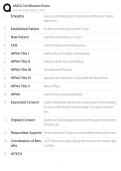
1. Empathy Having an understanding and compassion for what the patient may be
experiencing
2. Established Patient Has been seen by the physician within 3 years
3. New Patient Hasn't been to the physician in 3 years
4. CMS Center for Medicare and Medicaid services
5. HIPAA Title I Healthcare Access, Portability and Renewability
6. HIPAA Title II Preventing Health Care Fraud and Abuse
7. HIPAA Title III Tax Related Health Provisions
8. HIPAA Title IV Application and Enforcement of Group Health Plan Requirements
9. HIPAA Title V Revenue Offsets
10. HIPAA Health Insurance and Accountability Act
11. Expressed Consent A patient acknowledges that they have received proper direction regarding
the nature of their medical treatment verbally or by signing a comment
form
12. Implied Consent A patient uses body language top indicate that they agree to receive a form
of medical care
13. Respondeat Superior "let the master answer"; physician is responsible for medical staff mistakes
14. Coordination of Ben- C.O.B; Indicates how a policy well pay when more than one insurance plan
efits is in effect
15. HITECH
, AMCA Certification Exam
Study online at https://quizlet.com/_3p4t5c
Health Information Technology for Economic and Clinical Health Act; Pro-
motes the adoption and meaningful use of health information technology
(EHR)
16. ONCHIT Office of National Coordination for Health Technology
17. Core Function of EHR Health Information and data elements
18. Core Function of EHR Results management
19. Core Function of EHR Order management
20. Core Function of EHR Decision support
21. Core Function of EHR Electronic communications and connectivity
22. Core Function of EHR Patient support
23. Core Function of EHR Administrative processes
24. Core Function of EHR Reporting and population management
25. Electronic Medical Computerized records of one physicians encounter with a patient over time
Records (EMR) (intranet)
26. Electronic Health Reflects the data from ALL sources that have treated the individual (inter-
Records (EHR) operable to other facilities)
27. Acute Care Most often refers to a hospital, treats patients with urgent problems that
cannot be handled
28. Personal Health Maintained and owned by the patient
Records (PHR)
29. Ambulatory Care Refers to treatment without admission to hospital
, AMCA Certification Exam
Study online at https://quizlet.com/_3p4t5c
30. Clinical Templates Allows doctors to document patient encounters into an EHR on a structured
form
31. RADT Registration, admissions, discharge, transfer
32. Unique Patient Iden- Links all clinical observations, tests, procedures, villains, evaluations, and
tifier (UPI) diagnoses to the patient
33. Clinical Vocabularies Set a common definitions for medical terms that ease communication by
decreasing uncertainty
34. SNOMED-CT Clinical vocabulary designed to encompass all trends used in medicine
35. LOINC Trends and codes used for electronic exchange of lab results and clinical
observations
36. UMLS Thesaurus database of medical terms
37. Fixed Appointment One patient is scheduled for a specific appointment time
Scheduling
38. Cluster Scheduling Scheduling a group of patients cooking in for the fake tour of service should
be scheduled around the same block of time
39. Double Booking Two patients are scheduled to see the same physician at once
40. Wave Scheduling Patients are scheduled for the first half of each hour, and each patient is
Method seen in the order they arrive
41. Narrative Style Chart- Physicians dictate notes about patients care, then gave rise notes tran-
ing scribed and placed in the patients chart
42. SOAP Subjective, objective, assessment, plan
43. Subjective
Study online at https://quizlet.com/_3p4t5c
1. Empathy Having an understanding and compassion for what the patient may be
experiencing
2. Established Patient Has been seen by the physician within 3 years
3. New Patient Hasn't been to the physician in 3 years
4. CMS Center for Medicare and Medicaid services
5. HIPAA Title I Healthcare Access, Portability and Renewability
6. HIPAA Title II Preventing Health Care Fraud and Abuse
7. HIPAA Title III Tax Related Health Provisions
8. HIPAA Title IV Application and Enforcement of Group Health Plan Requirements
9. HIPAA Title V Revenue Offsets
10. HIPAA Health Insurance and Accountability Act
11. Expressed Consent A patient acknowledges that they have received proper direction regarding
the nature of their medical treatment verbally or by signing a comment
form
12. Implied Consent A patient uses body language top indicate that they agree to receive a form
of medical care
13. Respondeat Superior "let the master answer"; physician is responsible for medical staff mistakes
14. Coordination of Ben- C.O.B; Indicates how a policy well pay when more than one insurance plan
efits is in effect
15. HITECH
, AMCA Certification Exam
Study online at https://quizlet.com/_3p4t5c
Health Information Technology for Economic and Clinical Health Act; Pro-
motes the adoption and meaningful use of health information technology
(EHR)
16. ONCHIT Office of National Coordination for Health Technology
17. Core Function of EHR Health Information and data elements
18. Core Function of EHR Results management
19. Core Function of EHR Order management
20. Core Function of EHR Decision support
21. Core Function of EHR Electronic communications and connectivity
22. Core Function of EHR Patient support
23. Core Function of EHR Administrative processes
24. Core Function of EHR Reporting and population management
25. Electronic Medical Computerized records of one physicians encounter with a patient over time
Records (EMR) (intranet)
26. Electronic Health Reflects the data from ALL sources that have treated the individual (inter-
Records (EHR) operable to other facilities)
27. Acute Care Most often refers to a hospital, treats patients with urgent problems that
cannot be handled
28. Personal Health Maintained and owned by the patient
Records (PHR)
29. Ambulatory Care Refers to treatment without admission to hospital
, AMCA Certification Exam
Study online at https://quizlet.com/_3p4t5c
30. Clinical Templates Allows doctors to document patient encounters into an EHR on a structured
form
31. RADT Registration, admissions, discharge, transfer
32. Unique Patient Iden- Links all clinical observations, tests, procedures, villains, evaluations, and
tifier (UPI) diagnoses to the patient
33. Clinical Vocabularies Set a common definitions for medical terms that ease communication by
decreasing uncertainty
34. SNOMED-CT Clinical vocabulary designed to encompass all trends used in medicine
35. LOINC Trends and codes used for electronic exchange of lab results and clinical
observations
36. UMLS Thesaurus database of medical terms
37. Fixed Appointment One patient is scheduled for a specific appointment time
Scheduling
38. Cluster Scheduling Scheduling a group of patients cooking in for the fake tour of service should
be scheduled around the same block of time
39. Double Booking Two patients are scheduled to see the same physician at once
40. Wave Scheduling Patients are scheduled for the first half of each hour, and each patient is
Method seen in the order they arrive
41. Narrative Style Chart- Physicians dictate notes about patients care, then gave rise notes tran-
ing scribed and placed in the patients chart
42. SOAP Subjective, objective, assessment, plan
43. Subjective


