

PN HESI PHARMACOLOGY EXAM 2026 REVIEW TEST BANK
300 QUESTIONS WITH CORRECT ANSWERS & DETAILED
RATIONALES |EVOLVE HESI PN PHARMACOLOGY REVIEW -
COMPLETE A+ GUIDE
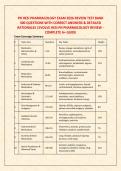
Exam Coverage Summary
# Topic Area Questions Key Topics Weight
Medication Routes, dosage calculations, rights of
1 Administration & 1-30 administration, enteral/parenteral, 10%
Safety safety protocols
Antihypertensives, antiarrhythmics,
Cardiovascular
2 31-65 anticoagulants, antiplatelets, digoxin, 12%
Medications
antidysrhythmics
Bronchodilators, corticosteroids,
Respiratory
3 66-85 anticholinergics, leukotriene 7%
Medications
modifiers, mucolytics
Endocrine & Diabetes Insulin, oral hypoglycemics, thyroid,
4 86-110 8%
Medications corticosteroids, hormone replacement
Neurological & Antidepressants, antipsychotics,
5 Psychiatric 111-140 anxiolytics, mood stabilizers, 10%
Medications anticonvulsants, Parkinson's drugs
Pain Management & Opioids, NSAIDs, adjuvant analgesics,
6 141-165 8%
Analgesics patient-controlled analgesia, antidotes
Penicillins, cephalosporins,
Antibiotics & Anti-
7 166-195 aminoglycosides, tetracyclines, 10%
Infectives
antifungals, antivirals
Gastrointestinal Antiemetics, antacids, proton pump
8 196-215 7%
Medications inhibitors, laxatives, antidiarrheals
Diuretics & Renal Loop, thiazide, potassium-sparing
9 216-235 7%
Medications diuretics, renal drugs
Geriatric, pediatric, pregnancy,
Special Populations &
10 236-300 emergency antidotes, herbals, drug 21%
Advanced Topics
interactions, NGN
,SECTION 1: MEDICATION ADMINISTRATION & SAFETY (Questions 1-30)
Question 1
A patient is prescribed a medication that has a high first-pass effect. Which route
of administration would be MOST appropriate to bypass this effect?
A. Oral
B. Sublingual
C. Intramuscular
D. Topical
Correct Answer: B. Sublingual
Rationale: The first-pass effect refers to metabolism of a drug in the liver after
oral absorption, reducing bioavailability. Sublingual administration allows direct
absorption into systemic circulation, bypassing the portal circulation and first-pass
metabolism.
Why A is wrong: Oral administration is subject to first-pass metabolism in the
liver.
Why C is wrong: Intramuscular administration bypasses first-pass effect but is not
the best option for drugs requiring rapid onset.
Why D is wrong: Topical administration provides local effect and is not typically
used to bypass first-pass metabolism for systemic drugs.
Reference: HESI PN Pharmacology Review, Basic Pharmacology
Question 2
The nurse is teaching a patient about a new prescription for enteric-coated
tablets. Which statement by the patient indicates correct understanding?
A. "I can crush the tablet if I have trouble swallowing."
B. "I should swallow the tablet whole without crushing or chewing."
C. "I can take the tablet with orange juice for better absorption."
D. "The coating is for flavor, so crushing is fine."
Correct Answer: B. "I should swallow the tablet whole without crushing or
chewing."
,Rationale: Enteric coating protects the drug from stomach acid and prevents
gastric irritation. Crushing or chewing destroys the coating, leading to premature
drug release, potential gastric upset, and altered absorption.
Why A is wrong: Crushing enteric-coated tablets destroys the protective coating.
Why C is wrong: Enteric-coated tablets should not be taken with acidic beverages.
Why D is wrong: The coating is for protection, not flavor.
Reference: HESI PN Pharmacology Review, Medication Administration
Question 3
How would you administer medication via the intramuscular (IM) route?
A. Inject at a 15-degree angle using a ½-inch needle
B. Inject at a 90-degree angle using the Z-track method
C. Inject at a 45-degree angle into fatty tissue
D. Inject intradermally and raise a wheal
Correct Answer: B. Inject at a 90-degree angle using the Z-track method
Rationale: IM injections are administered at a 90-degree angle. The Z-track
method is recommended to prevent medication leakage into subcutaneous tissue
and to minimize irritation. The ventrogluteal site is preferred for adults due to its
distance from major nerves and blood vessels.
Why A is wrong: A 15-degree angle is used for intradermal injections.
Why C is wrong: A 45-degree angle is used for subcutaneous injections in thin
patients.
Why D is wrong: This describes intradermal injection technique.
Reference: HESI PN Pharmacology Review, Medication Administration
Question 4
How would you administer medication via the subcutaneous (SubQ) route?
A. Injecting at 90 degrees for all patients into muscle tissue
B. Injecting at 45 degrees for thin patients or 90 degrees for average-sized
patients into fatty tissue
C. Injecting intradermally at a 10-15 degree angle
D. Administering directly into a vein
, Correct Answer: B. Injecting at 45 degrees for thin patients or 90 degrees for
average-sized patients into fatty tissue
Rationale: Subcutaneous injections are administered into fatty tissue. The angle
depends on the patient's body habitus: 45 degrees for thin patients with less
subcutaneous tissue, and 90 degrees for average-sized patients. Common sites
include the abdomen, upper arms, thighs, and back.
Why A is wrong: 90 degrees is not used for all patients; it depends on body
habitus.
Why C is wrong: Intradermal injections use a 10-15 degree angle.
Why D is wrong: This describes intravenous administration.
Reference: HESI PN Pharmacology Review, Medication Administration
Question 5
How would you administer medication via the oral route?
A. Place the medication on the bedside table for the patient to take later
B. Assist the patient to an upright or side-lying position and remain until
medication is swallowed
C. Crush all medications and mix with food without checking
D. Leave the room immediately after giving the medication cup
Correct Answer: B. Assist the patient to an upright or side-lying position and
remain until medication is swallowed
Rationale: Oral medications require the patient to be in an upright or side-lying
position to prevent aspiration. The nurse should offer water, remain at the
bedside until each medication is swallowed, and never leave the patient's bedside
until verification of swallowing is complete.
Why A is wrong: The nurse should not leave medications unattended at the
bedside.
Why C is wrong: Not all medications can be crushed; this must be verified first.
Why D is wrong: The nurse must remain to verify that the medication is
swallowed.
Reference: HESI PN Pharmacology Review, Oral Medication Administration
300 QUESTIONS WITH CORRECT ANSWERS & DETAILED
RATIONALES |EVOLVE HESI PN PHARMACOLOGY REVIEW -
COMPLETE A+ GUIDE
Exam Coverage Summary
# Topic Area Questions Key Topics Weight
Medication Routes, dosage calculations, rights of
1 Administration & 1-30 administration, enteral/parenteral, 10%
Safety safety protocols
Antihypertensives, antiarrhythmics,
Cardiovascular
2 31-65 anticoagulants, antiplatelets, digoxin, 12%
Medications
antidysrhythmics
Bronchodilators, corticosteroids,
Respiratory
3 66-85 anticholinergics, leukotriene 7%
Medications
modifiers, mucolytics
Endocrine & Diabetes Insulin, oral hypoglycemics, thyroid,
4 86-110 8%
Medications corticosteroids, hormone replacement
Neurological & Antidepressants, antipsychotics,
5 Psychiatric 111-140 anxiolytics, mood stabilizers, 10%
Medications anticonvulsants, Parkinson's drugs
Pain Management & Opioids, NSAIDs, adjuvant analgesics,
6 141-165 8%
Analgesics patient-controlled analgesia, antidotes
Penicillins, cephalosporins,
Antibiotics & Anti-
7 166-195 aminoglycosides, tetracyclines, 10%
Infectives
antifungals, antivirals
Gastrointestinal Antiemetics, antacids, proton pump
8 196-215 7%
Medications inhibitors, laxatives, antidiarrheals
Diuretics & Renal Loop, thiazide, potassium-sparing
9 216-235 7%
Medications diuretics, renal drugs
Geriatric, pediatric, pregnancy,
Special Populations &
10 236-300 emergency antidotes, herbals, drug 21%
Advanced Topics
interactions, NGN
,SECTION 1: MEDICATION ADMINISTRATION & SAFETY (Questions 1-30)
Question 1
A patient is prescribed a medication that has a high first-pass effect. Which route
of administration would be MOST appropriate to bypass this effect?
A. Oral
B. Sublingual
C. Intramuscular
D. Topical
Correct Answer: B. Sublingual
Rationale: The first-pass effect refers to metabolism of a drug in the liver after
oral absorption, reducing bioavailability. Sublingual administration allows direct
absorption into systemic circulation, bypassing the portal circulation and first-pass
metabolism.
Why A is wrong: Oral administration is subject to first-pass metabolism in the
liver.
Why C is wrong: Intramuscular administration bypasses first-pass effect but is not
the best option for drugs requiring rapid onset.
Why D is wrong: Topical administration provides local effect and is not typically
used to bypass first-pass metabolism for systemic drugs.
Reference: HESI PN Pharmacology Review, Basic Pharmacology
Question 2
The nurse is teaching a patient about a new prescription for enteric-coated
tablets. Which statement by the patient indicates correct understanding?
A. "I can crush the tablet if I have trouble swallowing."
B. "I should swallow the tablet whole without crushing or chewing."
C. "I can take the tablet with orange juice for better absorption."
D. "The coating is for flavor, so crushing is fine."
Correct Answer: B. "I should swallow the tablet whole without crushing or
chewing."
,Rationale: Enteric coating protects the drug from stomach acid and prevents
gastric irritation. Crushing or chewing destroys the coating, leading to premature
drug release, potential gastric upset, and altered absorption.
Why A is wrong: Crushing enteric-coated tablets destroys the protective coating.
Why C is wrong: Enteric-coated tablets should not be taken with acidic beverages.
Why D is wrong: The coating is for protection, not flavor.
Reference: HESI PN Pharmacology Review, Medication Administration
Question 3
How would you administer medication via the intramuscular (IM) route?
A. Inject at a 15-degree angle using a ½-inch needle
B. Inject at a 90-degree angle using the Z-track method
C. Inject at a 45-degree angle into fatty tissue
D. Inject intradermally and raise a wheal
Correct Answer: B. Inject at a 90-degree angle using the Z-track method
Rationale: IM injections are administered at a 90-degree angle. The Z-track
method is recommended to prevent medication leakage into subcutaneous tissue
and to minimize irritation. The ventrogluteal site is preferred for adults due to its
distance from major nerves and blood vessels.
Why A is wrong: A 15-degree angle is used for intradermal injections.
Why C is wrong: A 45-degree angle is used for subcutaneous injections in thin
patients.
Why D is wrong: This describes intradermal injection technique.
Reference: HESI PN Pharmacology Review, Medication Administration
Question 4
How would you administer medication via the subcutaneous (SubQ) route?
A. Injecting at 90 degrees for all patients into muscle tissue
B. Injecting at 45 degrees for thin patients or 90 degrees for average-sized
patients into fatty tissue
C. Injecting intradermally at a 10-15 degree angle
D. Administering directly into a vein
, Correct Answer: B. Injecting at 45 degrees for thin patients or 90 degrees for
average-sized patients into fatty tissue
Rationale: Subcutaneous injections are administered into fatty tissue. The angle
depends on the patient's body habitus: 45 degrees for thin patients with less
subcutaneous tissue, and 90 degrees for average-sized patients. Common sites
include the abdomen, upper arms, thighs, and back.
Why A is wrong: 90 degrees is not used for all patients; it depends on body
habitus.
Why C is wrong: Intradermal injections use a 10-15 degree angle.
Why D is wrong: This describes intravenous administration.
Reference: HESI PN Pharmacology Review, Medication Administration
Question 5
How would you administer medication via the oral route?
A. Place the medication on the bedside table for the patient to take later
B. Assist the patient to an upright or side-lying position and remain until
medication is swallowed
C. Crush all medications and mix with food without checking
D. Leave the room immediately after giving the medication cup
Correct Answer: B. Assist the patient to an upright or side-lying position and
remain until medication is swallowed
Rationale: Oral medications require the patient to be in an upright or side-lying
position to prevent aspiration. The nurse should offer water, remain at the
bedside until each medication is swallowed, and never leave the patient's bedside
until verification of swallowing is complete.
Why A is wrong: The nurse should not leave medications unattended at the
bedside.
Why C is wrong: Not all medications can be crushed; this must be verified first.
Why D is wrong: The nurse must remain to verify that the medication is
swallowed.
Reference: HESI PN Pharmacology Review, Oral Medication Administration


