
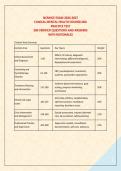
NCMHCE EXAM 2026-2027
CLINICAL MENTAL HEALTH COUNSELING
PRACTICE TEST
300 VERIFIED QUESTIONS AND ANSWERS
WITH RATIONALES
Content Area Overview:
Content Area Questions Key Topics Weight
DSM-5-TR criteria, diagnostic
Clinical Assessment
1-60 interviewing, differential diagnosis, 20%
and Diagnosis
biopsychosocial assessment
Counseling and
CBT, psychodynamic, humanistic,
Psychotherapy 61-120 20%
systemic, postmodern approaches
Theories
Evidence-based interventions, goal
Treatment Planning
121-180 setting, progress monitoring, 20%
and Intervention
termination
ACA Code of Ethics, confidentiality,
Ethical and Legal
181-225 informed consent, mandatory 16%
Issues
reporting, boundary issues
Crisis Intervention Suicide assessment, trauma-informed
226-260 12%
and Management care, de-escalation, safety planning
Professional Practice Supervision models, consultation,
261-300 12%
and Supervision documentation, self-care, advocacy
1
,SECTION 1: CLINICAL ASSESSMENT AND DIAGNOSIS (Questions 1-60)
Question 1
A 32-year-old client presents with persistent sadness, loss of interest in previously
enjoyed activities, significant weight loss, insomnia, fatigue, feelings of
worthlessness, and recurrent thoughts of death for the past four weeks. Which
diagnosis is MOST consistent with these symptoms?
A. Major Depressive Disorder, Single Episode, Severe
B. Persistent Depressive Disorder (Dysthymia)
C. Adjustment Disorder with Depressed Mood
D. Bipolar Disorder, Depressed Episode
Correct Answer: A. Major Depressive Disorder, Single Episode, Severe
Rationale: The client meets criteria for Major Depressive Disorder (MDD) with
five or more symptoms present for at least two weeks, including depressed mood,
anhedonia, significant weight change, sleep disturbance, fatigue, worthlessness,
and suicidal ideation. The severity is indicated by the presence of suicidal ideation
and multiple symptoms.
Why B is wrong: Persistent Depressive Disorder requires symptoms present for at
least two years, not four weeks.
Why C is wrong: Adjustment Disorder occurs in response to an identifiable
stressor and symptoms do not meet full MDD criteria.
Why D is wrong: Bipolar Disorder requires a history of manic or hypomanic
episodes, which are not described.
Reference: DSM-5-TR, Major Depressive Disorder Criteria
Question 2
A 45-year-old client reports excessive worry about multiple life circumstances
(work, health, family) for over six months. She finds it difficult to control the
worry and reports muscle tension, restlessness, and difficulty sleeping. What is
the MOST appropriate diagnosis?
A. Panic Disorder
B. Generalized Anxiety Disorder
C. Social Anxiety Disorder
D. Obsessive-Compulsive Disorder
2
,Correct Answer: B. Generalized Anxiety Disorder
Rationale: The client meets criteria for GAD with excessive, uncontrollable worry
about multiple domains lasting at least six months, accompanied by physical
symptoms (muscle tension, restlessness, sleep disturbance).
Why A is wrong: Panic Disorder requires recurrent unexpected panic attacks,
which are not described.
Why C is wrong: Social Anxiety Disorder involves fear of social situations and
scrutiny by others.
Why D is wrong: OCD involves obsessions and compulsions, which are not
described.
Reference: DSM-5-TR, Generalized Anxiety Disorder Criteria
Question 3
A 28-year-old client reports episodes of sudden intense fear, palpitations,
sweating, trembling, shortness of breath, and a feeling of impending doom. These
episodes last about 15-20 minutes and have occurred five times in the past
month. She now avoids places where she had these episodes. What is the MOST
appropriate diagnosis?
A. Generalized Anxiety Disorder
B. Panic Disorder with Agoraphobia
C. Specific Phobia
D. Post-Traumatic Stress Disorder
Correct Answer: B. Panic Disorder with Agoraphobia
Rationale: The client experiences recurrent, unexpected panic attacks followed by
persistent concern about future attacks and behavioral changes (avoidance of
places associated with attacks), meeting criteria for Panic Disorder with
Agoraphobia.
Why A is wrong: GAD involves worry about everyday events without the distinct
panic episodes.
Why C is wrong: Specific Phobia involves fear of specific objects or situations.
Why D is wrong: PTSD requires exposure to a traumatic event.
Reference: DSM-5-TR, Panic Disorder Criteria
3
, Question 4
A 19-year-old college student reports persistent fear of public speaking, eating in
public, and using public restrooms. He fears others will judge him negatively. He
has avoided social events for the past year, resulting in significant impairment in
his academic and social functioning. What is the MOST likely diagnosis?
A. Generalized Anxiety Disorder
B. Social Anxiety Disorder (Social Phobia)
C. Avoidant Personality Disorder
D. Agoraphobia
Correct Answer: B. Social Anxiety Disorder (Social Phobia)
Rationale: The client demonstrates marked fear of social situations where he may
be scrutinized, with avoidance leading to functional impairment. The specific fears
and duration of one year are consistent with Social Anxiety Disorder.
Why A is wrong: While anxiety is present, the focus is specifically on social
scrutiny rather than generalized worry.
Why C is wrong: Avoidant Personality Disorder is a pervasive pattern of social
inhibition, but the client's age and specific fears are more consistent with Social
Anxiety Disorder.
Why D is wrong: Agoraphobia involves fear of situations where escape might be
difficult, not primarily social scrutiny.
Reference: DSM-5-TR, Social Anxiety Disorder Criteria
Question 5
A 52-year-old client presents with intrusive memories of a car accident that
occurred six months ago. He experiences nightmares, flashbacks, and intense
distress when reminded of the accident. He avoids driving and discussing the
incident, and reports difficulty sleeping and hypervigilance. What is the MOST
appropriate diagnosis?
A. Acute Stress Disorder
B. Post-Traumatic Stress Disorder
C. Adjustment Disorder
D. Panic Disorder
Correct Answer: B. Post-Traumatic Stress Disorder
4


