

TAMU, POLS 207, Jason Smith, Exam 2
Study online at https://quizlet.com/_jp2yvh
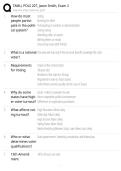
1. How do most Voting
people partici- Running for office
pate in the politi- Participating in marches or demonstrations
cal system? Giving money
Attending rallies or events
Writing letters or emails
Discussing issues with friends
2. What is a rational One who will vote only if the personal benefits outweigh the costs
voter?
3. Requirements Citizen of the United States
for Voting 18 years old
Resident of the state for 30 days
Registered to vote (in most states)
Some felons cannot (usually not the case in Texas)
4. Why do some Easier / More Convenient to vote
states have high- More competitive political environment
er voter turnout? Differences in registration procedures
5. What affects vot- High Education: More Likely
ing turnout? Older Age: More Likely
High Income: More Likely
Swing States: More Likely
Media Predicting Winners Early: Later Voters Less Likely
6. Who or what State governments, limited by constitution and federal law
determines voter
qualifications?
7. 15th Amend- 1870, All races can vote
ment
, TAMU, POLS 207, Jason Smith, Exam 2
Study online at https://quizlet.com/_jp2yvh
8. 19th Amend- 1920, Women can vote
ment
9. 24th Amend- 1962, No poll tax
ment
10. 26th Amend- 1971, Lowered the voting age from 21 to 18
ment
11. Responsible Par- A party system where each party offers clear policy alternatives AND holds their
ty Model elected officials responsible for enacting these policies in office.
Develop and clarify alternative policy positions for voters
Educate people about issues and simplify choices
Organize and direct their candidates to win elections
Hold their elected officials responsible for enacting the parties' policy positions
after they were elected
12. Who decides The State
what type of pri-
mary is used?
13. Closed Primary Only registered party members can vote (Ex: Only registered democrats can vote
in the democratic primary)
14. Open Primary Any registered voter can vote in one party's primary
15. Semi-Closed Pri- Registered party members must vote in their party's primary but independents
mary can choose which primary to vote in
16. All candidates from all parties are on one ballot, top two vote-getters advance
Study online at https://quizlet.com/_jp2yvh
1. How do most Voting
people partici- Running for office
pate in the politi- Participating in marches or demonstrations
cal system? Giving money
Attending rallies or events
Writing letters or emails
Discussing issues with friends
2. What is a rational One who will vote only if the personal benefits outweigh the costs
voter?
3. Requirements Citizen of the United States
for Voting 18 years old
Resident of the state for 30 days
Registered to vote (in most states)
Some felons cannot (usually not the case in Texas)
4. Why do some Easier / More Convenient to vote
states have high- More competitive political environment
er voter turnout? Differences in registration procedures
5. What affects vot- High Education: More Likely
ing turnout? Older Age: More Likely
High Income: More Likely
Swing States: More Likely
Media Predicting Winners Early: Later Voters Less Likely
6. Who or what State governments, limited by constitution and federal law
determines voter
qualifications?
7. 15th Amend- 1870, All races can vote
ment
, TAMU, POLS 207, Jason Smith, Exam 2
Study online at https://quizlet.com/_jp2yvh
8. 19th Amend- 1920, Women can vote
ment
9. 24th Amend- 1962, No poll tax
ment
10. 26th Amend- 1971, Lowered the voting age from 21 to 18
ment
11. Responsible Par- A party system where each party offers clear policy alternatives AND holds their
ty Model elected officials responsible for enacting these policies in office.
Develop and clarify alternative policy positions for voters
Educate people about issues and simplify choices
Organize and direct their candidates to win elections
Hold their elected officials responsible for enacting the parties' policy positions
after they were elected
12. Who decides The State
what type of pri-
mary is used?
13. Closed Primary Only registered party members can vote (Ex: Only registered democrats can vote
in the democratic primary)
14. Open Primary Any registered voter can vote in one party's primary
15. Semi-Closed Pri- Registered party members must vote in their party's primary but independents
mary can choose which primary to vote in
16. All candidates from all parties are on one ballot, top two vote-getters advance


