

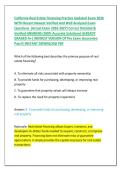
California Real Estate Financing Practice Updated Exam 2026
WITH Recent Newest Verified And Well Analyzed Exam
Questions (Actual Exam 2026-2027) Correct Detailed &
Verified ANSWERS (100% Accurate Solutions) ALREADY
GRADED A+||NEWEST VERSION Of The Exam Guarantee
Pass!!|INSTANT DOWNLOAD PDF
Which of the following best describes the primary purpose of real
estate financing?
A. To eliminate all risks associated with property ownership
B. To provide funds for purchasing, developing, or improving real
property
C. To guarantee that property values will always increase
D. To replace the need for property inspections
Answer: B. To provide funds for purchasing, developing, or improving
real property
Rationale: Real estate financing allows buyers, investors, and
developers to obtain funds needed to acquire, construct, or improve
real property. Financing does not eliminate risks or guarantee
appreciation; it simply provides the capital necessary for real estate
transactions.
,A borrower who obtains a loan to purchase a home is typically referred
to as the:
A. Mortgagee
B. Beneficiary
C. Trustor
D. Lender
Answer: C. Trustor
Rationale: In a California deed of trust transaction, the borrower is
called the trustor because the borrower transfers legal title to a trustee
as security for the loan. The lender is the beneficiary, and the trustee
holds title until the debt is satisfied.
In a California deed of trust, the party who holds legal title to the
property as security for the loan is the:
A. Borrower
B. Trustee
C. Beneficiary
D. Escrow officer
,Answer: B. Trustee
Rationale: The trustee is a neutral third party who holds bare legal title
to the property until the loan obligation is fulfilled. If the borrower
defaults, the trustee may conduct a foreclosure process according to
state law.
Which document creates a security interest in real property when a
loan is used to purchase the property?
A. Lease agreement
B. Purchase agreement
C. Deed of trust
D. Listing agreement
Answer: C. Deed of trust
Rationale: A deed of trust secures a loan by placing the property as
collateral. In California, deeds of trust are commonly used instead of
traditional mortgages.
The lender in a deed of trust arrangement is known as the:
A. Trustor
, B. Trustee
C. Beneficiary
D. Grantor
Answer: C. Beneficiary
Rationale: The beneficiary is the lender who receives the benefit of the
security agreement. The borrower is the trustor, and the trustee holds
legal title.
A loan that requires the borrower to make equal monthly payments
consisting of principal and interest is called a:
A. Balloon loan
B. Amortized loan
C. Straight loan
D. Reverse loan
Answer: B. Amortized loan
Rationale: An amortized loan is paid through scheduled payments that
gradually reduce the principal balance while covering interest charges.
Most conventional home loans are fully amortized.
WITH Recent Newest Verified And Well Analyzed Exam
Questions (Actual Exam 2026-2027) Correct Detailed &
Verified ANSWERS (100% Accurate Solutions) ALREADY
GRADED A+||NEWEST VERSION Of The Exam Guarantee
Pass!!|INSTANT DOWNLOAD PDF
Which of the following best describes the primary purpose of real
estate financing?
A. To eliminate all risks associated with property ownership
B. To provide funds for purchasing, developing, or improving real
property
C. To guarantee that property values will always increase
D. To replace the need for property inspections
Answer: B. To provide funds for purchasing, developing, or improving
real property
Rationale: Real estate financing allows buyers, investors, and
developers to obtain funds needed to acquire, construct, or improve
real property. Financing does not eliminate risks or guarantee
appreciation; it simply provides the capital necessary for real estate
transactions.
,A borrower who obtains a loan to purchase a home is typically referred
to as the:
A. Mortgagee
B. Beneficiary
C. Trustor
D. Lender
Answer: C. Trustor
Rationale: In a California deed of trust transaction, the borrower is
called the trustor because the borrower transfers legal title to a trustee
as security for the loan. The lender is the beneficiary, and the trustee
holds title until the debt is satisfied.
In a California deed of trust, the party who holds legal title to the
property as security for the loan is the:
A. Borrower
B. Trustee
C. Beneficiary
D. Escrow officer
,Answer: B. Trustee
Rationale: The trustee is a neutral third party who holds bare legal title
to the property until the loan obligation is fulfilled. If the borrower
defaults, the trustee may conduct a foreclosure process according to
state law.
Which document creates a security interest in real property when a
loan is used to purchase the property?
A. Lease agreement
B. Purchase agreement
C. Deed of trust
D. Listing agreement
Answer: C. Deed of trust
Rationale: A deed of trust secures a loan by placing the property as
collateral. In California, deeds of trust are commonly used instead of
traditional mortgages.
The lender in a deed of trust arrangement is known as the:
A. Trustor
, B. Trustee
C. Beneficiary
D. Grantor
Answer: C. Beneficiary
Rationale: The beneficiary is the lender who receives the benefit of the
security agreement. The borrower is the trustor, and the trustee holds
legal title.
A loan that requires the borrower to make equal monthly payments
consisting of principal and interest is called a:
A. Balloon loan
B. Amortized loan
C. Straight loan
D. Reverse loan
Answer: B. Amortized loan
Rationale: An amortized loan is paid through scheduled payments that
gradually reduce the principal balance while covering interest charges.
Most conventional home loans are fully amortized.


