

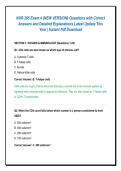
NUR 265 Exam 4 {NEW VERSION} Questions with Correct
Answers and Detailed Explanations Latest Update This
Year | Instant Pdf Download
SECTION 1: HIV/AIDS & IMMUNOLOGY (Questions 1-20)
Q1. CD4 cells are also known as which type of immune cell?
A. Cytotoxic T-cells
B. T-helper cells
C. B-cells
D. Natural killer cells
Correct Answer: B. T-helper cells
CD4 cells are a type of white blood cell that play a central role in the immune system by
signaling other immune cells to respond to infections. They are also known as T-helper cells
or CD4+ T lymphocytes .
Q2. When the CD4 count falls below which number is a person considered to have
AIDS?
A. 500 cells/mm³
B. 300 cells/mm³
C. 200 cells/mm³
D. 100 cells/mm³
Correct Answer: C. 200 cells/mm³
,A CD4 count below 200 cells/mm³ indicates severe immunosuppression and is one of the
diagnostic criteria for AIDS. This level places the patient at high risk for opportunistic
infections .
Q3. The nurse is working in the emergency department triaging a client who has
presented with chest pain, shortness of breath, a productive cough, and reports night
sweats. The client's health history includes AIDS and a recent laboratory result that
reveals a low CD4+ count. Airborne precautions have been initiated. Which action
should the nurse take next?
A. Prepare the client for insertion of a chest tube
B. Assess the client for shingles
C. Check the client's temperature
D. Obtain a throat culture
Correct Answer: C. Check the client's temperature
The client's symptoms are concerning for a possible opportunistic infection such as
tuberculosis, which is common in AIDS patients with low CD4 counts. While airborne
precautions are already initiated, the priority nursing action is to obtain a baseline
temperature to monitor for fever, which is a key indicator of infection .
Q4. This lung infection caused by a fungus is a common opportunistic infection in
people with AIDS.
A. Tuberculosis
B. Pneumocystis jirovecii pneumonia (PJP)
,C. Legionella
D. Streptococcus pneumoniae
Correct Answer: B. Pneumocystis jirovecii pneumonia (PJP)
PJP is one of the most common opportunistic infections in patients with AIDS, occurring
when CD4 counts drop below 200 cells/mm³. It is caused by a fungus and presents with
fever, dry cough, and progressive shortness of breath .
Q5. A cancer associated with AIDS, often presenting as purplish skin lesions, is
known as:
A. Melanoma
B. Kaposi's sarcoma
C. Basal cell carcinoma
D. Lymphoma
Correct Answer: B. Kaposi's sarcoma
Kaposi's sarcoma is an AIDS-defining illness caused by human herpesvirus 8 (HHV-8). It
presents with purplish, red, or brown skin lesions and can also affect internal organs. It is
most commonly seen in patients with advanced HIV/AIDS .
Q6. The newly hired nurse is developing a plan of care for a client who has AIDS and
was just diagnosed with Pneumocystis jiroveci pneumonia (PJP) and pain. Which
intervention should the nurse preceptor question?
A. Telling the client to keep the door to the room closed at all times
B. Placing the client on a pressure-relieving mattress
, C. Instructing the client to drink at least three liters of fluid throughout the day
D. Offering the client food high in calories and protein
Correct Answer: A. Telling the client to keep the door to the room closed at all times
PJP requires airborne precautions; keeping the door closed is appropriate. However, the
preceptor may question this if the rationale is unclear or if it is being used incorrectly. The
other interventions—pressure relief mattress, increased fluids, and high-calorie/protein
foods—are appropriate supportive care measures .
Q7. This therapy involves taking a combination of drugs to control HIV replication.
A. Monotherapy
B. HAART (Highly Active Antiretroviral Therapy)
C. Antibiotic therapy
D. Immunoglobulin therapy
Correct Answer: B. HAART (Highly Active Antiretroviral Therapy)
HAART, also known as combination antiretroviral therapy (cART), involves using a
combination of at least three antiretroviral drugs from different classes to suppress HIV
replication, reduce viral load, and preserve immune function .
Q8. The nurse has provided medication instructions to a client who has HIV and has
been prescribed combination antiretroviral therapy (cART). Which client statement
indicates correct understanding of the teaching?
A. "I am less likely to develop opportunistic infections once I begin taking my prescribed
medications."
Answers and Detailed Explanations Latest Update This
Year | Instant Pdf Download
SECTION 1: HIV/AIDS & IMMUNOLOGY (Questions 1-20)
Q1. CD4 cells are also known as which type of immune cell?
A. Cytotoxic T-cells
B. T-helper cells
C. B-cells
D. Natural killer cells
Correct Answer: B. T-helper cells
CD4 cells are a type of white blood cell that play a central role in the immune system by
signaling other immune cells to respond to infections. They are also known as T-helper cells
or CD4+ T lymphocytes .
Q2. When the CD4 count falls below which number is a person considered to have
AIDS?
A. 500 cells/mm³
B. 300 cells/mm³
C. 200 cells/mm³
D. 100 cells/mm³
Correct Answer: C. 200 cells/mm³
,A CD4 count below 200 cells/mm³ indicates severe immunosuppression and is one of the
diagnostic criteria for AIDS. This level places the patient at high risk for opportunistic
infections .
Q3. The nurse is working in the emergency department triaging a client who has
presented with chest pain, shortness of breath, a productive cough, and reports night
sweats. The client's health history includes AIDS and a recent laboratory result that
reveals a low CD4+ count. Airborne precautions have been initiated. Which action
should the nurse take next?
A. Prepare the client for insertion of a chest tube
B. Assess the client for shingles
C. Check the client's temperature
D. Obtain a throat culture
Correct Answer: C. Check the client's temperature
The client's symptoms are concerning for a possible opportunistic infection such as
tuberculosis, which is common in AIDS patients with low CD4 counts. While airborne
precautions are already initiated, the priority nursing action is to obtain a baseline
temperature to monitor for fever, which is a key indicator of infection .
Q4. This lung infection caused by a fungus is a common opportunistic infection in
people with AIDS.
A. Tuberculosis
B. Pneumocystis jirovecii pneumonia (PJP)
,C. Legionella
D. Streptococcus pneumoniae
Correct Answer: B. Pneumocystis jirovecii pneumonia (PJP)
PJP is one of the most common opportunistic infections in patients with AIDS, occurring
when CD4 counts drop below 200 cells/mm³. It is caused by a fungus and presents with
fever, dry cough, and progressive shortness of breath .
Q5. A cancer associated with AIDS, often presenting as purplish skin lesions, is
known as:
A. Melanoma
B. Kaposi's sarcoma
C. Basal cell carcinoma
D. Lymphoma
Correct Answer: B. Kaposi's sarcoma
Kaposi's sarcoma is an AIDS-defining illness caused by human herpesvirus 8 (HHV-8). It
presents with purplish, red, or brown skin lesions and can also affect internal organs. It is
most commonly seen in patients with advanced HIV/AIDS .
Q6. The newly hired nurse is developing a plan of care for a client who has AIDS and
was just diagnosed with Pneumocystis jiroveci pneumonia (PJP) and pain. Which
intervention should the nurse preceptor question?
A. Telling the client to keep the door to the room closed at all times
B. Placing the client on a pressure-relieving mattress
, C. Instructing the client to drink at least three liters of fluid throughout the day
D. Offering the client food high in calories and protein
Correct Answer: A. Telling the client to keep the door to the room closed at all times
PJP requires airborne precautions; keeping the door closed is appropriate. However, the
preceptor may question this if the rationale is unclear or if it is being used incorrectly. The
other interventions—pressure relief mattress, increased fluids, and high-calorie/protein
foods—are appropriate supportive care measures .
Q7. This therapy involves taking a combination of drugs to control HIV replication.
A. Monotherapy
B. HAART (Highly Active Antiretroviral Therapy)
C. Antibiotic therapy
D. Immunoglobulin therapy
Correct Answer: B. HAART (Highly Active Antiretroviral Therapy)
HAART, also known as combination antiretroviral therapy (cART), involves using a
combination of at least three antiretroviral drugs from different classes to suppress HIV
replication, reduce viral load, and preserve immune function .
Q8. The nurse has provided medication instructions to a client who has HIV and has
been prescribed combination antiretroviral therapy (cART). Which client statement
indicates correct understanding of the teaching?
A. "I am less likely to develop opportunistic infections once I begin taking my prescribed
medications."


