
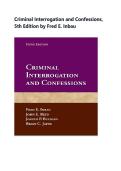
Criminal Interrogation and Confessions,
5th Edition by Fred E. Inbau
,TABLE OF CONTENTS
Part 1 Preliminary Considerations
Chapter 1 Distinctions between Interviews and Interrogations
Chapter 2 Obtaining and Evaluating Factual Information
Chapter 3 Case Solution Possibilities
Chapter 4 Initial Precautionary Measures for the Protections
of the Innocent
Chapter 5 Privacy and the Interview Room
Chapter 6 Qualifications, Attitude, and General Conduct of the
Investigator
Part 2 Interviewing Techniques
Chapter 7 Preparation and Starting the Interview
Chapter 8 Formulating Interview Questions
Chapter 9 Behavior Symptom Analysis
Chapter 10 Precautions when Evaluating Behavior Symptoms
of Truthful and Untruthful Subjects
Chapter 11 The Behavior Analysis Interview
Chapter 12 The Use of Specialized Questioning Techniques
Part 3 Interrogation Techniques
Chapter 13 The Reid Nine Steps of Interrogation
Chapter 14 Recommendations for Interrogators
Chapter 15 Distinguishing between True and False
Confessions
Chapter 16 Testifying on a Confession
Chapter 17 Interrogation Law
,Criminal Interrogation and Confessions, 5th Edition
Fred E. Inbau - Test Bank:
MULTIPLE CHOICE QUESTIONS
PART 1: PRELIMINARY CONSIDERATIONS
CHAPTER 1: Distinctions between Interviews and Interrogations
1. What is the primary purpose of a criminal interview?
A) To obtain a confession from a suspect
B) To gather information and assess the credibility of a subject
C) To formally charge a suspect with a crime
D) To intimidate a subject into providing information
Answer: B
2. Which of the following best describes an interrogation as distinguished from an interview?
A) An interrogation is conducted in a public setting
B) An interrogation is designed to gather general information from witnesses
C) An interrogation is a formal process aimed at eliciting admissions or confessions from suspects
D) An interrogation is always recorded on video
Answer: C
3. Which of the following individuals would most typically be subjected to an interview rather than an
interrogation?
, A) A prime suspect believed to have committed the crime
B) A witness who observed the crime
C) A person who has already confessed
D) A defendant who has been formally charged
Answer: B
4. According to Inbau, the fundamental difference between an interview and an interrogation lies in:
A) The location where each is conducted
B) The legal rights afforded to the subject
C) The purpose and the nature of the questioning process
D) The length of time each process takes
Answer: C
5. Which of the following statements about interviews is TRUE?
A) Interviews are always accusatory in nature
B) Interviews are conducted only with suspects
C) Interviews are generally non-accusatory and information-gathering in nature
D) Interviews must always be conducted in a formal interrogation room
Answer: C
6. During an interview, the investigator's primary role is to:
A) Convince the subject to confess
5th Edition by Fred E. Inbau
,TABLE OF CONTENTS
Part 1 Preliminary Considerations
Chapter 1 Distinctions between Interviews and Interrogations
Chapter 2 Obtaining and Evaluating Factual Information
Chapter 3 Case Solution Possibilities
Chapter 4 Initial Precautionary Measures for the Protections
of the Innocent
Chapter 5 Privacy and the Interview Room
Chapter 6 Qualifications, Attitude, and General Conduct of the
Investigator
Part 2 Interviewing Techniques
Chapter 7 Preparation and Starting the Interview
Chapter 8 Formulating Interview Questions
Chapter 9 Behavior Symptom Analysis
Chapter 10 Precautions when Evaluating Behavior Symptoms
of Truthful and Untruthful Subjects
Chapter 11 The Behavior Analysis Interview
Chapter 12 The Use of Specialized Questioning Techniques
Part 3 Interrogation Techniques
Chapter 13 The Reid Nine Steps of Interrogation
Chapter 14 Recommendations for Interrogators
Chapter 15 Distinguishing between True and False
Confessions
Chapter 16 Testifying on a Confession
Chapter 17 Interrogation Law
,Criminal Interrogation and Confessions, 5th Edition
Fred E. Inbau - Test Bank:
MULTIPLE CHOICE QUESTIONS
PART 1: PRELIMINARY CONSIDERATIONS
CHAPTER 1: Distinctions between Interviews and Interrogations
1. What is the primary purpose of a criminal interview?
A) To obtain a confession from a suspect
B) To gather information and assess the credibility of a subject
C) To formally charge a suspect with a crime
D) To intimidate a subject into providing information
Answer: B
2. Which of the following best describes an interrogation as distinguished from an interview?
A) An interrogation is conducted in a public setting
B) An interrogation is designed to gather general information from witnesses
C) An interrogation is a formal process aimed at eliciting admissions or confessions from suspects
D) An interrogation is always recorded on video
Answer: C
3. Which of the following individuals would most typically be subjected to an interview rather than an
interrogation?
, A) A prime suspect believed to have committed the crime
B) A witness who observed the crime
C) A person who has already confessed
D) A defendant who has been formally charged
Answer: B
4. According to Inbau, the fundamental difference between an interview and an interrogation lies in:
A) The location where each is conducted
B) The legal rights afforded to the subject
C) The purpose and the nature of the questioning process
D) The length of time each process takes
Answer: C
5. Which of the following statements about interviews is TRUE?
A) Interviews are always accusatory in nature
B) Interviews are conducted only with suspects
C) Interviews are generally non-accusatory and information-gathering in nature
D) Interviews must always be conducted in a formal interrogation room
Answer: C
6. During an interview, the investigator's primary role is to:
A) Convince the subject to confess


