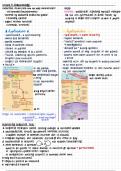
Lecture 4:Endocrinology
SIGNALING:how the
ENDOCRINE body communicates VOCAD:
via hormones & neurohormones Hormone:extracellular signaling molecule transpor
-
secreted by dedicated endocrine glands red vial circ. system & acts in distal tissues by
↳ pituitary, Adrenal binding a target cell'sreceptor to have a physic.
-organs mother functions response
↳ stomach, intestines
I
⑱ hyotrophilic ⑧ hydrophobic
-water-soluble, a lipid solubility -
lipid soluble, a water so ability
-
amino acid derivatives -
inyroid hormones
-peptide hormones -"Steroid"hormones-from cholestrol
-stored in secretion vesicles ↳
steroidogenesis
-
soluble in plasma
-
diffused "out"during synthesis
-cleared by proteases to bed active -protein-bound as they circulate in the plasma
-ractive:cleared by specific proteolitic -become more water-soluble & lostin urine to be
↓ active
enzymes (new structures
-
targets cell membrane receptors -modified win cells by enzymes to modify structure
* FASTER A to be more active
floating
around
in the plasma,
-
target intracellular receptors nucleus affect
in cell's -
so don't
need proteins,
NO ENTRY ing cell'stranscription
but phospholipid bilayer doesn't
diffuse in longer lasting effects
blood/plasma
=entry but slower onset
so cell membrane diffuse into
phospholipid bilayer
receptor
A big amplification
possible &
19.125
targetcell membrane receptor enzyme
complexy
· -
physiological,second messenger
19128
response cascade
regulating Endocrine FXS:
a. Negative Feedback control:sensing changes in controlled variable
b. Neuroendocrine reflexes can promote hormone secretion
↳s sudden increase in hormone secretion due to stimulus
c. circadian rhythms:diff. hormones secreted a diff. times of day
d. concentration ofreceptors #Of receptors (availability)
other hormonesa manow noter
e.
to function & optimale permissiveness
synergism:greater effecttogether
or
or antagonism:blocking receptors so hormone doesn't work
* may need to be activated
A lipophilic needs to be unbound
* inactivated & removed
, Lecture 5:Endocrine pancreas
·
regulating blood glucose by switching between stored forms and readily available forms
to maintain a relatively constantsupply ofnutrients
Anabolic building
protein carbohydrates triglyceride fat catabolic:breaking down
↓ S
12
forms
amino absorbable
glUCOSe
T, Monoglycerides body'smetabolic fuel
acids ofthe
most
BRAIN CAN
ONLY USE
↑ is stored in fat -
77%
FOR FUEL
hypoglycemia:low sugar hyperglycemia:a blood sugar
-
neuro problems
-
glUCOtOxiCity
-
cOMA ↳ retinopathies -
peripheral nerve damage
-
death ↳
poor kidney fxn 3 atherosclerosis
insulin:(pancreatic hormone) allows fuels to be
Speptide
stored appropriately reactions of Fuel metabolism
↳islets ofLangerhans (pancreatic endocrine cells)
B-cells make & Secrete insulin Glycogenesis:glucose- glycogen
hormone:hy drophilic glycogen being made
AlIOWS uptake ofglucose Glycogenolysis:glycogene glucose
glycogen breakdown
Gluconeogenesis:amino acid glucose
protein synthesis:amino acide protein
protein degradation:protein - amino acids
* alter the localization of
the transporter lipogenesis:fatty acide triglycerides
Protein GLUT4 in body tissues to enhance lipolysis:triglyceride - fatty acid
gIUCOse uptake GENESIS:to make
LYSIS:breakdown
Insulin Effects on:
carbs:↑ glucose uptake via GLUT4
↑ liver & skeletal glycogenesis promotes anabolic
liver & muscle & stops catabolic
x glycogenolysis
x liver gluconeogenesis
#At: glucose uptake in adipocytes for triglyceride
synthesis
↑ adipocyte triglyc synthesis
breakdown of
x lipids
·glut z insulin
=
independent
glut 4:insulin dependent protein:amino acid uptake into muscle & liver
↑ protein synth
Absorptive state:(after a meal breakdown of
x proteins
-
glucose is very present & acts as a major energy----------
SOUrCe insulin =d(X) in blood & become
Anabolic catabolic storage fuels
, Lecture 6:Endocrine pancreas * glucose-major regulator
Absorptive :
fed state -cells from pancreas secrete glucagon but a fatty acids & amino
·
anabolism in liver:a glycogen synthesis acids blood, also trigger
in
insulin is released ↑ glycogenolysis glucagon secretion a
post-absorptive:fasting state ↑ amino acid catabolism
CA+AbOliSm &gluconeogenesis (amino acid is glucosel
glucagon is released in fat:doesn't directly acton the adipose tissue
↓ triglyceride synthesis Post Absorptive Break-
insuline glucagon work together ↑ liPOLYSIS down
to keep blood glucose a homes in muscle:no direct effects on muscle ① glycogen in liver+
↓Creducedglucose uptake muscle
↑ protein degradation ② fatty acids as triglyc
in adipose
in brain,nothing really, butif peripheral muscle & protein
organs:good, brain:happy
Diabetes mellitus:a blood glucose level (sweet urinel
I
Type Idiabetes:no B-cells to produce insulin impaired 2) feedback:
-
younger age (autoimmunel ↑ glucagon-> catabolism
-insulin injections, exercise, dietto treat stored fuels
of
Type II diabetes:insulin receptors aren'tworking (resistance)
adulthood -
-
diet, exercise, mightneed insulin
insulin function:
-
enhance glucose uptake via Glu+4, so withoutit:
hyperglycemia doesn'timmediately effectthe brain
-
-liver:can uptake via GLUT2 butcan'tbe stored as glycogenstriglycerides & fatty liver
untreated diabetS:
metabolism:↑
·Carbohydrate blood glucose
-Excessive urination
-
Excessive Hunger
-
Excessive thirst
Lipid metabolism:& FATYACIdS be body is
weightloss breaking down proteine fatfor
-
-
Retoacids (by productused energy, who glycogen
sweetas fuel for brain)
breath
·protein metabolism:↑ amino acids
-weight loss
-
muscle degradation
, Brain:
puthniamn
Lecture 7:Hypothalamus -
Pituitary Axis
10:hormones ofhypothalamus, post pit, target organs, & effects
Is releasing & inhibiting hormones of hypothalamus
understand it feedback
11) key players in growth hormone axis
posterior pituitary:Neuro secretory Neuronal cell bodies menian
eminence
neuronormones in vesicles sent into blood (circ.) based posterior:directly
anterior:pituitary released from
on electrical signals
based on release gland hypothalamus
rasopressin + oxytocin (hydrophilic and inhibiting blood
into
BPCONtrol
↳* &permeability
vasoconstriction via arterities
distale collecting tubules via
FACTORS
kidney
↓DP
Vol
vasopressin neuron
of nephrons in ~
T
oxytocin:pair bonding & parent-offspring
↳ blood pressure ↑plasma
tising reflex child birth
Interines, milk ejection (mammary glands)
vasopressin
ysiOtrOpIC:pithitary nourishing
Anterior pituitary. A
app*
vasoconstriction
signal from hypothalamus - endocrine organ, passes signal finnibit/release hormones]
.
.neurons
-
I increaup
neuro secretory
Posterior Pit: (hydrophilic:faster response)
se in
Hypothalam e
↓
menence: use portal
system
Hormone
↓
I
PathWAY: Posterior pit
->
Ambrathalamus disorder ↓
(-) Hormone I
tocin
Releasel inhibit CRH ↓
Hormones
↓ Target organs
It portal system - - -
rid circulation
-> anterior pituitary zo disorder
tropic hormones. N
!pairbond
-
↓ effect
Hormone I ACTH ·regulate
hormone
secretion by another --------
↓
&
endocrine gland
-
target endocrine
grand order. Stim/maintain it's
targettissues
↓
Hormone 2 COrtiSOl
↳make big ger A
↓ Hypothalamus:integrator for neuronal input
I circulates/targetstress relief
↓
effect
- very important to
multiple systems
regulate
who competingnegative
feedback
SIGNALING:how the
ENDOCRINE body communicates VOCAD:
via hormones & neurohormones Hormone:extracellular signaling molecule transpor
-
secreted by dedicated endocrine glands red vial circ. system & acts in distal tissues by
↳ pituitary, Adrenal binding a target cell'sreceptor to have a physic.
-organs mother functions response
↳ stomach, intestines
I
⑱ hyotrophilic ⑧ hydrophobic
-water-soluble, a lipid solubility -
lipid soluble, a water so ability
-
amino acid derivatives -
inyroid hormones
-peptide hormones -"Steroid"hormones-from cholestrol
-stored in secretion vesicles ↳
steroidogenesis
-
soluble in plasma
-
diffused "out"during synthesis
-cleared by proteases to bed active -protein-bound as they circulate in the plasma
-ractive:cleared by specific proteolitic -become more water-soluble & lostin urine to be
↓ active
enzymes (new structures
-
targets cell membrane receptors -modified win cells by enzymes to modify structure
* FASTER A to be more active
floating
around
in the plasma,
-
target intracellular receptors nucleus affect
in cell's -
so don't
need proteins,
NO ENTRY ing cell'stranscription
but phospholipid bilayer doesn't
diffuse in longer lasting effects
blood/plasma
=entry but slower onset
so cell membrane diffuse into
phospholipid bilayer
receptor
A big amplification
possible &
19.125
targetcell membrane receptor enzyme
complexy
· -
physiological,second messenger
19128
response cascade
regulating Endocrine FXS:
a. Negative Feedback control:sensing changes in controlled variable
b. Neuroendocrine reflexes can promote hormone secretion
↳s sudden increase in hormone secretion due to stimulus
c. circadian rhythms:diff. hormones secreted a diff. times of day
d. concentration ofreceptors #Of receptors (availability)
other hormonesa manow noter
e.
to function & optimale permissiveness
synergism:greater effecttogether
or
or antagonism:blocking receptors so hormone doesn't work
* may need to be activated
A lipophilic needs to be unbound
* inactivated & removed
, Lecture 5:Endocrine pancreas
·
regulating blood glucose by switching between stored forms and readily available forms
to maintain a relatively constantsupply ofnutrients
Anabolic building
protein carbohydrates triglyceride fat catabolic:breaking down
↓ S
12
forms
amino absorbable
glUCOSe
T, Monoglycerides body'smetabolic fuel
acids ofthe
most
BRAIN CAN
ONLY USE
↑ is stored in fat -
77%
FOR FUEL
hypoglycemia:low sugar hyperglycemia:a blood sugar
-
neuro problems
-
glUCOtOxiCity
-
cOMA ↳ retinopathies -
peripheral nerve damage
-
death ↳
poor kidney fxn 3 atherosclerosis
insulin:(pancreatic hormone) allows fuels to be
Speptide
stored appropriately reactions of Fuel metabolism
↳islets ofLangerhans (pancreatic endocrine cells)
B-cells make & Secrete insulin Glycogenesis:glucose- glycogen
hormone:hy drophilic glycogen being made
AlIOWS uptake ofglucose Glycogenolysis:glycogene glucose
glycogen breakdown
Gluconeogenesis:amino acid glucose
protein synthesis:amino acide protein
protein degradation:protein - amino acids
* alter the localization of
the transporter lipogenesis:fatty acide triglycerides
Protein GLUT4 in body tissues to enhance lipolysis:triglyceride - fatty acid
gIUCOse uptake GENESIS:to make
LYSIS:breakdown
Insulin Effects on:
carbs:↑ glucose uptake via GLUT4
↑ liver & skeletal glycogenesis promotes anabolic
liver & muscle & stops catabolic
x glycogenolysis
x liver gluconeogenesis
#At: glucose uptake in adipocytes for triglyceride
synthesis
↑ adipocyte triglyc synthesis
breakdown of
x lipids
·glut z insulin
=
independent
glut 4:insulin dependent protein:amino acid uptake into muscle & liver
↑ protein synth
Absorptive state:(after a meal breakdown of
x proteins
-
glucose is very present & acts as a major energy----------
SOUrCe insulin =d(X) in blood & become
Anabolic catabolic storage fuels
, Lecture 6:Endocrine pancreas * glucose-major regulator
Absorptive :
fed state -cells from pancreas secrete glucagon but a fatty acids & amino
·
anabolism in liver:a glycogen synthesis acids blood, also trigger
in
insulin is released ↑ glycogenolysis glucagon secretion a
post-absorptive:fasting state ↑ amino acid catabolism
CA+AbOliSm &gluconeogenesis (amino acid is glucosel
glucagon is released in fat:doesn't directly acton the adipose tissue
↓ triglyceride synthesis Post Absorptive Break-
insuline glucagon work together ↑ liPOLYSIS down
to keep blood glucose a homes in muscle:no direct effects on muscle ① glycogen in liver+
↓Creducedglucose uptake muscle
↑ protein degradation ② fatty acids as triglyc
in adipose
in brain,nothing really, butif peripheral muscle & protein
organs:good, brain:happy
Diabetes mellitus:a blood glucose level (sweet urinel
I
Type Idiabetes:no B-cells to produce insulin impaired 2) feedback:
-
younger age (autoimmunel ↑ glucagon-> catabolism
-insulin injections, exercise, dietto treat stored fuels
of
Type II diabetes:insulin receptors aren'tworking (resistance)
adulthood -
-
diet, exercise, mightneed insulin
insulin function:
-
enhance glucose uptake via Glu+4, so withoutit:
hyperglycemia doesn'timmediately effectthe brain
-
-liver:can uptake via GLUT2 butcan'tbe stored as glycogenstriglycerides & fatty liver
untreated diabetS:
metabolism:↑
·Carbohydrate blood glucose
-Excessive urination
-
Excessive Hunger
-
Excessive thirst
Lipid metabolism:& FATYACIdS be body is
weightloss breaking down proteine fatfor
-
-
Retoacids (by productused energy, who glycogen
sweetas fuel for brain)
breath
·protein metabolism:↑ amino acids
-weight loss
-
muscle degradation
, Brain:
puthniamn
Lecture 7:Hypothalamus -
Pituitary Axis
10:hormones ofhypothalamus, post pit, target organs, & effects
Is releasing & inhibiting hormones of hypothalamus
understand it feedback
11) key players in growth hormone axis
posterior pituitary:Neuro secretory Neuronal cell bodies menian
eminence
neuronormones in vesicles sent into blood (circ.) based posterior:directly
anterior:pituitary released from
on electrical signals
based on release gland hypothalamus
rasopressin + oxytocin (hydrophilic and inhibiting blood
into
BPCONtrol
↳* &permeability
vasoconstriction via arterities
distale collecting tubules via
FACTORS
kidney
↓DP
Vol
vasopressin neuron
of nephrons in ~
T
oxytocin:pair bonding & parent-offspring
↳ blood pressure ↑plasma
tising reflex child birth
Interines, milk ejection (mammary glands)
vasopressin
ysiOtrOpIC:pithitary nourishing
Anterior pituitary. A
app*
vasoconstriction
signal from hypothalamus - endocrine organ, passes signal finnibit/release hormones]
.
.neurons
-
I increaup
neuro secretory
Posterior Pit: (hydrophilic:faster response)
se in
Hypothalam e
↓
menence: use portal
system
Hormone
↓
I
PathWAY: Posterior pit
->
Ambrathalamus disorder ↓
(-) Hormone I
tocin
Releasel inhibit CRH ↓
Hormones
↓ Target organs
It portal system - - -
rid circulation
-> anterior pituitary zo disorder
tropic hormones. N
!pairbond
-
↓ effect
Hormone I ACTH ·regulate
hormone
secretion by another --------
↓
&
endocrine gland
-
target endocrine
grand order. Stim/maintain it's
targettissues
↓
Hormone 2 COrtiSOl
↳make big ger A
↓ Hypothalamus:integrator for neuronal input
I circulates/targetstress relief
↓
effect
- very important to
multiple systems
regulate
who competingnegative
feedback