
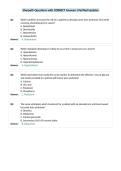
Sherpath Questions with CORRECT Answers (Verified Update)
Q1: Which condition increases the risk for a patient to develop tumor lysis syndrome (TLS) while
receiving chemotherapy for cancer?
A. Dehydration
B. Diverticulitis
C. Hypertension
D. Osteoarthritis
Answer: A. Dehydration
Q2: Which metabolic disturbance is likely to occur first in tumor lysis syn- drome?
A. Hyperkalemia
B. Hypocalcemia
C. Hyperuricemia
D. Hyperphosphatemia
Answer: A. Hyperkalemia
Q3: Which electrolyte level would the nurse monitor to determine the effective- ness of glucose
and insulin provided to a patient with tumor lysis syndrome?
A. Calcium
B. Uric acid
C. Potassium
D. Phosphorus
Answer: C. Potassium
Q4: The nurse anticipates which treatment for a patient with an elevated uric acid level caused
by tumor lysis syndrome?
A. Diuretics
B. Allopurinol
C. Calcium gluconate
D. Intravenous (IV) 0.9% normal saline
Answer: B. Allopurinol


