
NICU Exam Questions and Answers with
Verified Solutions | Latest Updated 2026
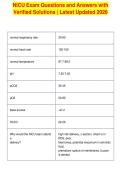
normal respiratory rate 30-60
normal heart rate 120-160
normal temperature 97.7-99.5
pH 7.35-7.45
pCO2 35-45
pO2 50-80
base excess +2/-2
HCO3 22-26
Why would the NICU team attend high risk delivery, c-section, infant is in
a RDS, poor
delivery? fetal tones, potential meconium in amniotic
fluid,
premature rupture of membranes, buzzer
is alerted
,Complications of infants born to LGA, poor feeders, difficulty maintaing
diabetic mothers glucose
levels, hypoglycemia, RDS
signs and symptoms of irritability, tremors, jittery, high pitched cry,
hypoglycemia lethragy,
cyanosis, apnea, bradycardia, poor
feeding/suck,
hypothermia
why is magnesium sulfate used for treat pre-eclampsia and is sometimes used
in when in
the expectant mother? preterm labor
what are potential side effects for drowsyness, lethragy, poor muscle tones,
the newborn of a mother on mag? poor
feeding/suck, shallow respirations, mag
toxicity
potential complications associated maintaining temperatures, hypoglycemia,
with SGA infants poor
feeding
consequences of cold stress increased metabolic rate (leads to
hypoglycemia
and RDS)
non-shivering thermogenesis (NST) - leads
to
metabolic acidosis and jaundice
vasoconstriction (pale, mottled skin)
, signs of respiratory distress in the tachypnea, retractions, head bobbing,
newborn cyanosis,
grunting, nasal flaring
signs and symptoms of a asymetrical breath sounds/absent breath
pneumothorax and tension sounds,
pneumothorax quick decompensation, bradycardia,
desaturation
what supplies are needed for a betadine, needle aspiration kit, stop-cock,
needle aspiration? 23
guage butterfly needle, two 10-20 mL
syringes
steps of needle aspiration chest is aseptically prepared (betadine),
equipment
is connected (syringe, stop-cock,
needle/angiocath), needle is then inserted
into the
third intercostal space in the antrior axillary
line,
slight pop may be felt, air is withdrawn into
the
syringe and evacuated into the room by
turning the
stopcock
Verified Solutions | Latest Updated 2026
normal respiratory rate 30-60
normal heart rate 120-160
normal temperature 97.7-99.5
pH 7.35-7.45
pCO2 35-45
pO2 50-80
base excess +2/-2
HCO3 22-26
Why would the NICU team attend high risk delivery, c-section, infant is in
a RDS, poor
delivery? fetal tones, potential meconium in amniotic
fluid,
premature rupture of membranes, buzzer
is alerted
,Complications of infants born to LGA, poor feeders, difficulty maintaing
diabetic mothers glucose
levels, hypoglycemia, RDS
signs and symptoms of irritability, tremors, jittery, high pitched cry,
hypoglycemia lethragy,
cyanosis, apnea, bradycardia, poor
feeding/suck,
hypothermia
why is magnesium sulfate used for treat pre-eclampsia and is sometimes used
in when in
the expectant mother? preterm labor
what are potential side effects for drowsyness, lethragy, poor muscle tones,
the newborn of a mother on mag? poor
feeding/suck, shallow respirations, mag
toxicity
potential complications associated maintaining temperatures, hypoglycemia,
with SGA infants poor
feeding
consequences of cold stress increased metabolic rate (leads to
hypoglycemia
and RDS)
non-shivering thermogenesis (NST) - leads
to
metabolic acidosis and jaundice
vasoconstriction (pale, mottled skin)
, signs of respiratory distress in the tachypnea, retractions, head bobbing,
newborn cyanosis,
grunting, nasal flaring
signs and symptoms of a asymetrical breath sounds/absent breath
pneumothorax and tension sounds,
pneumothorax quick decompensation, bradycardia,
desaturation
what supplies are needed for a betadine, needle aspiration kit, stop-cock,
needle aspiration? 23
guage butterfly needle, two 10-20 mL
syringes
steps of needle aspiration chest is aseptically prepared (betadine),
equipment
is connected (syringe, stop-cock,
needle/angiocath), needle is then inserted
into the
third intercostal space in the antrior axillary
line,
slight pop may be felt, air is withdrawn into
the
syringe and evacuated into the room by
turning the
stopcock


