
NASM CES Study Guide Chapter 1 Exam
Questions and Answers with Verified
Solutions | Latest Updated 2026
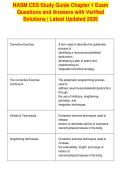
Corrective Exercise A term used to describe the systematic
process of
identifying a neuromusculoskeletal
dysfunction,
developing a plan of action and
implementing an
integrated corrective strategy.
The Corrective Exercise The systematic programming process
Continuum used to
address neuromusculoskeletal dysfunction
through
the use of inhibitory, lengthening,
activation, and
integration techniques.
Inhibitory Techniques Corrective exercise techniques used to
release
tension or decrease activity of overactive
neuromyofascial tissues in the body.
lengthening techniques Corrective exercise techniques used to
increase
the extensibility, length, and range of
motion of
neuromyofascial tissues in the body.
, Activation Techniques Corrective exercise techniques used to
reeducate
or increase activation of underactive
tissues.
Integration Techniques Corrective exercise techniques used to
retain the
collective synergistic function of all
muscles
through functionally progressive
movements.
1985 (Obesity) The International Obesity Task Force
deemed the
prevalence of obesity an epidemic.
Percentage of obese people Approximately 33.8% of adults are
estimated to be
obese.
Percentage of overweight 18% of today's adolescents and teenagers
adolescents are
considered overweight.
Musculoskeletal pain More common now than 40 years ago.
People are
less active and are no longer spending as
much of
their free time engaged in physical activity
producing more inactive and nonfunctional
people.
Questions and Answers with Verified
Solutions | Latest Updated 2026
Corrective Exercise A term used to describe the systematic
process of
identifying a neuromusculoskeletal
dysfunction,
developing a plan of action and
implementing an
integrated corrective strategy.
The Corrective Exercise The systematic programming process
Continuum used to
address neuromusculoskeletal dysfunction
through
the use of inhibitory, lengthening,
activation, and
integration techniques.
Inhibitory Techniques Corrective exercise techniques used to
release
tension or decrease activity of overactive
neuromyofascial tissues in the body.
lengthening techniques Corrective exercise techniques used to
increase
the extensibility, length, and range of
motion of
neuromyofascial tissues in the body.
, Activation Techniques Corrective exercise techniques used to
reeducate
or increase activation of underactive
tissues.
Integration Techniques Corrective exercise techniques used to
retain the
collective synergistic function of all
muscles
through functionally progressive
movements.
1985 (Obesity) The International Obesity Task Force
deemed the
prevalence of obesity an epidemic.
Percentage of obese people Approximately 33.8% of adults are
estimated to be
obese.
Percentage of overweight 18% of today's adolescents and teenagers
adolescents are
considered overweight.
Musculoskeletal pain More common now than 40 years ago.
People are
less active and are no longer spending as
much of
their free time engaged in physical activity
producing more inactive and nonfunctional
people.


