

classmerit.com — The Marketplace to Buy and Sell Study Materials
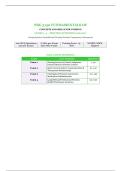
NSG 3130 FUNDAMENTALS OF
CONCEPTS AND SKILLS FOR NURSING
EXAMS 1–4 — PRACTICE QUESTIONS 2026/2027
Comprehensive Foundational Nursing Practice Competency Assessment
200 MCQ Questions 75 Min per Exam Passing Score: 75– NCSBN CJMM
(50 per Exam) (300 Min Total) 80% Aligned
Exam Content Distribution
Exam Core Domains Questions
Exam 1 Nursing Process & Clinical Judgment; 1–50
Patient Safety & Infection Control
Exam 2 Basic Care & Comfort; Communication & 51–100
Therapeutic Relationships
Exam 3 Vital Signs & Physical Assessment; 101–150
Medication Administration
Exam 4 Legal/Ethical/Professional Practice; 151–200
Health Promotion; Scenarios
Downloaded by: Want to earn $1,500
Distribution of this document is illegal extra per year?
, classmerit.com — The Marketplace to Buy and Sell Study Materials
EXAM 1 (Questions 1–50)
Part A: Nursing Process & Clinical Judgment (Q1–Q25)
1. A nurse is completing the admission assessment of a 68-year-old patient admitted for
heart failure. Which of the following findings should the nurse recognize as the most
significant cue requiring immediate follow-up?
A. The patient reports occasional fatigue when climbing stairs
B. The patient has 2+ pitting edema in both lower extremities and gained 4 kg in one week
C. The patient's appetite has decreased slightly over the past few days
D. The patient reports sleeping with two pillows instead of one
Correct Answer: B. The patient has 2+ pitting edema in both lower extremities and
gained 4 kg in one week
Rationale: Rapid weight gain (greater than 1–2 kg in a week) combined with bilateral pitting
edema is a hallmark sign of fluid retention in heart failure and requires immediate intervention.
This finding indicates worsening volume overload and potential decompensation. Fatigue (A) and
mild appetite changes (C) are nonspecific. Sleeping with two pillows (D) may suggest mild
orthopnea but is less urgent than overt fluid retention.
2. Which of the following assessment findings in a postoperative patient should the
nurse identify as an early cue of potential hemorrhage?
A. Heart rate increase from 78 to 102 bpm over 1 hour with a slight drop in blood pressure
B. Blood pressure of 110/70 mmHg, pulse 88 bpm, and dry surgical dressing
C. Temperature of 37.8°C (100°F) and a small amount of serous drainage on the dressing
D. Urinary output of 30 mL/hr and patient reports mild incisional pain
Correct Answer: A. Heart rate increase from 78 to 102 bpm over 1 hour with a slight
drop in blood pressure
Rationale: Tachycardia with a slight decrease in blood pressure is an early compensatory sign of
hypovolemia from hemorrhage. The body attempts to maintain cardiac output through increased
heart rate before hypotension becomes severe. A normal BP and dry dressing (B) are reassuring.
Low-grade temperature and serous drainage (C) are expected postoperative findings. Urine output
of 30 mL/hr (D) is within acceptable limits, and mild pain is anticipated.
3. A nurse is performing a respiratory assessment on a patient with pneumonia. Which
finding is most indicative of impaired gas exchange that the nurse should report to the
provider immediately?
A. Crackles auscultated in the bilateral lung bases
B. SpO2 of 88% on room air with new-onset confusion
C. Respiratory rate of 22 breaths per minute
D. Productive cough with yellow-green sputum
Correct Answer: B. SpO2 of 88% on room air with new-onset confusion
Rationale: An oxygen saturation below 90% accompanied by new-onset confusion indicates
significant hypoxemia and impaired gas exchange. Confusion is a sign of cerebral hypoxia requiring
immediate intervention. Crackles (A) are an expected finding in pneumonia. A respiratory rate of 22
(C) is mildly elevated but does not alone indicate imminent danger. Productive cough with purulent
sputum (D) is a typical symptom but not emergent.
4. A nurse is reviewing the laboratory results of a patient receiving heparin therapy.
Which result should the nurse recognize as a critical value that must be reported
immediately?
A. Activated partial thromboplastin time (aPTT) of 45 seconds
B. Hemoglobin of 11.2 g/dL
C. White blood cell count of 9,800/mm³
D. Platelet count of 48,000/mm³
Correct Answer: D. Platelet count of 48,000/mm³
NSG
Downloaded by:3130 Practice Exams 1–4 — Page 1
Want to earn $1,500
Distribution of this document is illegal extra per year?
, classmerit.com — The Marketplace to Buy and Sell Study Materials
Rationale: A platelet count of 48,000/mm³ is critically low and suggests heparin-induced
thrombocytopenia (HIT), a life-threatening complication of heparin therapy that requires
immediate discontinuation of the drug. An aPTT of 45 seconds (A) is within the therapeutic range for
heparin (typically 1.5–2.5 times control). A hemoglobin of 11.2 (B) is mildly low but not critical. A
WBC of 9,800 (C) is within normal limits.
5. A nurse is assessing a patient who is 2 days post-abdominal surgery. Which of the
following findings should the nurse recognize as an abnormal cue suggesting a potential
complication?
A. The patient reports passing flatus
B. The patient's abdomen is soft and nontender with bowel sounds present in all four quadrants
C. The patient has a pain rating of 4 out of 10 that is controlled with prescribed analgesics
D. The patient has not had a bowel movement since surgery and reports abdominal distension
with absent bowel sounds
Correct Answer: D. The patient has not had a bowel movement since surgery and
reports abdominal distension with absent bowel sounds
Rationale: Absent bowel sounds combined with abdominal distension and no bowel movement 2
days post-surgery suggests a paralytic ileus or possible mechanical bowel obstruction, which
requires prompt evaluation. Passing flatus (A) indicates returning bowel function. A soft, nontender
abdomen with bowel sounds (B) is a normal finding. Mild pain controlled by analgesics (C) is
expected postoperatively.
6. A nurse is caring for a patient with chronic kidney disease (CKD). The patient's most
recent laboratory results are: BUN 42 mg/dL, creatinine 4.8 mg/dL, potassium 6.2
mEq/L, and calcium 7.8 mg/dL. The nurse should analyze these results and identify
which pathophysiologic process as the primary concern?
A. Fluid volume deficit due to inadequate oral intake
B. Hyperkalemia with risk of life-threatening cardiac dysrhythmias
C. Acute infection as evidenced by elevated BUN
D. Electrolyte imbalance caused by excessive calcium intake
Correct Answer: B. Hyperkalemia with risk of life-threatening cardiac dysrhythmias
Rationale: The potassium level of 6.2 mEq/L is critically elevated (normal 3.5–5.0 mEq/L) and
places the patient at high risk for fatal cardiac dysrhythmias. In CKD, the kidneys cannot excrete
potassium effectively, leading to hyperkalemia. The elevated BUN and creatinine reflect worsening
renal function but are not the most immediate threat. Fluid volume deficit (A) is not supported by the
data. Elevated BUN (C) reflects renal impairment, not infection. Hypocalcemia, not hypercalcemia,
is present (D).
7. A nurse is caring for a patient with type 2 diabetes mellitus who reports feeling shaky,
sweaty, and dizzy. The patient's blood glucose is 58 mg/dL. The nurse analyzes the
situation and understands that which pathophysiologic mechanism is responsible for
these symptoms?
A. Hypoglycemia triggering the sympathetic nervous system response
B. Hyperglycemia causing osmotic diuresis and dehydration
C. Diabetic ketoacidosis producing metabolic acidosis
D. Insulin resistance leading to cellular glucose starvation
Correct Answer: A. Hypoglycemia triggering the sympathetic nervous system response
Rationale: A blood glucose of 58 mg/dL is below normal (70–100 mg/dL fasting) and triggers the
sympathetic nervous system, causing shakiness, sweating, and dizziness (adrenergic symptoms).
This is the body's compensatory response to hypoglycemia, releasing epinephrine to stimulate
glycogenolysis. Hyperglycemia (B) causes polyuria and polydipsia, not shakiness. DKA (C) produces
Kussmaul respirations and fruity breath, not these symptoms. Insulin resistance (D) causes chronic
hyperglycemia, not acute hypoglycemia.
8. A nurse is reviewing the chart of a patient with heart failure who is receiving
furosemide (Lasix). The nurse notes the following assessment data: blood pressure
98/58 mmHg, heart rate 96 bpm, dry oral mucous membranes, poor skin turgor, and
24-hour urine output of 2,800 mL. The nurse should analyze that the patient is most
likely experiencing which condition?
NSG
Downloaded by:3130 Practice Exams 1–4 — Page 2
Want to earn $1,500
Distribution of this document is illegal extra per year?
, classmerit.com — The Marketplace to Buy and Sell Study Materials
A. Fluid volume excess related to heart failure
B. Renal failure related to decreased cardiac output
C. Fluid volume deficit secondary to diuretic therapy
D. Electrolyte imbalance unrelated to medication therapy
Correct Answer: C. Fluid volume deficit secondary to diuretic therapy
Rationale: The combination of low blood pressure, tachycardia, dry mucous membranes, poor
skin turgor, and high urine output (2,800 mL) are classic signs of fluid volume deficit caused by
excessive diuresis from furosemide. Furosemide promotes sodium and water excretion, and without
adequate fluid replacement, hypovolemia occurs. Fluid volume excess (A) would present with
edema, weight gain, and crackles. Renal failure (B) would present with oliguria, not polyuria.
9. A nurse is assessing a patient 24 hours after a total hip replacement. The patient
reports severe pain in the calf of the operative leg rated 8 out of 10 that is unrelieved by
position changes. The nurse notes swelling, warmth, and erythema of the affected calf.
The nurse analyzes these findings as most likely indicating which condition?
A. Normal postoperative inflammation at the surgical site
B. Superficial wound infection at the incision site
C. Muscle spasm from improper positioning during surgery
D. Deep vein thrombosis (DVT) requiring immediate intervention
Correct Answer: D. Deep vein thrombosis (DVT) requiring immediate intervention
Rationale: Severe calf pain, unilateral swelling, warmth, and erythema are classic signs of DVT
(Virchow's triad risk factors include venous stasis from immobility after surgery). This is a medical
emergency because a thrombus can dislodge and cause a pulmonary embolism. Normal
postoperative inflammation (A) would be near the surgical site, not the calf. Muscle spasm (C)
would not cause warmth and erythema. Wound infection (B) would present at the incision, not the
calf.
10. A nurse is caring for an older adult patient who has been increasingly confused,
lethargic, and has a decreased appetite over the past 3 days. The nurse reviews the
medication administration record and notes the patient was started on
diphenhydramine (Benadryl) 50 mg every 6 hours PRN for insomnia 4 days ago. The
nurse analyzes that the patient's change in mental status is most likely related to which
mechanism?
A. Anticholinergic effects of diphenhydramine causing delirium in an older adult
B. Progression of an underlying neurodegenerative disease
C. Normal age-related cognitive decline
D. Dehydration from decreased oral intake unrelated to medications
Correct Answer: A. Anticholinergic effects of diphenhydramine causing delirium in an
older adult
Rationale: Diphenhydramine has strong anticholinergic properties that cross the blood-brain
barrier, causing confusion, delirium, urinary retention, dry mouth, and constipation—especially in
older adults who are more susceptible due to decreased cholinergic neurotransmission. The
temporal relationship between starting the medication and symptom onset is a key clue. While
neurodegeneration (B) develops gradually, not acutely over days. Age-related cognitive decline (C)
does not present as acute confusion. Dehydration (D) may contribute but the primary cause is
medication-induced delirium.
11. A nurse receives a change-of-shift report on four patients. Which patient should the
nurse assess FIRST?
A. A patient with type 2 diabetes whose fasting blood glucose is 178 mg/dL
B. A patient with chronic obstructive pulmonary disease (COPD) who has an SpO2 of 85% and is
using accessory muscles to breathe
C. A patient who is 1 day post-cholecystectomy and reports abdominal pain rated 4 out of 10
D. A patient with a urinary tract infection who has a temperature of 38.2°C (100.8°F)
Correct Answer: B. A patient with COPD who has an SpO2 of 85% and is using accessory
muscles to breathe
Rationale: Using the ABC (Airway, Breathing, Circulation) prioritization framework, the patient
with an oxygen saturation of 85% and accessory muscle use is experiencing acute respiratory
NSG
Downloaded by:3130 Practice Exams 1–4 — Page 3
Want to earn $1,500
Distribution of this document is illegal extra per year?
NSG 3130 FUNDAMENTALS OF
CONCEPTS AND SKILLS FOR NURSING
EXAMS 1–4 — PRACTICE QUESTIONS 2026/2027
Comprehensive Foundational Nursing Practice Competency Assessment
200 MCQ Questions 75 Min per Exam Passing Score: 75– NCSBN CJMM
(50 per Exam) (300 Min Total) 80% Aligned
Exam Content Distribution
Exam Core Domains Questions
Exam 1 Nursing Process & Clinical Judgment; 1–50
Patient Safety & Infection Control
Exam 2 Basic Care & Comfort; Communication & 51–100
Therapeutic Relationships
Exam 3 Vital Signs & Physical Assessment; 101–150
Medication Administration
Exam 4 Legal/Ethical/Professional Practice; 151–200
Health Promotion; Scenarios
Downloaded by: Want to earn $1,500
Distribution of this document is illegal extra per year?
, classmerit.com — The Marketplace to Buy and Sell Study Materials
EXAM 1 (Questions 1–50)
Part A: Nursing Process & Clinical Judgment (Q1–Q25)
1. A nurse is completing the admission assessment of a 68-year-old patient admitted for
heart failure. Which of the following findings should the nurse recognize as the most
significant cue requiring immediate follow-up?
A. The patient reports occasional fatigue when climbing stairs
B. The patient has 2+ pitting edema in both lower extremities and gained 4 kg in one week
C. The patient's appetite has decreased slightly over the past few days
D. The patient reports sleeping with two pillows instead of one
Correct Answer: B. The patient has 2+ pitting edema in both lower extremities and
gained 4 kg in one week
Rationale: Rapid weight gain (greater than 1–2 kg in a week) combined with bilateral pitting
edema is a hallmark sign of fluid retention in heart failure and requires immediate intervention.
This finding indicates worsening volume overload and potential decompensation. Fatigue (A) and
mild appetite changes (C) are nonspecific. Sleeping with two pillows (D) may suggest mild
orthopnea but is less urgent than overt fluid retention.
2. Which of the following assessment findings in a postoperative patient should the
nurse identify as an early cue of potential hemorrhage?
A. Heart rate increase from 78 to 102 bpm over 1 hour with a slight drop in blood pressure
B. Blood pressure of 110/70 mmHg, pulse 88 bpm, and dry surgical dressing
C. Temperature of 37.8°C (100°F) and a small amount of serous drainage on the dressing
D. Urinary output of 30 mL/hr and patient reports mild incisional pain
Correct Answer: A. Heart rate increase from 78 to 102 bpm over 1 hour with a slight
drop in blood pressure
Rationale: Tachycardia with a slight decrease in blood pressure is an early compensatory sign of
hypovolemia from hemorrhage. The body attempts to maintain cardiac output through increased
heart rate before hypotension becomes severe. A normal BP and dry dressing (B) are reassuring.
Low-grade temperature and serous drainage (C) are expected postoperative findings. Urine output
of 30 mL/hr (D) is within acceptable limits, and mild pain is anticipated.
3. A nurse is performing a respiratory assessment on a patient with pneumonia. Which
finding is most indicative of impaired gas exchange that the nurse should report to the
provider immediately?
A. Crackles auscultated in the bilateral lung bases
B. SpO2 of 88% on room air with new-onset confusion
C. Respiratory rate of 22 breaths per minute
D. Productive cough with yellow-green sputum
Correct Answer: B. SpO2 of 88% on room air with new-onset confusion
Rationale: An oxygen saturation below 90% accompanied by new-onset confusion indicates
significant hypoxemia and impaired gas exchange. Confusion is a sign of cerebral hypoxia requiring
immediate intervention. Crackles (A) are an expected finding in pneumonia. A respiratory rate of 22
(C) is mildly elevated but does not alone indicate imminent danger. Productive cough with purulent
sputum (D) is a typical symptom but not emergent.
4. A nurse is reviewing the laboratory results of a patient receiving heparin therapy.
Which result should the nurse recognize as a critical value that must be reported
immediately?
A. Activated partial thromboplastin time (aPTT) of 45 seconds
B. Hemoglobin of 11.2 g/dL
C. White blood cell count of 9,800/mm³
D. Platelet count of 48,000/mm³
Correct Answer: D. Platelet count of 48,000/mm³
NSG
Downloaded by:3130 Practice Exams 1–4 — Page 1
Want to earn $1,500
Distribution of this document is illegal extra per year?
, classmerit.com — The Marketplace to Buy and Sell Study Materials
Rationale: A platelet count of 48,000/mm³ is critically low and suggests heparin-induced
thrombocytopenia (HIT), a life-threatening complication of heparin therapy that requires
immediate discontinuation of the drug. An aPTT of 45 seconds (A) is within the therapeutic range for
heparin (typically 1.5–2.5 times control). A hemoglobin of 11.2 (B) is mildly low but not critical. A
WBC of 9,800 (C) is within normal limits.
5. A nurse is assessing a patient who is 2 days post-abdominal surgery. Which of the
following findings should the nurse recognize as an abnormal cue suggesting a potential
complication?
A. The patient reports passing flatus
B. The patient's abdomen is soft and nontender with bowel sounds present in all four quadrants
C. The patient has a pain rating of 4 out of 10 that is controlled with prescribed analgesics
D. The patient has not had a bowel movement since surgery and reports abdominal distension
with absent bowel sounds
Correct Answer: D. The patient has not had a bowel movement since surgery and
reports abdominal distension with absent bowel sounds
Rationale: Absent bowel sounds combined with abdominal distension and no bowel movement 2
days post-surgery suggests a paralytic ileus or possible mechanical bowel obstruction, which
requires prompt evaluation. Passing flatus (A) indicates returning bowel function. A soft, nontender
abdomen with bowel sounds (B) is a normal finding. Mild pain controlled by analgesics (C) is
expected postoperatively.
6. A nurse is caring for a patient with chronic kidney disease (CKD). The patient's most
recent laboratory results are: BUN 42 mg/dL, creatinine 4.8 mg/dL, potassium 6.2
mEq/L, and calcium 7.8 mg/dL. The nurse should analyze these results and identify
which pathophysiologic process as the primary concern?
A. Fluid volume deficit due to inadequate oral intake
B. Hyperkalemia with risk of life-threatening cardiac dysrhythmias
C. Acute infection as evidenced by elevated BUN
D. Electrolyte imbalance caused by excessive calcium intake
Correct Answer: B. Hyperkalemia with risk of life-threatening cardiac dysrhythmias
Rationale: The potassium level of 6.2 mEq/L is critically elevated (normal 3.5–5.0 mEq/L) and
places the patient at high risk for fatal cardiac dysrhythmias. In CKD, the kidneys cannot excrete
potassium effectively, leading to hyperkalemia. The elevated BUN and creatinine reflect worsening
renal function but are not the most immediate threat. Fluid volume deficit (A) is not supported by the
data. Elevated BUN (C) reflects renal impairment, not infection. Hypocalcemia, not hypercalcemia,
is present (D).
7. A nurse is caring for a patient with type 2 diabetes mellitus who reports feeling shaky,
sweaty, and dizzy. The patient's blood glucose is 58 mg/dL. The nurse analyzes the
situation and understands that which pathophysiologic mechanism is responsible for
these symptoms?
A. Hypoglycemia triggering the sympathetic nervous system response
B. Hyperglycemia causing osmotic diuresis and dehydration
C. Diabetic ketoacidosis producing metabolic acidosis
D. Insulin resistance leading to cellular glucose starvation
Correct Answer: A. Hypoglycemia triggering the sympathetic nervous system response
Rationale: A blood glucose of 58 mg/dL is below normal (70–100 mg/dL fasting) and triggers the
sympathetic nervous system, causing shakiness, sweating, and dizziness (adrenergic symptoms).
This is the body's compensatory response to hypoglycemia, releasing epinephrine to stimulate
glycogenolysis. Hyperglycemia (B) causes polyuria and polydipsia, not shakiness. DKA (C) produces
Kussmaul respirations and fruity breath, not these symptoms. Insulin resistance (D) causes chronic
hyperglycemia, not acute hypoglycemia.
8. A nurse is reviewing the chart of a patient with heart failure who is receiving
furosemide (Lasix). The nurse notes the following assessment data: blood pressure
98/58 mmHg, heart rate 96 bpm, dry oral mucous membranes, poor skin turgor, and
24-hour urine output of 2,800 mL. The nurse should analyze that the patient is most
likely experiencing which condition?
NSG
Downloaded by:3130 Practice Exams 1–4 — Page 2
Want to earn $1,500
Distribution of this document is illegal extra per year?
, classmerit.com — The Marketplace to Buy and Sell Study Materials
A. Fluid volume excess related to heart failure
B. Renal failure related to decreased cardiac output
C. Fluid volume deficit secondary to diuretic therapy
D. Electrolyte imbalance unrelated to medication therapy
Correct Answer: C. Fluid volume deficit secondary to diuretic therapy
Rationale: The combination of low blood pressure, tachycardia, dry mucous membranes, poor
skin turgor, and high urine output (2,800 mL) are classic signs of fluid volume deficit caused by
excessive diuresis from furosemide. Furosemide promotes sodium and water excretion, and without
adequate fluid replacement, hypovolemia occurs. Fluid volume excess (A) would present with
edema, weight gain, and crackles. Renal failure (B) would present with oliguria, not polyuria.
9. A nurse is assessing a patient 24 hours after a total hip replacement. The patient
reports severe pain in the calf of the operative leg rated 8 out of 10 that is unrelieved by
position changes. The nurse notes swelling, warmth, and erythema of the affected calf.
The nurse analyzes these findings as most likely indicating which condition?
A. Normal postoperative inflammation at the surgical site
B. Superficial wound infection at the incision site
C. Muscle spasm from improper positioning during surgery
D. Deep vein thrombosis (DVT) requiring immediate intervention
Correct Answer: D. Deep vein thrombosis (DVT) requiring immediate intervention
Rationale: Severe calf pain, unilateral swelling, warmth, and erythema are classic signs of DVT
(Virchow's triad risk factors include venous stasis from immobility after surgery). This is a medical
emergency because a thrombus can dislodge and cause a pulmonary embolism. Normal
postoperative inflammation (A) would be near the surgical site, not the calf. Muscle spasm (C)
would not cause warmth and erythema. Wound infection (B) would present at the incision, not the
calf.
10. A nurse is caring for an older adult patient who has been increasingly confused,
lethargic, and has a decreased appetite over the past 3 days. The nurse reviews the
medication administration record and notes the patient was started on
diphenhydramine (Benadryl) 50 mg every 6 hours PRN for insomnia 4 days ago. The
nurse analyzes that the patient's change in mental status is most likely related to which
mechanism?
A. Anticholinergic effects of diphenhydramine causing delirium in an older adult
B. Progression of an underlying neurodegenerative disease
C. Normal age-related cognitive decline
D. Dehydration from decreased oral intake unrelated to medications
Correct Answer: A. Anticholinergic effects of diphenhydramine causing delirium in an
older adult
Rationale: Diphenhydramine has strong anticholinergic properties that cross the blood-brain
barrier, causing confusion, delirium, urinary retention, dry mouth, and constipation—especially in
older adults who are more susceptible due to decreased cholinergic neurotransmission. The
temporal relationship between starting the medication and symptom onset is a key clue. While
neurodegeneration (B) develops gradually, not acutely over days. Age-related cognitive decline (C)
does not present as acute confusion. Dehydration (D) may contribute but the primary cause is
medication-induced delirium.
11. A nurse receives a change-of-shift report on four patients. Which patient should the
nurse assess FIRST?
A. A patient with type 2 diabetes whose fasting blood glucose is 178 mg/dL
B. A patient with chronic obstructive pulmonary disease (COPD) who has an SpO2 of 85% and is
using accessory muscles to breathe
C. A patient who is 1 day post-cholecystectomy and reports abdominal pain rated 4 out of 10
D. A patient with a urinary tract infection who has a temperature of 38.2°C (100.8°F)
Correct Answer: B. A patient with COPD who has an SpO2 of 85% and is using accessory
muscles to breathe
Rationale: Using the ABC (Airway, Breathing, Circulation) prioritization framework, the patient
with an oxygen saturation of 85% and accessory muscle use is experiencing acute respiratory
NSG
Downloaded by:3130 Practice Exams 1–4 — Page 3
Want to earn $1,500
Distribution of this document is illegal extra per year?


