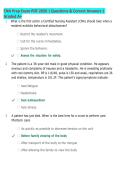
CNA Prep Exam PDF 2026 | Questions & Correct Answers |
Graded A+
1. What is the first action a Certified Nursing Assistant (CNA) should take when a
resident exhibits behavioral disturbances?
Restrict the resident's movement.
Call for the nurse immediately.
Ignore the behavior.
Assess the situation for safety.
2. The patient is a 36-year-old male in good physical condition. He appears
anxious and complains of nausea and a headache. He is sweating profusely
with cool clammy skin. BP is 116/48, pulse is 150 and weak, respirations are 36
and shallow, temperature is 101.2F. This patient's signs/symptoms indicate:
heat fatigue
heatstroke
heat exhaustion
heat stress
3. A patient has just died. When is the best time for a nurse to perform post
Mortem care
As quickly as possible to decrease tension on the unit
Before family viewing of the body
After transport of the body to the morgue
After allowing the family to view the body
,4. During the assessment of a patient who had a cerebrovascular accident, the
nurse observes that the patient has difficulty swallowing. The nurse should:
Offer thin liquids to ease swallowing
Encourage the patient to eat larger, less frequent meals
Position the patient in a supine position during meals
Conduct a swallow assessment before offering food or drink
5. Describe how ensuring the call light is within reach can address the
emotional needs of elderly patients.
It allows them to engage in social activities.
It provides them with a sense of security and independence.
It ensures they receive their meals on time.
It helps them remember their medication schedule.
6. What is a key practice to prevent pulling out a Foley catheter when
repositioning a patient?
Avoid turning the patient.
Use a larger catheter size.
Secure the catheter properly.
Increase the patient's fluid intake.
7. If you suspect that a 75-year-old patient with bruises may be experiencing
abuse, what action should you take?
Confront the patient about the bruises.
Report your concerns to the appropriate authorities as per facility
policy.
, Ignore the signs if the patient seems comfortable.
Discuss the situation with the patient's family first.
8. What is one way to meet the emotional needs of elderly residents in a
healthcare setting?
Regularly checking on the resident
Scheduling physical therapy sessions
Providing medication reminders
Administering vaccinations
9. What is the best method to prevent infection?
B. Gowning up for all patients' rooms
A. Wearing a mask
C. Wash counters/frequently touched surfaces after use
E. Lysol everything, always, in a hospital setting
D. Hand Washing
10. Why is it important for a caregiver to stand on the patient's weaker side
when assisting with ambulation?
It provides better support and stability for the patient.
It makes it easier for the patient to use the cane.
It prevents the patient from falling backwards.
It allows the caregiver to see the patient's face better.
, 11. What is an important consideration when addressing a resident's refusal for
personal care?
Respect their autonomy
Force them to comply
Notify the family immediately
Ignore their request
12. Which of the following is the best unit to measure the amount of blood in the
human body?
Milliliters
Liters
Ounces
Pounds
13. A pulse oximeter is used to measure the patient's:
Bicarbonate levels (HCO3)
Oxygen saturation (SaO2)
Partial pressure of blood oxygen (PaCO2)
Blood alkalinity (pH)
14. Seniors like to make their own decisions and can do so unless they are
cognitively declining. The Certified Nursing Assistant is aware that one of the
best ways to respect the resident's decisions is to do what?
Encourage them to listen to their family
Ask them to speak with the social worker
Graded A+
1. What is the first action a Certified Nursing Assistant (CNA) should take when a
resident exhibits behavioral disturbances?
Restrict the resident's movement.
Call for the nurse immediately.
Ignore the behavior.
Assess the situation for safety.
2. The patient is a 36-year-old male in good physical condition. He appears
anxious and complains of nausea and a headache. He is sweating profusely
with cool clammy skin. BP is 116/48, pulse is 150 and weak, respirations are 36
and shallow, temperature is 101.2F. This patient's signs/symptoms indicate:
heat fatigue
heatstroke
heat exhaustion
heat stress
3. A patient has just died. When is the best time for a nurse to perform post
Mortem care
As quickly as possible to decrease tension on the unit
Before family viewing of the body
After transport of the body to the morgue
After allowing the family to view the body
,4. During the assessment of a patient who had a cerebrovascular accident, the
nurse observes that the patient has difficulty swallowing. The nurse should:
Offer thin liquids to ease swallowing
Encourage the patient to eat larger, less frequent meals
Position the patient in a supine position during meals
Conduct a swallow assessment before offering food or drink
5. Describe how ensuring the call light is within reach can address the
emotional needs of elderly patients.
It allows them to engage in social activities.
It provides them with a sense of security and independence.
It ensures they receive their meals on time.
It helps them remember their medication schedule.
6. What is a key practice to prevent pulling out a Foley catheter when
repositioning a patient?
Avoid turning the patient.
Use a larger catheter size.
Secure the catheter properly.
Increase the patient's fluid intake.
7. If you suspect that a 75-year-old patient with bruises may be experiencing
abuse, what action should you take?
Confront the patient about the bruises.
Report your concerns to the appropriate authorities as per facility
policy.
, Ignore the signs if the patient seems comfortable.
Discuss the situation with the patient's family first.
8. What is one way to meet the emotional needs of elderly residents in a
healthcare setting?
Regularly checking on the resident
Scheduling physical therapy sessions
Providing medication reminders
Administering vaccinations
9. What is the best method to prevent infection?
B. Gowning up for all patients' rooms
A. Wearing a mask
C. Wash counters/frequently touched surfaces after use
E. Lysol everything, always, in a hospital setting
D. Hand Washing
10. Why is it important for a caregiver to stand on the patient's weaker side
when assisting with ambulation?
It provides better support and stability for the patient.
It makes it easier for the patient to use the cane.
It prevents the patient from falling backwards.
It allows the caregiver to see the patient's face better.
, 11. What is an important consideration when addressing a resident's refusal for
personal care?
Respect their autonomy
Force them to comply
Notify the family immediately
Ignore their request
12. Which of the following is the best unit to measure the amount of blood in the
human body?
Milliliters
Liters
Ounces
Pounds
13. A pulse oximeter is used to measure the patient's:
Bicarbonate levels (HCO3)
Oxygen saturation (SaO2)
Partial pressure of blood oxygen (PaCO2)
Blood alkalinity (pH)
14. Seniors like to make their own decisions and can do so unless they are
cognitively declining. The Certified Nursing Assistant is aware that one of the
best ways to respect the resident's decisions is to do what?
Encourage them to listen to their family
Ask them to speak with the social worker