7/3/26, 2:14 PM OneNote
Sole Traders, Partnerships
Wednesday, December 24, 2025 8:12 PM
Legal status: position defined by law
Entrepreneurs: people who set up businesses. They are the owners. Businesses would not exist without
them in the private sector.
Roles of entrepreneurs:
1. Innovators: because they try to make money out of a business idea. The origins of such ideas may
be: spotting a gap in the market, a new invention, market research. It could also be copying or
adapting what another business does.
Innovator: someone who introduces changes and new ideas
2. Organisers: they organise other factors of production. They buy or hire resources such as
materials, labour and equipment, which are used to make their products. Organising involves:
1.giving instructions 2.making arrangements 3.setting up systems
3. Decision makers: (because they're the owners). Make decisions on: 1. how to raise finance 2.
product design 3. choice of production method 4. prices 5. recruitment
4. Risk takers: because they risk losing any money they put into the business and possibly more
should it fail. However if the business is successful, they are rewarded with profit.
_________________________________
Unincorporated and incorporated businesses:
• Unincorporated businesses: no legal distinction between the owner and the business, everything
is carried out in the name of the owner. Tend to be small, owned by one person or a small group.
• Incorporated businesses: the business has a separate legal identity from that of its owners. The
business can sue, be sued, taken over, liquidated(assets are redistributed to claimants).
Incorporated businesses are often called limited companies and the owners are shareholders.
_________________________________
Sole trader/sole proprietor: is the simplest form of business organisation, has one owner but can
employ any number of people. Maye be involved in a wide rande of business activity. E.g. In the primary
sector: farmers/fishermen, in the secondary sector: small builders/manufacturers. However most sole
traders are found in the tertiary sector. E.g. many are retailers running small shops, others may do web
design, tutoring, hairdressing, taxi driving, garden maintenance, etc.
Primary sector: The primary sector is extracting or growing natural resources to supply raw materials for
business.
Secondary sector: manufacturing goods from raw materials.
Setting up as a sole trader is simple because there are no legal requirements, however all sole traders
have unlimited liability (I.e. the owner of a business is personally liable for all business debts.) so if a
business fails the sole trader may lose more money than was invested originally, because a sole trader
can be forced to use personal wealth to pay off business debts.
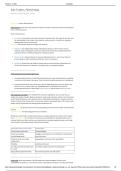
Advantages of being a sole trader Disadvantages
Owners keeps all the profit Unlimited liability
Owner has complete Struggle to raise finance as it is considered too risky by those
control(independent) who lend money
Simple to set up and no legal Independence may be too much responsibility
requirements
Flexibility Long hours hard work
Can offer a personal service because Too small to exploit economies of scale(usually)
it is small
May qualify for government help No continuity (business dies with owner)
_________________________________________
Partnership: exists when between 2 and 20 people own a business together. Owners share
responsibility and profits. E.g.: accountants, doctors, estate agents and solicitors are often partnerships
https://abbeydldcolleges-my.sharepoint.com/personal/sadafjabari_abbeycambridge_co_uk/_layouts/15/Doc.aspx?sourcedoc={eeebb44f-9d89-4f4… 1/2
Sole Traders, Partnerships
Wednesday, December 24, 2025 8:12 PM
Legal status: position defined by law
Entrepreneurs: people who set up businesses. They are the owners. Businesses would not exist without
them in the private sector.
Roles of entrepreneurs:
1. Innovators: because they try to make money out of a business idea. The origins of such ideas may
be: spotting a gap in the market, a new invention, market research. It could also be copying or
adapting what another business does.
Innovator: someone who introduces changes and new ideas
2. Organisers: they organise other factors of production. They buy or hire resources such as
materials, labour and equipment, which are used to make their products. Organising involves:
1.giving instructions 2.making arrangements 3.setting up systems
3. Decision makers: (because they're the owners). Make decisions on: 1. how to raise finance 2.
product design 3. choice of production method 4. prices 5. recruitment
4. Risk takers: because they risk losing any money they put into the business and possibly more
should it fail. However if the business is successful, they are rewarded with profit.
_________________________________
Unincorporated and incorporated businesses:
• Unincorporated businesses: no legal distinction between the owner and the business, everything
is carried out in the name of the owner. Tend to be small, owned by one person or a small group.
• Incorporated businesses: the business has a separate legal identity from that of its owners. The
business can sue, be sued, taken over, liquidated(assets are redistributed to claimants).
Incorporated businesses are often called limited companies and the owners are shareholders.
_________________________________
Sole trader/sole proprietor: is the simplest form of business organisation, has one owner but can
employ any number of people. Maye be involved in a wide rande of business activity. E.g. In the primary
sector: farmers/fishermen, in the secondary sector: small builders/manufacturers. However most sole
traders are found in the tertiary sector. E.g. many are retailers running small shops, others may do web
design, tutoring, hairdressing, taxi driving, garden maintenance, etc.
Primary sector: The primary sector is extracting or growing natural resources to supply raw materials for
business.
Secondary sector: manufacturing goods from raw materials.
Setting up as a sole trader is simple because there are no legal requirements, however all sole traders
have unlimited liability (I.e. the owner of a business is personally liable for all business debts.) so if a
business fails the sole trader may lose more money than was invested originally, because a sole trader
can be forced to use personal wealth to pay off business debts.
Advantages of being a sole trader Disadvantages
Owners keeps all the profit Unlimited liability
Owner has complete Struggle to raise finance as it is considered too risky by those
control(independent) who lend money
Simple to set up and no legal Independence may be too much responsibility
requirements
Flexibility Long hours hard work
Can offer a personal service because Too small to exploit economies of scale(usually)
it is small
May qualify for government help No continuity (business dies with owner)
_________________________________________
Partnership: exists when between 2 and 20 people own a business together. Owners share
responsibility and profits. E.g.: accountants, doctors, estate agents and solicitors are often partnerships
https://abbeydldcolleges-my.sharepoint.com/personal/sadafjabari_abbeycambridge_co_uk/_layouts/15/Doc.aspx?sourcedoc={eeebb44f-9d89-4f4… 1/2