
hes 211 chapter 17: exercise for special
populations Exam Questions and Answers
with Verified Solutions | Latest Updated 2026
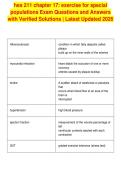
Atherosclerosis condition in which fatty deposits called
plaque
build up on the inner walls of the arteries
myocardia infraction heart attack the occlusion of one or more
coronary
arteries caused by plaque buildup
stroke A sudden attack of weakness or paralysis
that
occurs when blood flow to an area of the
brain is
interrupted
hypertension high blood pressure
ejection fraction measurement of the volume percentage of
left
ventricular contents ejected with each
contraction
GXT graded exercise tolerance (stress test)
, afterload the amount of resistance to ejection of
blood from
the ventricle
rate-pressure product HR x SBP. determines the stress placed
on the
heart.
Symptoms of heart disease that - Undue fatigue ---unwarranted or
may excessive
lead to heart attack fatigue
- Palpitations ---the sensation that your
heart is
skipping a beat or beating too rapidly
- Dyspnea ---difficult or labored breathing
- Chest pain ---pain or discomfort from
increased
activity felt mainly in the left upper body
Importance of cardiac - To reduce overall risk of dying and the
rehabilitation risk of
dying from a heart attack
- To reduce the risk of future heart attack
- To reduce chest pain and the need for
medicines
to treat chest pain
- To reduce risk factors for heart problems,
such as
hypertension and hyperlipidemia
- To reduce stress, take part in social
activities, and
exercise and thus improve overall quality
of life


