

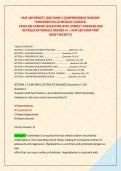
NUR 180 NEWEST 2026 EXAM 2 COMPREHENSIVE NURSING
FUNDAMENTALS & MEDICAL-SURGICAL
EXAM 300 VERIFIED QUESTIONS WITH CORRECT ANSWERS AND
DETAILED RATIONALES GRADED A+ | NUR 180 EXAM PREP
(MOST RECENT!!)
TABLE OF CONTENTS
SECTION 1: FLUID AND ELECTROLYTE BALANCE ....................... Questions 1–50
SECTION 2: ACID-BASE BALANCE .................................. Questions 51–75
SECTION 3: PERIOPERATIVE CARE ................................. Questions 76–110
SECTION 4: INFECTION CONTROL & SAFETY ........................ Questions 111–145
SECTION 5: PHARMACOLOGY FUNDAMENTALS ......................... Questions 146–180
SECTION 6: OXYGENATION & RESPIRATORY CARE .................... Questions 181–210
SECTION 7: WOUND CARE & SKIN INTEGRITY ....................... Questions 211–240
SECTION 8: THE NURSING PROCESS & CRITICAL THINKING ........... Questions 241–270
SECTION 9: COMPREHENSIVE/MIXED REVIEW ........................ Questions 271–300
SECTION 1: FLUID AND ELECTROLYTE BALANCE (Questions 1–50)
Question 1
A patient with heart failure is prescribed furosemide. Which electrolyte
imbalance is the nurse most concerned about?
A) Hyperkalemia
B) Hypokalemia
C) Hypermagnesemia
D) Hypercalcemia
Correct Answer: B
Rationale: Furosemide is a loop diuretic that inhibits sodium and chloride
reabsorption in the ascending loop of Henle, leading to increased excretion of
potassium and magnesium. Hypokalemia is a common and potentially dangerous
side
effect that can cause cardiac arrhythmias. Hyperkalemia is associated with
1
,potassium-sparing diuretics.
Question 2
A patient has a serum sodium level of 128 mEq/L. Which clinical manifestation
would the nurse expect?
A) Thirst and dry mucous membranes
B) Muscle cramps and hyperreflexia
C) Confusion and lethargy
D) Polyuria and polydipsia
Correct Answer: C
Rationale: Hyponatremia (serum sodium <135 mEq/L) causes cerebral edema due
to osmotic fluid shifts into brain cells, leading to confusion, lethargy, headache,
and seizures. Thirst and dry mucous membranes are signs of hypernatremia.
Muscle cramps and hyperreflexia are associated with hypocalcemia or
hypomagnesemia.
Question 3
Which finding is a late sign of hypovolemic shock?
A) Tachycardia
B) Thirst
C) Decreased urine output
D) Hypotension
Correct Answer: D
Rationale: Hypotension is a late sign of hypovolemic shock because compensatory
mechanisms (tachycardia, vasoconstriction) maintain blood pressure initially.
2
,Thirst, tachycardia, and decreased urine output occur earlier as the body
attempts to preserve perfusion to vital organs.
Question 4
The nurse is caring for a patient receiving IV potassium chloride. Which action
is most important?
A) Administer via IV push for rapid replacement
B) Infuse at a rate not exceeding 10 mEq/hour
C) Monitor the IV site for infiltration
D) Mix with lactated Ringer's solution
Correct Answer: C
Rationale: Potassium chloride is highly irritant to veins; infiltration can
cause tissue necrosis. It must be diluted and infused slowly (usually ≤10
mEq/hour via peripheral IV, up to 20 mEq/hour via central line). It should
NEVER be given IV push. Lactated Ringer's contains potassium and should not be
used as a diluent for potassium supplements.
Question 5
A patient's arterial blood gas (ABG) shows pH 7.48, PaCO2 32 mmHg, and HCO3
24 mEq/L. This indicates:
A) Metabolic acidosis
B) Metabolic alkalosis
C) Respiratory acidosis
D) Respiratory alkalosis
Correct Answer: D
3
, Rationale: pH is elevated (alkalemia). PaCO2 is low (<35 mmHg), indicating a
respiratory cause. In respiratory alkalosis, hyperventilation blows off CO2,
causing alkalemia. The HCO3 is normal, indicating no renal compensation yet.
Question 6
A patient with chronic kidney disease has a serum potassium of 6.8 mEq/L. Which
intervention should the nurse anticipate?
A) Oral potassium supplements
B) IV calcium gluconate
C) Spironolactone administration
D) Restrict dietary protein
Correct Answer: B
Rationale: Hyperkalemia (>5.5 mEq/L) can cause life-threatening cardiac
arrhythmias. IV calcium gluconate stabilizes the cardiac membrane and is the
first-line emergency treatment. Insulin with glucose and sodium bicarbonate
shift potassium into cells. Kayexalate removes potassium via the GI tract.
Oral supplements and spironolactone (potassium-sparing diuretic) would worsen
hyperkalemia.
Question 7
Which patient is at highest risk for developing hypermagnesemia?
A) A patient with chronic alcoholism
B) A patient with renal failure taking magnesium-containing antacids
C) A patient with hyperparathyroidism
D) A patient receiving loop diuretics
Correct Answer: B
4
FUNDAMENTALS & MEDICAL-SURGICAL
EXAM 300 VERIFIED QUESTIONS WITH CORRECT ANSWERS AND
DETAILED RATIONALES GRADED A+ | NUR 180 EXAM PREP
(MOST RECENT!!)
TABLE OF CONTENTS
SECTION 1: FLUID AND ELECTROLYTE BALANCE ....................... Questions 1–50
SECTION 2: ACID-BASE BALANCE .................................. Questions 51–75
SECTION 3: PERIOPERATIVE CARE ................................. Questions 76–110
SECTION 4: INFECTION CONTROL & SAFETY ........................ Questions 111–145
SECTION 5: PHARMACOLOGY FUNDAMENTALS ......................... Questions 146–180
SECTION 6: OXYGENATION & RESPIRATORY CARE .................... Questions 181–210
SECTION 7: WOUND CARE & SKIN INTEGRITY ....................... Questions 211–240
SECTION 8: THE NURSING PROCESS & CRITICAL THINKING ........... Questions 241–270
SECTION 9: COMPREHENSIVE/MIXED REVIEW ........................ Questions 271–300
SECTION 1: FLUID AND ELECTROLYTE BALANCE (Questions 1–50)
Question 1
A patient with heart failure is prescribed furosemide. Which electrolyte
imbalance is the nurse most concerned about?
A) Hyperkalemia
B) Hypokalemia
C) Hypermagnesemia
D) Hypercalcemia
Correct Answer: B
Rationale: Furosemide is a loop diuretic that inhibits sodium and chloride
reabsorption in the ascending loop of Henle, leading to increased excretion of
potassium and magnesium. Hypokalemia is a common and potentially dangerous
side
effect that can cause cardiac arrhythmias. Hyperkalemia is associated with
1
,potassium-sparing diuretics.
Question 2
A patient has a serum sodium level of 128 mEq/L. Which clinical manifestation
would the nurse expect?
A) Thirst and dry mucous membranes
B) Muscle cramps and hyperreflexia
C) Confusion and lethargy
D) Polyuria and polydipsia
Correct Answer: C
Rationale: Hyponatremia (serum sodium <135 mEq/L) causes cerebral edema due
to osmotic fluid shifts into brain cells, leading to confusion, lethargy, headache,
and seizures. Thirst and dry mucous membranes are signs of hypernatremia.
Muscle cramps and hyperreflexia are associated with hypocalcemia or
hypomagnesemia.
Question 3
Which finding is a late sign of hypovolemic shock?
A) Tachycardia
B) Thirst
C) Decreased urine output
D) Hypotension
Correct Answer: D
Rationale: Hypotension is a late sign of hypovolemic shock because compensatory
mechanisms (tachycardia, vasoconstriction) maintain blood pressure initially.
2
,Thirst, tachycardia, and decreased urine output occur earlier as the body
attempts to preserve perfusion to vital organs.
Question 4
The nurse is caring for a patient receiving IV potassium chloride. Which action
is most important?
A) Administer via IV push for rapid replacement
B) Infuse at a rate not exceeding 10 mEq/hour
C) Monitor the IV site for infiltration
D) Mix with lactated Ringer's solution
Correct Answer: C
Rationale: Potassium chloride is highly irritant to veins; infiltration can
cause tissue necrosis. It must be diluted and infused slowly (usually ≤10
mEq/hour via peripheral IV, up to 20 mEq/hour via central line). It should
NEVER be given IV push. Lactated Ringer's contains potassium and should not be
used as a diluent for potassium supplements.
Question 5
A patient's arterial blood gas (ABG) shows pH 7.48, PaCO2 32 mmHg, and HCO3
24 mEq/L. This indicates:
A) Metabolic acidosis
B) Metabolic alkalosis
C) Respiratory acidosis
D) Respiratory alkalosis
Correct Answer: D
3
, Rationale: pH is elevated (alkalemia). PaCO2 is low (<35 mmHg), indicating a
respiratory cause. In respiratory alkalosis, hyperventilation blows off CO2,
causing alkalemia. The HCO3 is normal, indicating no renal compensation yet.
Question 6
A patient with chronic kidney disease has a serum potassium of 6.8 mEq/L. Which
intervention should the nurse anticipate?
A) Oral potassium supplements
B) IV calcium gluconate
C) Spironolactone administration
D) Restrict dietary protein
Correct Answer: B
Rationale: Hyperkalemia (>5.5 mEq/L) can cause life-threatening cardiac
arrhythmias. IV calcium gluconate stabilizes the cardiac membrane and is the
first-line emergency treatment. Insulin with glucose and sodium bicarbonate
shift potassium into cells. Kayexalate removes potassium via the GI tract.
Oral supplements and spironolactone (potassium-sparing diuretic) would worsen
hyperkalemia.
Question 7
Which patient is at highest risk for developing hypermagnesemia?
A) A patient with chronic alcoholism
B) A patient with renal failure taking magnesium-containing antacids
C) A patient with hyperparathyroidism
D) A patient receiving loop diuretics
Correct Answer: B
4


