

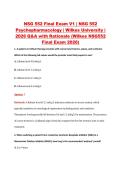
NSG 552 Final Exam V1 | NSG 552
Psychopharmacology | Wilkes University |
2026 Q&A with Rationale (Wilkes NSG552
Final Exam 2026)
1. A patient on Lithium therapy presents with coarse hand tremors, ataxia, and confusion.
Which of the following lab values would the provider most likely expect to see?
A. Lithium level 0.8 mEq/L
B. Lithium level 1.2 mEq/L
C. Lithium level 2.1 mEq/L
D. Lithium level 0.4 mEq/L
Answer: C
Rationale: A lithium level of 2.1 mEq/L indicates moderate to severe toxicity, which
typically manifests as neurological impairments including ataxia and confusion.
Therapeutic levels generally fall between 0.6 and 1.2 mEq/L for maintenance. The presence
of coarse tremors is a hallmark sign of toxicity compared to the fine tremors seen in early
treatment.
2. When switching a patient from a Selective Serotonin Reuptake Inhibitor (SSRI) to a
Monoamine Oxidase Inhibitor (MAOI), how long is the recommended ‘washout’ period?
A. 2 to 4 days
,B. 7 days
C. 24 hours
D. 14 days
Answer: D
Rationale: A 14-day washout period is necessary to allow for the clearance of the SSRI and
the synthesis of new MAO enzymes. Fluoxetine is a notable exception requiring at least 5
weeks due to its long half-life. Failure to observe this period significantly increases the risk
of life-threatening Serotonin Syndrome.
3. Which antipsychotic medication requires frequent monitoring of Absolute Neutrophil
Count (ANC) due to the risk of agranulocytosis?
A. Olanzapine
B. Clozapine
C. Risperidone
D. Quetiapine
Answer: B
Rationale: Clozapine is associated with a risk of severe neutropenia or agranulocytosis in
approximately 1% of patients. Frequent blood monitoring is mandated by the FDA through
the Clozapine REMS program. Providers must ensure the ANC remains within safe
parameters to continue treatment.
, 4. A patient taking an antipsychotic develops severe muscle rigidity (‘lead-pipe’), fever, and
autonomic instability. What is the most likely diagnosis?
A. Serotonin Syndrome
B. Neuroleptic Malignant Syndrome (NMS)
C. Tardive Dyskinesia
D. Acute Dystonia
Answer: B
Rationale: Neuroleptic Malignant Syndrome is a life-threatening reaction to dopamine-
blocking agents characterized by hyperthermia and rigidity. It is distinguished from
Serotonin Syndrome by the presence of ‘lead-pipe’ rigidity rather than hyperreflexia and
clonus. Immediate discontinuation of the offending agent and supportive care are essential
interventions.
5. Which antidepressant is most associated with a reduction in seizure threshold and is
contraindicated in patients with eating disorders?
A. Sertraline
B. Venlafaxine
C. Bupropion
D. Mirtazapine
Answer: C
Psychopharmacology | Wilkes University |
2026 Q&A with Rationale (Wilkes NSG552
Final Exam 2026)
1. A patient on Lithium therapy presents with coarse hand tremors, ataxia, and confusion.
Which of the following lab values would the provider most likely expect to see?
A. Lithium level 0.8 mEq/L
B. Lithium level 1.2 mEq/L
C. Lithium level 2.1 mEq/L
D. Lithium level 0.4 mEq/L
Answer: C
Rationale: A lithium level of 2.1 mEq/L indicates moderate to severe toxicity, which
typically manifests as neurological impairments including ataxia and confusion.
Therapeutic levels generally fall between 0.6 and 1.2 mEq/L for maintenance. The presence
of coarse tremors is a hallmark sign of toxicity compared to the fine tremors seen in early
treatment.
2. When switching a patient from a Selective Serotonin Reuptake Inhibitor (SSRI) to a
Monoamine Oxidase Inhibitor (MAOI), how long is the recommended ‘washout’ period?
A. 2 to 4 days
,B. 7 days
C. 24 hours
D. 14 days
Answer: D
Rationale: A 14-day washout period is necessary to allow for the clearance of the SSRI and
the synthesis of new MAO enzymes. Fluoxetine is a notable exception requiring at least 5
weeks due to its long half-life. Failure to observe this period significantly increases the risk
of life-threatening Serotonin Syndrome.
3. Which antipsychotic medication requires frequent monitoring of Absolute Neutrophil
Count (ANC) due to the risk of agranulocytosis?
A. Olanzapine
B. Clozapine
C. Risperidone
D. Quetiapine
Answer: B
Rationale: Clozapine is associated with a risk of severe neutropenia or agranulocytosis in
approximately 1% of patients. Frequent blood monitoring is mandated by the FDA through
the Clozapine REMS program. Providers must ensure the ANC remains within safe
parameters to continue treatment.
, 4. A patient taking an antipsychotic develops severe muscle rigidity (‘lead-pipe’), fever, and
autonomic instability. What is the most likely diagnosis?
A. Serotonin Syndrome
B. Neuroleptic Malignant Syndrome (NMS)
C. Tardive Dyskinesia
D. Acute Dystonia
Answer: B
Rationale: Neuroleptic Malignant Syndrome is a life-threatening reaction to dopamine-
blocking agents characterized by hyperthermia and rigidity. It is distinguished from
Serotonin Syndrome by the presence of ‘lead-pipe’ rigidity rather than hyperreflexia and
clonus. Immediate discontinuation of the offending agent and supportive care are essential
interventions.
5. Which antidepressant is most associated with a reduction in seizure threshold and is
contraindicated in patients with eating disorders?
A. Sertraline
B. Venlafaxine
C. Bupropion
D. Mirtazapine
Answer: C


