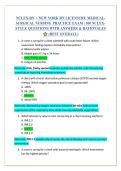
NCLEX-RN + NEW YORK RN LICENSURE
FUNDAMENTALS OF NURSING PRACTICE EXAM | 100
NCLEX-STYLE MULTIPLE-CHOICE QUESTIONS
WITH ANSWERS & RATIONALES
1. A nurse is preparing to assess a newly admitted client. Which action should
the nurse perform first?
A. Obtain the client's vital signs
B. Administer prescribed medications
C. Introduce self and verify the client's identity
D. Complete discharge planning
Rationale: The nurse should first establish rapport and verify the correct client
before beginning any assessment or intervention.
2. Which phase of the nursing process involves collecting subjective and
objective data?
A. Diagnosis
B. Planning
C. Evaluation
D. Assessment
Rationale: Assessment is the first step of the nursing process and includes
gathering all relevant data.
3. A nurse documents "Client appears comfortable and cooperative." This
statement is an example of:
A. Objective data
B. Subjective interpretation
C. Diagnostic statement
D. Medical diagnosis
Rationale: "Appears comfortable" reflects the nurse's interpretation rather than
measurable findings.
, 4. Which action best demonstrates therapeutic communication?
A. Giving personal advice
B. Changing the subject
C. Using open-ended questions
D. Offering false reassurance
Rationale: Open-ended questions encourage clients to express feelings and provide
detailed information.
5. Which patient is at greatest risk for falls?
A. Healthy adolescent
B. Middle-aged office worker
C. Older adult receiving sedatives
D. Adult with seasonal allergies
Rationale: Age and sedative medications significantly increase fall risk.
6. Which precaution is appropriate for a client with pulmonary tuberculosis?
A. Contact precautions
B. Droplet precautions
C. Standard precautions only
D. Airborne precautions
Rationale: Tuberculosis spreads through airborne particles requiring a negative-
pressure room and N95 respirator.
7. Which nursing action requires immediate correction?
A. Washing hands before patient contact
B. Wearing gloves when handling blood
C. Recapping a used needle
D. Disposing of sharps in an approved container
Rationale: Recapping needles increases the risk of needlestick injuries.
8. Which pulse site is commonly used during adult cardiopulmonary
resuscitation assessment?
A. Radial
, B. Brachial
C. Carotid
D. Femoral
Rationale: The carotid artery is the recommended pulse site in unconscious adults.
9. Which abbreviation should never be used in documentation?
A. mg
B. IV
C. U
D. PO
Rationale: "U" may be mistaken for zero and should be written as "units."
10.A client refuses medication. What is the nurse's priority action?
A. Hide the medication in food
B. Notify security
C. Force administration
D. Determine the reason for refusal
Rationale: The nurse should first assess the client's concerns and provide
education.
11.Which action best maintains patient confidentiality?
A. Discussing care in the hallway
B. Sharing information with friends
C. Leaving charts open
D. Accessing only records needed for assigned care
Rationale: Nurses should access only information necessary to provide care.
12.Which nursing action demonstrates advocacy?
A. Completing documentation quickly
B. Protecting the client's rights and preferences
C. Delegating assessment
D. Following every family request
FUNDAMENTALS OF NURSING PRACTICE EXAM | 100
NCLEX-STYLE MULTIPLE-CHOICE QUESTIONS
WITH ANSWERS & RATIONALES
1. A nurse is preparing to assess a newly admitted client. Which action should
the nurse perform first?
A. Obtain the client's vital signs
B. Administer prescribed medications
C. Introduce self and verify the client's identity
D. Complete discharge planning
Rationale: The nurse should first establish rapport and verify the correct client
before beginning any assessment or intervention.
2. Which phase of the nursing process involves collecting subjective and
objective data?
A. Diagnosis
B. Planning
C. Evaluation
D. Assessment
Rationale: Assessment is the first step of the nursing process and includes
gathering all relevant data.
3. A nurse documents "Client appears comfortable and cooperative." This
statement is an example of:
A. Objective data
B. Subjective interpretation
C. Diagnostic statement
D. Medical diagnosis
Rationale: "Appears comfortable" reflects the nurse's interpretation rather than
measurable findings.
, 4. Which action best demonstrates therapeutic communication?
A. Giving personal advice
B. Changing the subject
C. Using open-ended questions
D. Offering false reassurance
Rationale: Open-ended questions encourage clients to express feelings and provide
detailed information.
5. Which patient is at greatest risk for falls?
A. Healthy adolescent
B. Middle-aged office worker
C. Older adult receiving sedatives
D. Adult with seasonal allergies
Rationale: Age and sedative medications significantly increase fall risk.
6. Which precaution is appropriate for a client with pulmonary tuberculosis?
A. Contact precautions
B. Droplet precautions
C. Standard precautions only
D. Airborne precautions
Rationale: Tuberculosis spreads through airborne particles requiring a negative-
pressure room and N95 respirator.
7. Which nursing action requires immediate correction?
A. Washing hands before patient contact
B. Wearing gloves when handling blood
C. Recapping a used needle
D. Disposing of sharps in an approved container
Rationale: Recapping needles increases the risk of needlestick injuries.
8. Which pulse site is commonly used during adult cardiopulmonary
resuscitation assessment?
A. Radial
, B. Brachial
C. Carotid
D. Femoral
Rationale: The carotid artery is the recommended pulse site in unconscious adults.
9. Which abbreviation should never be used in documentation?
A. mg
B. IV
C. U
D. PO
Rationale: "U" may be mistaken for zero and should be written as "units."
10.A client refuses medication. What is the nurse's priority action?
A. Hide the medication in food
B. Notify security
C. Force administration
D. Determine the reason for refusal
Rationale: The nurse should first assess the client's concerns and provide
education.
11.Which action best maintains patient confidentiality?
A. Discussing care in the hallway
B. Sharing information with friends
C. Leaving charts open
D. Accessing only records needed for assigned care
Rationale: Nurses should access only information necessary to provide care.
12.Which nursing action demonstrates advocacy?
A. Completing documentation quickly
B. Protecting the client's rights and preferences
C. Delegating assessment
D. Following every family request