
,
,
, Latest ATI RN Maternal Newborn OB 2023/2026 NGN | 70 Screenshot Questions
and Answers
SECTION 1: ANTEPARTUM (Prenatal Care & Complications)
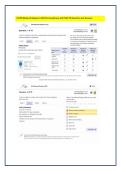
Question 1
A client at 32 weeks' gestation reports sudden painless vaginal bleeding. Which
condition is most likely?
A. Placental abruption
B. Uterine rupture
C. Placenta previa
D. Cervical dilation
Correct Answer: C. Placenta previa
Rationale: Placenta previa presents with painless, bright red vaginal bleeding in
the second or third trimester. Placental abruption is typically associated with
painful, dark bleeding and uterine rigidity.
Question 2
A client at 36 weeks presents with painful, dark red vaginal bleeding and a rigid,
board-like abdomen. Fetal heart rate shows late decelerations. What is the most
likely diagnosis?
A. Placenta previa
B. Placental abruption
C. Vasa previa
D. Cervical insufficiency
Correct Answer: B. Placental abruption
Rationale: Placental abruption is characterized by painful, dark red vaginal
bleeding with a rigid, board-like abdomen. Late decelerations indicate fetal
distress from compromised oxygenation.
,
, Latest ATI RN Maternal Newborn OB 2023/2026 NGN | 70 Screenshot Questions
and Answers
SECTION 1: ANTEPARTUM (Prenatal Care & Complications)
Question 1
A client at 32 weeks' gestation reports sudden painless vaginal bleeding. Which
condition is most likely?
A. Placental abruption
B. Uterine rupture
C. Placenta previa
D. Cervical dilation
Correct Answer: C. Placenta previa
Rationale: Placenta previa presents with painless, bright red vaginal bleeding in
the second or third trimester. Placental abruption is typically associated with
painful, dark bleeding and uterine rigidity.
Question 2
A client at 36 weeks presents with painful, dark red vaginal bleeding and a rigid,
board-like abdomen. Fetal heart rate shows late decelerations. What is the most
likely diagnosis?
A. Placenta previa
B. Placental abruption
C. Vasa previa
D. Cervical insufficiency
Correct Answer: B. Placental abruption
Rationale: Placental abruption is characterized by painful, dark red vaginal
bleeding with a rigid, board-like abdomen. Late decelerations indicate fetal
distress from compromised oxygenation.


