

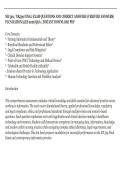
NR 599 / NR599 FINAL EXAM QUESTIONS AND CORRECT ANSWERS (VERIFIED ANSWERS)
PLUS RATIONALES 2026 Q&A | INSTANT DOWNLOAD PDF
Core Domains
*- Nursing Informatics Fundamentals and Theory*
*- Bioethical Standards and Professional Ethics*
*- Legal Compliance and Risk Mitigation*
*- Clinical Decision Support Systems*
*- Point-of-Care (POC) Technology and Medical Devices*
*- Telehealth and Mobile Health (mHealth)*
- Evidence-Based Practice in Technology Application
*- Human-Technology Interface and Workflow Analysis*
Introduction
This comprehensive assessment evaluates critical knowledge and skills essential for advanced practice nurses
working in informatics. The exam covers foundational theory, applied professional knowledge, regulatory
and legal compliance, ethics, and professional standards through multiple-choice and scenario-based
questions. Each question emphasizes real-world application and clinical decision-making in healthcare
technology environments. Students will demonstrate competence in managing data, information, knowledge,
and wisdom within nursing practice while navigating complex ethical dilemmas, legal requirements, and
technological challenges. This test bank prepares candidates for successful performance on the NR 599 Final
Exam and contemporary informatics practice.
,SECTION ONE: QUESTIONS 1–100
Question 1
Which bioethical principle is defined as "the right of an individual to choose for themselves" in healthcare
settings?
A. Beneficence
B. Justice
C. Autonomy
D. Nonmaleficence
🟢 Correct answer: C
🔴 RATIONALE: Autonomy is the bioethical principle that defines an individual's right to make their own
choices regarding healthcare, respecting their opinions, perspectives, values, and beliefs without coercion.
Question 2
A nurse is using a fingerprint scanner to authenticate access to patient records. What type of Point-of-Care
device is this?
A. Biologic device
B. Biometric device
C. Haptic device
D. Medical application
🟢 Correct answer: B
,🔴 RATIONALE: Biometric devices utilize unique biological characteristics like fingerprints, retinas, irises,
voices, or facial patterns to authenticate or grant access to data and information.
Question 3
Which of the following is the MOST common risk to patient privacy and confidentiality in healthcare?
A. External hackers
B. Organization's employees
C. Software vulnerabilities
D. Network breaches
🟢 Correct answer: B
🔴 RATIONALE: An organization's employees represent the most common risk to patient privacy and
confidentiality, as internal staff may violate privacy by accessing unauthorized colleague or patient records.
Question 4
What is the primary benefit of Clinical Decision Support Systems (CDSS) for nurses?
A. Eliminating all medical errors
B. Reducing variability and improving standardization
C. Replacing nursing judgment entirely
D. Reducing healthcare costs exclusively
🟢 Correct answer: B
, 🔴 RATIONALE: CDSS can enhance nursing decision-making by reducing variability and improving
standardization of care, though concerns exist about system usability and overriding recommendations.
Question 5
Which legal concept involves "prioritizing, evaluating, and implementing appropriate risk-reducing controls"
from the risk management process?
A. Bioethics
B. Risk mitigation
C. Casuistry
D. Accountability
🟢 Correct answer: B
🔴 RATIONALE: Risk mitigation is the legal concept that involves prioritizing, evaluating, and implementing
appropriate risk-reducing controls or countermeasures recommended from the risk management process.
Question 6
A nurse wants to test diagnosis at the patient's home rather than the hospital. What technology enables this?
A. Telehealth only
B. Point-of-Care (POC) technology
C. Mobile Health app
D. Clinical Decision Support
🟢 Correct answer: B
PLUS RATIONALES 2026 Q&A | INSTANT DOWNLOAD PDF
Core Domains
*- Nursing Informatics Fundamentals and Theory*
*- Bioethical Standards and Professional Ethics*
*- Legal Compliance and Risk Mitigation*
*- Clinical Decision Support Systems*
*- Point-of-Care (POC) Technology and Medical Devices*
*- Telehealth and Mobile Health (mHealth)*
- Evidence-Based Practice in Technology Application
*- Human-Technology Interface and Workflow Analysis*
Introduction
This comprehensive assessment evaluates critical knowledge and skills essential for advanced practice nurses
working in informatics. The exam covers foundational theory, applied professional knowledge, regulatory
and legal compliance, ethics, and professional standards through multiple-choice and scenario-based
questions. Each question emphasizes real-world application and clinical decision-making in healthcare
technology environments. Students will demonstrate competence in managing data, information, knowledge,
and wisdom within nursing practice while navigating complex ethical dilemmas, legal requirements, and
technological challenges. This test bank prepares candidates for successful performance on the NR 599 Final
Exam and contemporary informatics practice.
,SECTION ONE: QUESTIONS 1–100
Question 1
Which bioethical principle is defined as "the right of an individual to choose for themselves" in healthcare
settings?
A. Beneficence
B. Justice
C. Autonomy
D. Nonmaleficence
🟢 Correct answer: C
🔴 RATIONALE: Autonomy is the bioethical principle that defines an individual's right to make their own
choices regarding healthcare, respecting their opinions, perspectives, values, and beliefs without coercion.
Question 2
A nurse is using a fingerprint scanner to authenticate access to patient records. What type of Point-of-Care
device is this?
A. Biologic device
B. Biometric device
C. Haptic device
D. Medical application
🟢 Correct answer: B
,🔴 RATIONALE: Biometric devices utilize unique biological characteristics like fingerprints, retinas, irises,
voices, or facial patterns to authenticate or grant access to data and information.
Question 3
Which of the following is the MOST common risk to patient privacy and confidentiality in healthcare?
A. External hackers
B. Organization's employees
C. Software vulnerabilities
D. Network breaches
🟢 Correct answer: B
🔴 RATIONALE: An organization's employees represent the most common risk to patient privacy and
confidentiality, as internal staff may violate privacy by accessing unauthorized colleague or patient records.
Question 4
What is the primary benefit of Clinical Decision Support Systems (CDSS) for nurses?
A. Eliminating all medical errors
B. Reducing variability and improving standardization
C. Replacing nursing judgment entirely
D. Reducing healthcare costs exclusively
🟢 Correct answer: B
, 🔴 RATIONALE: CDSS can enhance nursing decision-making by reducing variability and improving
standardization of care, though concerns exist about system usability and overriding recommendations.
Question 5
Which legal concept involves "prioritizing, evaluating, and implementing appropriate risk-reducing controls"
from the risk management process?
A. Bioethics
B. Risk mitigation
C. Casuistry
D. Accountability
🟢 Correct answer: B
🔴 RATIONALE: Risk mitigation is the legal concept that involves prioritizing, evaluating, and implementing
appropriate risk-reducing controls or countermeasures recommended from the risk management process.
Question 6
A nurse wants to test diagnosis at the patient's home rather than the hospital. What technology enables this?
A. Telehealth only
B. Point-of-Care (POC) technology
C. Mobile Health app
D. Clinical Decision Support
🟢 Correct answer: B


