

Page 1 of 97
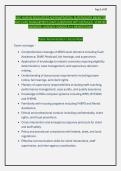
NYC HUMAN RESOURCES ADMINISTRATION: SUPERVISORY BENEFITS
AND CASE MANAGEMENT EXAM QUESTIONS WITH DETAILED- VERIFIED
ANSWERS- ALREADY GRADED A+ || NEWEST EXAM
Public Administration / Social Work
Exam coverage: -
• Comprehensive coverage of ABOS exam domains including Cash
Assistance, SNAP, Medicaid, fair hearings, and supervision.
• Application of knowledge to realistic scenarios requiring eligibility
determination, case management, and supervisory decision-
making.
• Understanding of due process requirements including proper
notice, fair hearings, and client rights.
• Mastery of supervisory responsibilities including staff coaching,
performance management, case audits, and quality assurance.
• Knowledge of HRA computer systems including WMS, NYCWAY,
and FHEMS.
• Familiarity with housing programs including FHEPS and Rental
Assistance.
• Ethical and professional conduct including confidentiality, client
rights, and fraud prevention.
• Crisis intervention and emergency response protocols for client
and staff safety.
• Policy and procedural compliance with federal, state, and local
regulations.
• Effective communication skills for client interactions, staff
supervision, and inter-agency coordination.
, Page 2 of 97
SECTION 1: PROGRAM ELIGIBILITY AND ENTITLEMENTS
1. A single mother with two children applies for Cash Assistance. She
has no income and is not employed. What is the most appropriate first
step for the ABOS to direct the Benefits Opportunity Specialist (BOS) to
take?
A. Approve the application immediately to expedite benefits.
B. Schedule an eligibility interview and request required documentation.
C. Deny the application pending employment verification.
D. Refer the applicant directly to a job training program.
Correct Answer: B — Before eligibility can be determined, an eligibility
interview must be conducted and required documentation (identity,
residency, income) must be obtained and verified.
Rationale: Approving without documentation would violate program
integrity requirements. Denial without proper evaluation is premature.
Job training referral comes after eligibility determination.
2. A client receiving Cash Assistance reports a new job. What is the
ABOS's primary supervisory responsibility?
A. Immediately close the case to prevent overpayment.
B. Instruct the BOS to recalculate eligibility based on the new income.
C. Ignore the report until the next recertification period.
D. Terminate all benefits immediately.
Correct Answer: B — The ABOS must instruct the BOS to recalculate
eligibility based on the new income.
, Page 3 of 97
Rationale: Changes in income must be promptly evaluated to adjust
benefit amounts appropriately. Immediate closure without recalculation
would be premature and could result in improper termination of
benefits.
3. What does TANF stand for in the context of public assistance
programs?
A. Supplemental Nutrition Assistance Program
B. Temporary Assistance for Needy Families
C. Social Security Disability Insurance
D. Medicaid
Correct Answer: B — TANF is the federal block grant that funds state and
local cash assistance programs for families with children.
Rationale: TANF provides cash assistance to families with children.
SNAP provides food assistance, SSDI is for disabled workers, and
Medicaid provides health coverage.
4. A client applies for Safety Net Assistance. Which of the following best
describes this program?
A. A program providing food assistance to low-income families.
B. A state-funded program providing cash assistance to individuals and
families who are ineligible for TANF.
C. A federal program providing housing vouchers.
D. A program providing medical assistance to the elderly.
, Page 4 of 97
Correct Answer: B — Safety Net Assistance is a state-funded program
providing cash assistance to individuals and families who are ineligible
for TANF.
Rationale: Safety Net serves as the program of last resort for single
adults, childless couples, and families who have exhausted their TANF
time limits or are otherwise ineligible.
5. An applicant for Cash Assistance has a car valued at $12,000. What is
the general policy regarding this resource?
A. The vehicle is fully counted toward the resource limit.
B. One vehicle per household is typically exempt up to a specified equity
limit.
C. The vehicle must be sold before any benefits can be approved.
D. All vehicles are exempt regardless of value.
Correct Answer: B — One vehicle per household is typically exempt up to
a specified equity limit.
Rationale: Vehicle resource rules allow for one vehicle per household to
be exempt up to a certain equity value, recognizing the necessity of
transportation for employment and daily living.
NYC HUMAN RESOURCES ADMINISTRATION: SUPERVISORY BENEFITS
AND CASE MANAGEMENT EXAM QUESTIONS WITH DETAILED- VERIFIED
ANSWERS- ALREADY GRADED A+ || NEWEST EXAM
Public Administration / Social Work
Exam coverage: -
• Comprehensive coverage of ABOS exam domains including Cash
Assistance, SNAP, Medicaid, fair hearings, and supervision.
• Application of knowledge to realistic scenarios requiring eligibility
determination, case management, and supervisory decision-
making.
• Understanding of due process requirements including proper
notice, fair hearings, and client rights.
• Mastery of supervisory responsibilities including staff coaching,
performance management, case audits, and quality assurance.
• Knowledge of HRA computer systems including WMS, NYCWAY,
and FHEMS.
• Familiarity with housing programs including FHEPS and Rental
Assistance.
• Ethical and professional conduct including confidentiality, client
rights, and fraud prevention.
• Crisis intervention and emergency response protocols for client
and staff safety.
• Policy and procedural compliance with federal, state, and local
regulations.
• Effective communication skills for client interactions, staff
supervision, and inter-agency coordination.
, Page 2 of 97
SECTION 1: PROGRAM ELIGIBILITY AND ENTITLEMENTS
1. A single mother with two children applies for Cash Assistance. She
has no income and is not employed. What is the most appropriate first
step for the ABOS to direct the Benefits Opportunity Specialist (BOS) to
take?
A. Approve the application immediately to expedite benefits.
B. Schedule an eligibility interview and request required documentation.
C. Deny the application pending employment verification.
D. Refer the applicant directly to a job training program.
Correct Answer: B — Before eligibility can be determined, an eligibility
interview must be conducted and required documentation (identity,
residency, income) must be obtained and verified.
Rationale: Approving without documentation would violate program
integrity requirements. Denial without proper evaluation is premature.
Job training referral comes after eligibility determination.
2. A client receiving Cash Assistance reports a new job. What is the
ABOS's primary supervisory responsibility?
A. Immediately close the case to prevent overpayment.
B. Instruct the BOS to recalculate eligibility based on the new income.
C. Ignore the report until the next recertification period.
D. Terminate all benefits immediately.
Correct Answer: B — The ABOS must instruct the BOS to recalculate
eligibility based on the new income.
, Page 3 of 97
Rationale: Changes in income must be promptly evaluated to adjust
benefit amounts appropriately. Immediate closure without recalculation
would be premature and could result in improper termination of
benefits.
3. What does TANF stand for in the context of public assistance
programs?
A. Supplemental Nutrition Assistance Program
B. Temporary Assistance for Needy Families
C. Social Security Disability Insurance
D. Medicaid
Correct Answer: B — TANF is the federal block grant that funds state and
local cash assistance programs for families with children.
Rationale: TANF provides cash assistance to families with children.
SNAP provides food assistance, SSDI is for disabled workers, and
Medicaid provides health coverage.
4. A client applies for Safety Net Assistance. Which of the following best
describes this program?
A. A program providing food assistance to low-income families.
B. A state-funded program providing cash assistance to individuals and
families who are ineligible for TANF.
C. A federal program providing housing vouchers.
D. A program providing medical assistance to the elderly.
, Page 4 of 97
Correct Answer: B — Safety Net Assistance is a state-funded program
providing cash assistance to individuals and families who are ineligible
for TANF.
Rationale: Safety Net serves as the program of last resort for single
adults, childless couples, and families who have exhausted their TANF
time limits or are otherwise ineligible.
5. An applicant for Cash Assistance has a car valued at $12,000. What is
the general policy regarding this resource?
A. The vehicle is fully counted toward the resource limit.
B. One vehicle per household is typically exempt up to a specified equity
limit.
C. The vehicle must be sold before any benefits can be approved.
D. All vehicles are exempt regardless of value.
Correct Answer: B — One vehicle per household is typically exempt up to
a specified equity limit.
Rationale: Vehicle resource rules allow for one vehicle per household to
be exempt up to a certain equity value, recognizing the necessity of
transportation for employment and daily living.


