

WGU ELO1
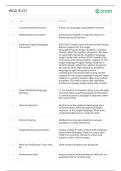
# Term Definition
1 Content-based instruction A focus on language and academic content.
2 Differentiated instruction Instruction modified to meet the needs of a
diverse group of learners.
3 Sheltered English language SIOP SIOP Content-area instruction with strong
instruction teacher support for the target
language.Program keeps students in content
classes rather than pullout programs. Ells held
to same high standards. Academic language
taught along side content. SIOP Content-area
instruction with strong teacher support for the
target language.Program keeps students in
content classes rather than pullout programs.
Ells held to same high standards. Academic
language taught along side content.
Content-area instruction with strong teacher
support for the target language.Program keeps
students in content classes rather than pullout
programs. Ells held to same high standards.
Academic language taught along side content.
4 Direct Methodof language L1 not used for instruction; focus is on everyday
learning communication and the purpose of instruction
is communication. Language is acquired rather
than memorized.
5 Natural Approach Emphasis on the students developing basic
communication skills through meaningful
exposure to the target language. Must have
comprehensible input to improve skills.
6 Partner Sharing Method to encourage students to answer
questions or make comments.
7 Integrated learning activities Using a variety of skills to work with language
and content.Examples: listen to a story then
retell it to a partner. Research a topic and
present a skit or other project.
8 What are Proficiency Tests used Used to place students into programs.
for
9 Achievement tests Assess student understanding or skill level in a
particular skill or content area.
,WGU ELO1
# Term Definition
10 Cultural bias When items or tasks have a cultural patters or
expectations.
11 Valid Test It measures what it is intended to.
12 norm-referenced test Relate a student's score to other student's
scores on the same test.
13 Washback or backwash studies Studies that examine the effects of testing on
teaching and learning.
14 Plyer v. Doe Children cannot be denied public education
based upon their immigration status. Focus:
role of public school in checking immigration
status of students.
15 Lau v. Nichols U.S. Supreme Court Case: Equal opportunity
does not equate to equal access. ELLs were not
given instruction that made sure the education
they were receiving was comprehensible. Title
VI of the Civil Rights Act was violated. Students
must have equal access to content
16 Title IV, Civil Rights Act of 1964 Law that outlawed discrimination based upon
race, color, religion, sex, or national orgin.
17 Classroom research on teacher Research that focuses on the thinking processes
cognition of teachers (how they make decisions in the
classroom, how instruction is planned, etc)
18 Action research The teacher collects and analyzes data on an
intervention in their own classroom. The
teacher learns about their own teaching
practices.
19 Discrete point testing Test of one element
20 integrative testing Tests many elements
21 Natural Approach Students' developing basic communication skills
through receiving meaningful exposure to the
target language. Must receive comprehensible
input to improve their skills.
, WGU ELO1
# Term Definition
22 Bilingual ELL Program Instruction is offered in L1 and target language
23 Two way immersion Program where both ELL and native-English
speakers become bilingual and achieve
academically in both langauges.
24 proficiency testing assessment designed to measure people's
ability in a language.
25 achievement testing assessment that determines how successful
students or courses are in achieving objectives
26 diagnostic testing assessment used to identify learner's strengths
and weaknesses.
27 placement testing assessment that helps place a student in a
program most appropriate to the students'
abilities.
28 discrete point testing refers to testing one element at a time, item by
item
29 norm-referenced testing assessment that relates one students
performance to that of other students.
30 criterion-referenced testing assessment that classifies people according to if
they are able to perform a task satisfactorily.
31 portfolio assessment assessment that is a collection of a students
work, teacher observations, and self assessment
that are used to show progress over time.
32 authentic assessment assessment that uses activities that represent
classroom goals, curricula, and instruction or
real life performance.
33 formative assessment Ongoing diagnostic assessment providing
information to guide instruction.
# Term Definition
1 Content-based instruction A focus on language and academic content.
2 Differentiated instruction Instruction modified to meet the needs of a
diverse group of learners.
3 Sheltered English language SIOP SIOP Content-area instruction with strong
instruction teacher support for the target
language.Program keeps students in content
classes rather than pullout programs. Ells held
to same high standards. Academic language
taught along side content. SIOP Content-area
instruction with strong teacher support for the
target language.Program keeps students in
content classes rather than pullout programs.
Ells held to same high standards. Academic
language taught along side content.
Content-area instruction with strong teacher
support for the target language.Program keeps
students in content classes rather than pullout
programs. Ells held to same high standards.
Academic language taught along side content.
4 Direct Methodof language L1 not used for instruction; focus is on everyday
learning communication and the purpose of instruction
is communication. Language is acquired rather
than memorized.
5 Natural Approach Emphasis on the students developing basic
communication skills through meaningful
exposure to the target language. Must have
comprehensible input to improve skills.
6 Partner Sharing Method to encourage students to answer
questions or make comments.
7 Integrated learning activities Using a variety of skills to work with language
and content.Examples: listen to a story then
retell it to a partner. Research a topic and
present a skit or other project.
8 What are Proficiency Tests used Used to place students into programs.
for
9 Achievement tests Assess student understanding or skill level in a
particular skill or content area.
,WGU ELO1
# Term Definition
10 Cultural bias When items or tasks have a cultural patters or
expectations.
11 Valid Test It measures what it is intended to.
12 norm-referenced test Relate a student's score to other student's
scores on the same test.
13 Washback or backwash studies Studies that examine the effects of testing on
teaching and learning.
14 Plyer v. Doe Children cannot be denied public education
based upon their immigration status. Focus:
role of public school in checking immigration
status of students.
15 Lau v. Nichols U.S. Supreme Court Case: Equal opportunity
does not equate to equal access. ELLs were not
given instruction that made sure the education
they were receiving was comprehensible. Title
VI of the Civil Rights Act was violated. Students
must have equal access to content
16 Title IV, Civil Rights Act of 1964 Law that outlawed discrimination based upon
race, color, religion, sex, or national orgin.
17 Classroom research on teacher Research that focuses on the thinking processes
cognition of teachers (how they make decisions in the
classroom, how instruction is planned, etc)
18 Action research The teacher collects and analyzes data on an
intervention in their own classroom. The
teacher learns about their own teaching
practices.
19 Discrete point testing Test of one element
20 integrative testing Tests many elements
21 Natural Approach Students' developing basic communication skills
through receiving meaningful exposure to the
target language. Must receive comprehensible
input to improve their skills.
, WGU ELO1
# Term Definition
22 Bilingual ELL Program Instruction is offered in L1 and target language
23 Two way immersion Program where both ELL and native-English
speakers become bilingual and achieve
academically in both langauges.
24 proficiency testing assessment designed to measure people's
ability in a language.
25 achievement testing assessment that determines how successful
students or courses are in achieving objectives
26 diagnostic testing assessment used to identify learner's strengths
and weaknesses.
27 placement testing assessment that helps place a student in a
program most appropriate to the students'
abilities.
28 discrete point testing refers to testing one element at a time, item by
item
29 norm-referenced testing assessment that relates one students
performance to that of other students.
30 criterion-referenced testing assessment that classifies people according to if
they are able to perform a task satisfactorily.
31 portfolio assessment assessment that is a collection of a students
work, teacher observations, and self assessment
that are used to show progress over time.
32 authentic assessment assessment that uses activities that represent
classroom goals, curricula, and instruction or
real life performance.
33 formative assessment Ongoing diagnostic assessment providing
information to guide instruction.


