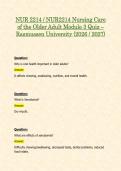
NUR 2214 / NUR2214 Nursing Care
of the Older Adult Module 3 Quiz –
Rasmussen University ()
Question:
Why is oral health important in older adults?
Answer:
It affects chewing, swallowing, nutrition, and overall health.
Question:
What is Xerostomia?
Answer:
Dry mouth.
Question:
What are effects of xerostomia?
Answer:
Difficulty chewing/swallowing, decreased taste, dental problems, reduced
food intake.
,Question:
Is tooth loss a normal part of aging?
Answer:
No.
Question:
What can poor oral care lead to?
Answer:
Malnutrition, dehydration, pneumonia, infections, poor diabetes control.
Question:
What is Dysphagia?
Answer:
Difficulty swallowing.
Question:
What are common causes of dysphagia?
Answer:
Stroke, dementia, Parkinson's disease.
,Question:
What are signs of dysphagia?
Answer:
Coughing with meals, choking, drooling, wet voice, food pocketing.
Question:
Why is dysphagia dangerous?
Answer:
Risk for aspiration and aspiration pneumonia.
Question:
What position should a patient be in while eating?
Answer:
Upright or HOB at least 45°.
Question:
How long should a patient remain upright after eating?
Answer:
30 minutes to 1 hour.
, Question:
What is malnutrition?
Answer:
Intake of nutrients less than needed.
Question:
What is protein-energy malnutrition?
Answer:
Low intake of calories and protein.
Question:
What are risks for malnutrition?
Answer:
Depression, dementia, dysphagia, poor dentition, polypharmacy,
dependence.
Question:
What are signs of malnutrition?
Answer:
Weight loss, weakness, poor healing, dry skin, hair changes, edema.
of the Older Adult Module 3 Quiz –
Rasmussen University ()
Question:
Why is oral health important in older adults?
Answer:
It affects chewing, swallowing, nutrition, and overall health.
Question:
What is Xerostomia?
Answer:
Dry mouth.
Question:
What are effects of xerostomia?
Answer:
Difficulty chewing/swallowing, decreased taste, dental problems, reduced
food intake.
,Question:
Is tooth loss a normal part of aging?
Answer:
No.
Question:
What can poor oral care lead to?
Answer:
Malnutrition, dehydration, pneumonia, infections, poor diabetes control.
Question:
What is Dysphagia?
Answer:
Difficulty swallowing.
Question:
What are common causes of dysphagia?
Answer:
Stroke, dementia, Parkinson's disease.
,Question:
What are signs of dysphagia?
Answer:
Coughing with meals, choking, drooling, wet voice, food pocketing.
Question:
Why is dysphagia dangerous?
Answer:
Risk for aspiration and aspiration pneumonia.
Question:
What position should a patient be in while eating?
Answer:
Upright or HOB at least 45°.
Question:
How long should a patient remain upright after eating?
Answer:
30 minutes to 1 hour.
, Question:
What is malnutrition?
Answer:
Intake of nutrients less than needed.
Question:
What is protein-energy malnutrition?
Answer:
Low intake of calories and protein.
Question:
What are risks for malnutrition?
Answer:
Depression, dementia, dysphagia, poor dentition, polypharmacy,
dependence.
Question:
What are signs of malnutrition?
Answer:
Weight loss, weakness, poor healing, dry skin, hair changes, edema.