
NSG124/NSG 124 Final Exam V1 |
Pharmacology Q&A with Rationale |
Herzing University
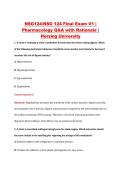
1. A nurse is reviewing a client’s medication list and notes the client is taking digoxin. Which
of the following electrolyte imbalances should the nurse monitor most closely for because it
increases the risk of digoxin toxicity?
A. Hypercalcemia
B. Hypomagnesemia
C. Hypernatremia
D. Hypokalemia
Correct Answer: D
Rationale: Hypokalemia increases the sensitivity of the cardiac muscle to digoxin, thereby
increasing the risk of toxicity. Digoxin and potassium compete for the same binding sites on
the sodium-potassium ATPase pump. Therefore, a low level of potassium allows more
digoxin to bind, leading to toxic effects even at normal serum levels.
2. A client is prescribed sublingual nitroglycerin for stable angina. Which instruction should
the nurse include in the teaching plan regarding the storage of this medication?
A. Keep the tablets in the refrigerator to maintain potency.
B. Transfer the tablets to a clear plastic pill organizer for easy access.
,C. Store the medication in the bathroom cabinet for convenience.
D. Keep the tablets in their original dark glass bottle away from light.
Correct Answer: D
Rationale: Nitroglycerin is highly sensitive to light, heat, and moisture, which can cause it
to decompose and lose effectiveness. Keeping the medication in its original dark glass
bottle protects it from light exposure. Patients should also be advised not to store it in
bathrooms or refrigerators where humidity and temperature fluctuations occur.
3. A nurse is preparing to administer heparin subcutaneously to a client. Which of the
following actions should the nurse take?
A. Aspirate for blood return before injecting the medication.
B. Administer the injection at least 2 inches away from the umbilicus.
C. Massage the injection site after the needle is withdrawn.
D. Use a 1-inch, 18-gauge needle for the injection.
Correct Answer: B
Rationale: Heparin should be administered in the abdomen at least 2 inches away from the
umbilicus to ensure proper subcutaneous absorption. Aspiration and massaging the site
are contraindicated as they increase the risk of tissue damage and hematoma formation.
The nurse should use a small-gauge needle (25- to 27-gauge) to minimize trauma.
, 4. Which of the following medications is considered the gold standard antidote for an
overdose of warfarin?
A. Protamine sulfate
B. Vitamin K
C. Naloxone
D. Acetylcysteine
Correct Answer: B
Rationale: Vitamin K is the specific antagonist for warfarin and is used to reverse its
anticoagulant effects in the event of an overdose or excessive bleeding. Warfarin works by
inhibiting vitamin K-dependent clotting factors. Administering Vitamin K allows the liver to
resume the synthesis of these factors, neutralizing the drug’s effect.
5. A client with type 1 diabetes mellitus is prescribed lispro insulin. When should the nurse
instruct the client to administer this medication?
A. 30 to 60 minutes before a meal.
B. Immediately after eating.
C. Once daily at bedtime.
D. 15 minutes before a meal.
Correct Answer: D
Pharmacology Q&A with Rationale |
Herzing University
1. A nurse is reviewing a client’s medication list and notes the client is taking digoxin. Which
of the following electrolyte imbalances should the nurse monitor most closely for because it
increases the risk of digoxin toxicity?
A. Hypercalcemia
B. Hypomagnesemia
C. Hypernatremia
D. Hypokalemia
Correct Answer: D
Rationale: Hypokalemia increases the sensitivity of the cardiac muscle to digoxin, thereby
increasing the risk of toxicity. Digoxin and potassium compete for the same binding sites on
the sodium-potassium ATPase pump. Therefore, a low level of potassium allows more
digoxin to bind, leading to toxic effects even at normal serum levels.
2. A client is prescribed sublingual nitroglycerin for stable angina. Which instruction should
the nurse include in the teaching plan regarding the storage of this medication?
A. Keep the tablets in the refrigerator to maintain potency.
B. Transfer the tablets to a clear plastic pill organizer for easy access.
,C. Store the medication in the bathroom cabinet for convenience.
D. Keep the tablets in their original dark glass bottle away from light.
Correct Answer: D
Rationale: Nitroglycerin is highly sensitive to light, heat, and moisture, which can cause it
to decompose and lose effectiveness. Keeping the medication in its original dark glass
bottle protects it from light exposure. Patients should also be advised not to store it in
bathrooms or refrigerators where humidity and temperature fluctuations occur.
3. A nurse is preparing to administer heparin subcutaneously to a client. Which of the
following actions should the nurse take?
A. Aspirate for blood return before injecting the medication.
B. Administer the injection at least 2 inches away from the umbilicus.
C. Massage the injection site after the needle is withdrawn.
D. Use a 1-inch, 18-gauge needle for the injection.
Correct Answer: B
Rationale: Heparin should be administered in the abdomen at least 2 inches away from the
umbilicus to ensure proper subcutaneous absorption. Aspiration and massaging the site
are contraindicated as they increase the risk of tissue damage and hematoma formation.
The nurse should use a small-gauge needle (25- to 27-gauge) to minimize trauma.
, 4. Which of the following medications is considered the gold standard antidote for an
overdose of warfarin?
A. Protamine sulfate
B. Vitamin K
C. Naloxone
D. Acetylcysteine
Correct Answer: B
Rationale: Vitamin K is the specific antagonist for warfarin and is used to reverse its
anticoagulant effects in the event of an overdose or excessive bleeding. Warfarin works by
inhibiting vitamin K-dependent clotting factors. Administering Vitamin K allows the liver to
resume the synthesis of these factors, neutralizing the drug’s effect.
5. A client with type 1 diabetes mellitus is prescribed lispro insulin. When should the nurse
instruct the client to administer this medication?
A. 30 to 60 minutes before a meal.
B. Immediately after eating.
C. Once daily at bedtime.
D. 15 minutes before a meal.
Correct Answer: D


