

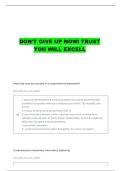
Areas that must be included in a comprehensive assessment:
Give this one a try later!
1. physicial development & medical problems (including general health
conditions & possible infectious diseases such as HIV, TB, Hepatitis, and
STD's.)
2. History of drug use & any previous SUD Tx.
3. psychosocial problems ( either causing drug use or resulting from
substance abuse) such as family & peer relationships, school & vocational
difficulties, & legal & financial problems.
4. psychiatric disorders,
5. current socioeconomic status & eligibility for various programs.
Comprehensive Assessment: Information Gathering
Give this one a try later!
, three sources of info that can be helpful in a comprehensive assessment
1. existing information
2. individual and collateral interviews
3. testing instruments
Assessment is important because....
Give this one a try later!
*it's used to make a diagnosis
* used to develop treatment plans
* important to be valid and reliable
Three basic steps in assessment process:
Give this one a try later!
1. Information
2. Data analysis
3. treatment plan development
Telemetered Drug Use Detection:
Give this one a try later!
drug detection device worn on wrist. analyzes perspiration.
, Criteria related to the program may include:
Give this one a try later!
1. Environment & philosophy of the program
2. Whether the program is:
a. detoxification unit
b. inpatient
c. residential
d. outpatient
General types of forms: release of information forms
Give this one a try later!
the required written permission of a client of r the release of information to
a specific outside party or to receive any information from an outside party.
i.e. former tx. provider or therapist, probation or parole officer, family
physician, etc.
Treatment Plan Development:
Give this one a try later!
The data derived from the screening and assessment is used to develop a
treatment plan.
* The plan must be individualized.
* Treatment plan should be comprehensive
Give this one a try later!
1. physicial development & medical problems (including general health
conditions & possible infectious diseases such as HIV, TB, Hepatitis, and
STD's.)
2. History of drug use & any previous SUD Tx.
3. psychosocial problems ( either causing drug use or resulting from
substance abuse) such as family & peer relationships, school & vocational
difficulties, & legal & financial problems.
4. psychiatric disorders,
5. current socioeconomic status & eligibility for various programs.
Comprehensive Assessment: Information Gathering
Give this one a try later!
, three sources of info that can be helpful in a comprehensive assessment
1. existing information
2. individual and collateral interviews
3. testing instruments
Assessment is important because....
Give this one a try later!
*it's used to make a diagnosis
* used to develop treatment plans
* important to be valid and reliable
Three basic steps in assessment process:
Give this one a try later!
1. Information
2. Data analysis
3. treatment plan development
Telemetered Drug Use Detection:
Give this one a try later!
drug detection device worn on wrist. analyzes perspiration.
, Criteria related to the program may include:
Give this one a try later!
1. Environment & philosophy of the program
2. Whether the program is:
a. detoxification unit
b. inpatient
c. residential
d. outpatient
General types of forms: release of information forms
Give this one a try later!
the required written permission of a client of r the release of information to
a specific outside party or to receive any information from an outside party.
i.e. former tx. provider or therapist, probation or parole officer, family
physician, etc.
Treatment Plan Development:
Give this one a try later!
The data derived from the screening and assessment is used to develop a
treatment plan.
* The plan must be individualized.
* Treatment plan should be comprehensive


