
CEN PRACTICE QUESTIONS with 100% Verified Answers
UPDATED!!!.
parenteral analgesics and broad-spectrum ABX, ensuring appropriate tetanus prophylaxis,
and elevating the injury. High-pressure injection injuries are a surgical emergency requiring
thorough cleansing and immediate decompression to prevent compartment syndrome and
tissue necrosis. Hydrocarbon-based substances (e.g., fuel, paint thinners, organic solvents)
cause the most severe inflammatory response and are associated with the highest incidence
of subsequence amputations.
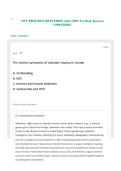
, B. N/V
Rationale: N/V that start within 3-6hrs of exposure are the most common initial
manifestations of MILD radiation toxicity. Vomiting that begins within 1hr indicates
exposure to a potentially lethal radiation dose, probably more than 600rads. Radiation
levels ≥ 200 rads are marked by confusion, weakness, and fever. Levels ≥ 300 rads
produce hair loss, hemorrhage, and diarrhea. Tremors and seizure activity follow
massive doses of radiation, usually at levels above 1000 rads. Because radiation
damage occurs INSIDE the cells, there is little than can be done to reverse the process.
Patients who are quickly symptomatic after exposure are most likely to die, although
the process may take days. Care is largely supportive and symptomatic.
D. Skin decontamination
The patient's presentation and recent history suggest organophosphate or cabamate
poisoning. These substances are found in industrial insecticides used on farms, as well as in
home pesticides (bug spray). Toxicity causes a cholinergic crisis resulting in stimulation and
hypersecretion of body fluids. Findings in the patient with a cholinergic toxicity are MUDDLE.
Miosis (constriction of pupils), Urination (increase in urination), Diaphoresis, Defecation,
Lacrimation, Excitement. As well as SLUDGE: Salivation, Lacrimation, Urination, Defecation, GI
upset, and Emesis. Death occurs related to respiratory occurs r/t respiratory failure caused by
respiratory muscle paralysis nd increased secretions. In the walking and talking patient, the
priority intervention is to decontaminate the patient to avoid cross-contamination of medical
caregivers and equipment. Antidote administration-intravenous atropine and pralidoxime (2-
PAM; Protopam)-will likely be required.
,
UPDATED!!!.
parenteral analgesics and broad-spectrum ABX, ensuring appropriate tetanus prophylaxis,
and elevating the injury. High-pressure injection injuries are a surgical emergency requiring
thorough cleansing and immediate decompression to prevent compartment syndrome and
tissue necrosis. Hydrocarbon-based substances (e.g., fuel, paint thinners, organic solvents)
cause the most severe inflammatory response and are associated with the highest incidence
of subsequence amputations.
, B. N/V
Rationale: N/V that start within 3-6hrs of exposure are the most common initial
manifestations of MILD radiation toxicity. Vomiting that begins within 1hr indicates
exposure to a potentially lethal radiation dose, probably more than 600rads. Radiation
levels ≥ 200 rads are marked by confusion, weakness, and fever. Levels ≥ 300 rads
produce hair loss, hemorrhage, and diarrhea. Tremors and seizure activity follow
massive doses of radiation, usually at levels above 1000 rads. Because radiation
damage occurs INSIDE the cells, there is little than can be done to reverse the process.
Patients who are quickly symptomatic after exposure are most likely to die, although
the process may take days. Care is largely supportive and symptomatic.
D. Skin decontamination
The patient's presentation and recent history suggest organophosphate or cabamate
poisoning. These substances are found in industrial insecticides used on farms, as well as in
home pesticides (bug spray). Toxicity causes a cholinergic crisis resulting in stimulation and
hypersecretion of body fluids. Findings in the patient with a cholinergic toxicity are MUDDLE.
Miosis (constriction of pupils), Urination (increase in urination), Diaphoresis, Defecation,
Lacrimation, Excitement. As well as SLUDGE: Salivation, Lacrimation, Urination, Defecation, GI
upset, and Emesis. Death occurs related to respiratory occurs r/t respiratory failure caused by
respiratory muscle paralysis nd increased secretions. In the walking and talking patient, the
priority intervention is to decontaminate the patient to avoid cross-contamination of medical
caregivers and equipment. Antidote administration-intravenous atropine and pralidoxime (2-
PAM; Protopam)-will likely be required.
,


