

Written by students who passed Immediately available after payment Read online or as PDF Wrong document? Swap it for free 4.6 TrustPilot
logo-home
Document preview thumbnail
Preview 2 out of 10 pages
Exam (elaborations)

NSG 552 Exam 1 Antidepressants 2026 – 75+ Practice Questions on SSRIs, SNRIs, TCAs, MAOIs & Depression Pharmacotherapy

Document preview thumbnail
Preview 2 out of 10 pages

This comprehensive NSG 552 Exam 1 Antidepressants study guide contains over 75 high-yield practice questions and answers covering the neurobiology of depression, antidepressant classifications, medication mechanisms of action, adverse effect management, and evidence-based prescribing principles essential for psychiatric nursing practice. Designed for graduate nursing students and advanced practice providers, this resource converts complex psychopharmacology concepts into an active recall format that strengthens clinical reasoning, enhances medication safety awareness, and improves performance on psychiatric nursing examinations and certification assessments. The material integrates pharmacodynamics, therapeutic applications, patient counseling considerations, and treatment strategies frequently emphasized in Psychiatric Mental Health Nurse Practitioner (PMHNP) programs and advanced psychopharmacology courses. The guide begins with an in-depth review of the monoamine theory of depression, emphasizing the critical roles of serotonin, norepinephrine, and dopamine in mood regulation and the pathophysiology of depressive disorders. Students will strengthen their understanding of how alterations in neurotransmitter activity contribute to depressive symptoms and how antidepressant medications target these pathways to restore neurochemical balance and improve clinical outcomes. Extensive coverage of Selective Serotonin Reuptake Inhibitors (SSRIs) examines their mechanisms of action, therapeutic advantages, and role as first-line agents in the treatment of Major Depressive Disorder (MDD). Learners will review medication-specific characteristics of commonly prescribed SSRIs, including fluoxetine, sertraline, paroxetine, citalopram, fluvoxamine, and their unique clinical applications. Topics include differences in half-life, FDA-approved indications, pregnancy considerations, overdose safety profiles, and the management of common adverse effects such as gastrointestinal disturbances, insomnia, agitation, hyponatremia, bleeding risk, and sexual dysfunction. The resource provides detailed exploration of Serotonin-Norepinephrine Reuptake Inhibitors (SNRIs), Norepinephrine-Dopamine Reuptake Inhibitors (NDRIs), Serotonin Receptor Antagonists and Reuptake Inhibitors (SARIs), and Noradrenergic and Specific Serotonergic Antidepressants (NaSSAs). Students will develop a thorough understanding of bupropion, trazodone, mirtazapine, duloxetine, and venlafaxine, including their mechanisms of action, target symptoms, advantages, contraindications, and adverse effect profiles. Clinical applications such as smoking cessation, treatment of antidepressant-induced sexual dysfunction, insomnia management, appetite stimulation, and symptom-based medication selection are emphasized to support individualized treatment planning. Comprehensive review of Tricyclic Antidepressants (TCAs) highlights their pharmacologic properties, therapeutic uses, and significant safety considerations. Learners will examine medications such as amitriptyline, imipramine, clomipramine, nortriptyline, desipramine, and amoxapine while differentiating their roles in depression, obsessive-compulsive disorder, enuresis, chronic pain syndromes, migraine prophylaxis, and insomnia. The guide also addresses anticholinergic effects, cardiovascular toxicity, seizure risk, overdose lethality, electrocardiographic abnormalities, and evidence-based strategies for managing TCA overdose. Monoamine Oxidase Inhibitors (MAOIs) are reviewed extensively through discussions of their mechanisms, clinical indications, dietary restrictions, and drug interaction precautions. Students will strengthen their understanding of tyramine-containing foods, hypertensive crisis prevention, serotonin syndrome risk, medication washout periods, and the distinctive role of agents such as phenelzine and transdermal selegiline in treatment-resistant depression and atypical depressive presentations. Special emphasis is placed on antidepressant safety, monitoring, and patient counseling. Topics include antidepressant discontinuation syndrome, serotonin syndrome recognition, black box warnings regarding suicidality in children and adolescents, antidepressant selection during pregnancy, sedating versus activating antidepressant profiles, and evidence-based interventions for managing antidepressant-induced sexual dysfunction. These concepts support safe prescribing practices and strengthen learners' confidence in psychopharmacologic decision-making. This study guide is particularly valuable for Psychiatric Mental Health Nurse Practitioner (PMHNP) students, Master of Science in Nursing (MSN) students, Doctor of Nursing Practice (DNP) students, psychiatric nursing students, advanced practice registered nurses, physician assistant students specializing in behavioral health, psychiatry residents, nurse practitioner certification candidates, and healthcare professionals seeking a focused review of antidepressant pharmacotherapy. The content aligns with established evidence-based practice standards and authoritative references, including: Stahl, S. M. (2024). Stahl's Essential Psychopharmacology: Neuroscientific Basis and Practical Applications (6th ed.). Cambridge University Press. Stahl, S. M. (2024). Stahl's Essential Psychopharmacology Prescriber's Guide (8th ed.). Cambridge University Press. American Psychiatric Association. (2023). Practice Guideline for the Treatment of Patients With Major Depressive Disorder. Townsend, M. C., & Morgan, K. I. (2024). Psychiatric Mental Health Nursing: Concepts of Care in Evidence-Based Practice (11th ed.). F.A. Davis. Sadock, B. J., Sadock, V. A., & Ruiz, P. (2022). Kaplan & Sadock's Synopsis of Psychiatry (12th ed.). Wolters Kluwer. National Institute for Health and Care Excellence (NICE). Current recommendations for the pharmacological treatment of depressive disorders. Designed as both an intensive examination review and a practical psychopharmacology companion, this study guide promotes active learning, strengthens diagnostic and prescribing confidence, enhances medication safety awareness, and prepares learners to integrate evidence-based antidepressant therapy into advanced psychiatric nursing practice. Keywords: NSG 552, NSG 552 Exam 1, Antidepressants, Psychopharmacology, Depression pharmacology, Monoamine theory, Major depressive disorder, MDD, SSRIs, Selective serotonin reuptake inhibitors, Fluoxetine, Sertraline, Paroxetine, Citalopram, Fluvoxamine, SNRIs, Serotonin norepinephrine reuptake inhibitors, Venlafaxine, Duloxetine, NDRI, Bupropion, Trazodone, Mirtazapine, TCAs, Tricyclic antidepressants, Amitriptyline, Imipramine, Clomipramine, Nortriptyline, Desipramine, Amoxapine, MAOIs, Monoamine oxidase inhibitors, Phenelzine, Selegiline, Tyramine diet, Hypertensive crisis, Serotonin syndrome, Antidepressant discontinuation syndrome, Sexual dysfunction, Major depression treatment, OCD pharmacotherapy, Smoking cessation, Insomnia treatment, Chronic pain management, Migraine prophylaxis, Enuresis treatment, Treatment-resistant depression, Suicide risk warning, Pediatric depression, Pregnancy considerations, PMHNP exam preparation, Psychiatric nursing review, Advanced psychopharmacology, Nurse practitioner certification review

Content preview

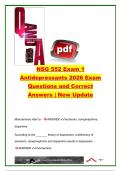
NSG 552 Exam 1
Antidepressants 2026 Exam
Questions and Correct
Answers | New Update


Monoamines refer to - ANSWER ✔✔serotonin, norepinephrine,

dopamine

According to the _______ theory of depression, a deficiency of

serotonin, norepinephrine and dopamine results in depression. -

ANSWER ✔✔monoamine

, What are the major classes of antidepressants? - ANSWER

✔✔SSRIs, SNRIs, TCAs, MAOIs, atypical


#1 reason why some patients stop taking their antidepressant meds? -

ANSWER ✔✔S/e


Sexual dysfunction being #1 (libido, ED, etc)


MOA of SSRIs: - ANSWER ✔✔Inhibit presynaptic HT2A reuptake

pumps: increases availability of 5HT in synaptic cleft


First line tx for MDD: - ANSWER ✔✔SSRIs


Advantage of SSRIs over the other classes of antidepressants: -

ANSWER ✔✔tolerability and safety


GI side effects associated w/ antidepressants are often transient lasting

1-2 weeks - ANSWER ✔✔True


SSRI w/ longest half life: - ANSWER ✔✔fluoxetine


SSRI FDA approved for OCD: - ANSWER ✔✔fluvoxamine


SSRI w/ the shortest half-life, significant s/e such as anticholinergic and

sexual dysfunction: - ANSWER ✔✔paroxetine

Document information

Uploaded on
June 11, 2026
Number of pages
10
Written in
2025/2026
Type
Exam (elaborations)
Contains
Questions & answers
$18.99

Wrong document? Swap it for free Within 14 days of purchase and before downloading, you can choose a different document. You can simply spend the amount again.
Written by students who passed
Immediately available after payment
Read online or as PDF

Seller avatar
Reputation scores are based on the amount of documents a seller has sold for a fee and the reviews they have received for those documents. There are three levels: Bronze, Silver and Gold. The better the reputation, the more your can rely on the quality of the sellers work.
PROFFKERRYMARTIN
3.3
(60)
Sold
303
Followers
10
Items
11356
Last sold
1 day ago


Why students choose Stuvia

Created by fellow students, verified by reviews

Quality you can trust: written by students who passed their tests and reviewed by others who've used these notes.

Didn't get what you expected? Choose another document

No worries! You can instantly pick a different document that better fits what you're looking for.

Pay as you like, start learning right away

No subscription, no commitments. Pay the way you're used to via credit card and download your PDF document instantly.

Student with book image

“Bought, downloaded, and aced it. It really can be that simple.”

Alisha Student

Working on your references?

Create accurate citations in APA, MLA and Harvard with our free citation generator.

Working on your references?

Frequently asked questions

