NR 667 CEA FINAL EXAM STUDY GUIDE
2025
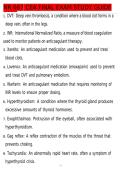
1. DVT: Deep vein thrombosis, a condition where a blood clot forms in a
deep vein, often in the legs.
2. INR: International Normalized Ratio, a measure of blood coagulation
used to monitor patients on anticoagulant therapy.
3. Xarelto: An anticoagulant medication used to prevent and treat
blood clots.
4. Lovenox: An anticoagulant medication (enoxaparin) used to prevent
and treat DVT and pulmonary embolism.
5. Warfarin: An anticoagulant medication that requires monitoring of
INR levels to ensure proper dosing.
6. Hyperthyroidism: A condition where the thyroid gland produces
excessive amounts of thyroid hormones.
7. Exophthalmos: Protrusion of the eyeball, often associated with
hyperthyroidism.
8. Gag reflex: A reflex contraction of the muscles of the throat that
prevents choking.
9. Tachycardia: An abnormally rapid heart rate, often a symptom of
hyperthyroid crisis.
,NR 667 CEA FINAL EXAM STUDY GUIDE
2025
10. Periorbital edema: Swelling around the eyes, which can be a
sign of various medical conditions.
11. Corticosteroids: A class of steroid hormones used to reduce
inflammation in autoimmune disorders.
12. Monoclonal antibodies: Antibodies that are made by identical
immune cells, used in the treatment of various diseases, including
autoimmune disorders.
13. H2 receptor antagonist: A class of medications that reduce
stomach acid production, not typically used for autoimmune
diseases.
14. Non-steroid anti-inflammatory: Medications used to
relieve pain and reduce inflammation with-out steroids.
15. Hypothyroidism: A condition where the thyroid gland does
not produce enough thyroid hormones.
16. Myxedema: A severe form of hypothyroidism characterized by
swelling of the skin and underlying tissues.
17. Bilateral conjunctivitis: Inflammation of the conjunctiva in
both eyes, which can cause redness and discomfort.
,NR 667 CEA FINAL EXAM STUDY GUIDE
2025
18. Glossopharyngeal nerve: Cranial nerve IX, responsible for
the gag reflex and other functions.
19. Trigeminal nerve: Cranial nerve V, responsible for
sensation in the face and motor functions such as biting and
chewing.
20. Hypoglossal nerve: Cranial nerve XII, responsible for
tongue movements.
21. Abducens nerve: Cranial nerve VI, responsible for eye
movement.
22. Severe hypothyroidism: A condition where the thyroid
hormone levels are critically low, leading to significant health issues.
23. microcytic hypochromic anemia: A type of anemia
characterized by smaller than normal red blood cells and reduced
hemoglobin content.
24. red cell distribution width: A measure of the variation in
the size of red blood cells.
, NR 667 CEA FINAL EXAM STUDY GUIDE
2025
25. macrocytic anemia: A type of anemia characterized by
larger than normal red blood cells.
26. etiology: The study of the cause or origin of a disease.
27. eccrine sweat glands: Sweat glands concentrated in the
palms of the hands and soles of the feet, involved in temperature
regulation.
28. gustatory hallucination: A type of hallucination where a
person experiences a false perception of taste.
29. stereognosis: The ability to recognize objects by touch
alone.
30. glomerulonephritis: An inflammation of the glomeruli in the
kidneys, often leading to hematuria.
31. urinalysis with micro and micro albumin: A test to
evaluate kidney function by measuring the presence of
albumin in urine.
32. irregular heart rate: A condition where the heart beats in
an irregular pattern.
33. BUN/creatinine ratio: A test used to assess kidney
2025
1. DVT: Deep vein thrombosis, a condition where a blood clot forms in a
deep vein, often in the legs.
2. INR: International Normalized Ratio, a measure of blood coagulation
used to monitor patients on anticoagulant therapy.
3. Xarelto: An anticoagulant medication used to prevent and treat
blood clots.
4. Lovenox: An anticoagulant medication (enoxaparin) used to prevent
and treat DVT and pulmonary embolism.
5. Warfarin: An anticoagulant medication that requires monitoring of
INR levels to ensure proper dosing.
6. Hyperthyroidism: A condition where the thyroid gland produces
excessive amounts of thyroid hormones.
7. Exophthalmos: Protrusion of the eyeball, often associated with
hyperthyroidism.
8. Gag reflex: A reflex contraction of the muscles of the throat that
prevents choking.
9. Tachycardia: An abnormally rapid heart rate, often a symptom of
hyperthyroid crisis.
,NR 667 CEA FINAL EXAM STUDY GUIDE
2025
10. Periorbital edema: Swelling around the eyes, which can be a
sign of various medical conditions.
11. Corticosteroids: A class of steroid hormones used to reduce
inflammation in autoimmune disorders.
12. Monoclonal antibodies: Antibodies that are made by identical
immune cells, used in the treatment of various diseases, including
autoimmune disorders.
13. H2 receptor antagonist: A class of medications that reduce
stomach acid production, not typically used for autoimmune
diseases.
14. Non-steroid anti-inflammatory: Medications used to
relieve pain and reduce inflammation with-out steroids.
15. Hypothyroidism: A condition where the thyroid gland does
not produce enough thyroid hormones.
16. Myxedema: A severe form of hypothyroidism characterized by
swelling of the skin and underlying tissues.
17. Bilateral conjunctivitis: Inflammation of the conjunctiva in
both eyes, which can cause redness and discomfort.
,NR 667 CEA FINAL EXAM STUDY GUIDE
2025
18. Glossopharyngeal nerve: Cranial nerve IX, responsible for
the gag reflex and other functions.
19. Trigeminal nerve: Cranial nerve V, responsible for
sensation in the face and motor functions such as biting and
chewing.
20. Hypoglossal nerve: Cranial nerve XII, responsible for
tongue movements.
21. Abducens nerve: Cranial nerve VI, responsible for eye
movement.
22. Severe hypothyroidism: A condition where the thyroid
hormone levels are critically low, leading to significant health issues.
23. microcytic hypochromic anemia: A type of anemia
characterized by smaller than normal red blood cells and reduced
hemoglobin content.
24. red cell distribution width: A measure of the variation in
the size of red blood cells.
, NR 667 CEA FINAL EXAM STUDY GUIDE
2025
25. macrocytic anemia: A type of anemia characterized by
larger than normal red blood cells.
26. etiology: The study of the cause or origin of a disease.
27. eccrine sweat glands: Sweat glands concentrated in the
palms of the hands and soles of the feet, involved in temperature
regulation.
28. gustatory hallucination: A type of hallucination where a
person experiences a false perception of taste.
29. stereognosis: The ability to recognize objects by touch
alone.
30. glomerulonephritis: An inflammation of the glomeruli in the
kidneys, often leading to hematuria.
31. urinalysis with micro and micro albumin: A test to
evaluate kidney function by measuring the presence of
albumin in urine.
32. irregular heart rate: A condition where the heart beats in
an irregular pattern.
33. BUN/creatinine ratio: A test used to assess kidney