

NUR 104- WVJC Exam 4
Study online at https://quizlet.com/_bk4egh
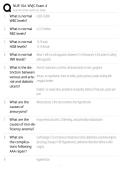
1. What is normal 4,300-10,800
WBC levels?
2. What is normal 4.2-5.9 million
RBC levels?
3. What is normal 13-18 male
HGB levels? 12-16 female
4. What is normal About 1 with no anticoagulants; between 2-3 is therapeutic is the patient is taking
INR levels? anticoagulants
5. What is the dis- Arterial: claudication, cool foot, decreased pulse on toes, gangrene
tinction between
venous and arte- Venous: no claudication, hurts on ankles, pulses present, purple looking with
rial and diabetic irregular borders
ulcers?
Diabetic: no claudication, peripheral neuropathy, bottom of foot pale, pulses pre-
sent
6. What are the Atherosclerosis is the most common; then hypertension
causes of
aneurysms?
7. What are the Heavy menstrual cycles, GI bleeding, and potentially malabsorption
causes of iron-de-
ficiency anemia?
8. What are Graft leakage: S/S ecchymosis, hematomas in back, abdominal, or perineal regions
the complica- (bruising), changes in BP (hypotension), abdominal distention before vs after
tions following surgery
AAA repair?
9. Hypertension
1/5
, NUR 104- WVJC Exam 4
Study online at https://quizlet.com/_bk4egh
What increases
the risk of graft
rupture after AAA
repair?
10. What are compli- CVA, MI, kidney failure, death
cations from hy-
pertension?
11. How do we diag- The presence of Reed-Sternberg cells
nose Hodgkin's
Lymphoma?
12. What is the differ- Urgency: asymptomatic, BP above 180/120; Treatment: oral medications, follow up
ence in hyperten- with GP
sive urgency and
emergency? (in- Emergency: symptomatic, BP above 180/120; S/S: blurred vision, headache,
clude diagnosis stroke, seizure, acute MI, acute HF, edema, acute kidney failure;
and treatment) Treatment: may need IV meds and monitoring, reduce MAP by 25% in first hour
and BP less than 160/110 within 6 hours
13. What are the Elevate affected leg while in bed, ambulate but avoid strenuous activity, wear
interventions for compression stockings, warm compresses, do NOT massage affected limb, anti-
DVT? coagulants, inferior vena cava filter
If they are taking heparin; monitor them for injury and assess IV patency (no
bleeding)
14. How do we pre- Stop smoking, prophylactic anticoagulation, walking, TED hose
vent DVT?
15. What are the Patient education: stop smoking, wear gloves and warm clothes, manage stress,
interventions for avoid caffeine
Raynaud's?
2/5
Study online at https://quizlet.com/_bk4egh
1. What is normal 4,300-10,800
WBC levels?
2. What is normal 4.2-5.9 million
RBC levels?
3. What is normal 13-18 male
HGB levels? 12-16 female
4. What is normal About 1 with no anticoagulants; between 2-3 is therapeutic is the patient is taking
INR levels? anticoagulants
5. What is the dis- Arterial: claudication, cool foot, decreased pulse on toes, gangrene
tinction between
venous and arte- Venous: no claudication, hurts on ankles, pulses present, purple looking with
rial and diabetic irregular borders
ulcers?
Diabetic: no claudication, peripheral neuropathy, bottom of foot pale, pulses pre-
sent
6. What are the Atherosclerosis is the most common; then hypertension
causes of
aneurysms?
7. What are the Heavy menstrual cycles, GI bleeding, and potentially malabsorption
causes of iron-de-
ficiency anemia?
8. What are Graft leakage: S/S ecchymosis, hematomas in back, abdominal, or perineal regions
the complica- (bruising), changes in BP (hypotension), abdominal distention before vs after
tions following surgery
AAA repair?
9. Hypertension
1/5
, NUR 104- WVJC Exam 4
Study online at https://quizlet.com/_bk4egh
What increases
the risk of graft
rupture after AAA
repair?
10. What are compli- CVA, MI, kidney failure, death
cations from hy-
pertension?
11. How do we diag- The presence of Reed-Sternberg cells
nose Hodgkin's
Lymphoma?
12. What is the differ- Urgency: asymptomatic, BP above 180/120; Treatment: oral medications, follow up
ence in hyperten- with GP
sive urgency and
emergency? (in- Emergency: symptomatic, BP above 180/120; S/S: blurred vision, headache,
clude diagnosis stroke, seizure, acute MI, acute HF, edema, acute kidney failure;
and treatment) Treatment: may need IV meds and monitoring, reduce MAP by 25% in first hour
and BP less than 160/110 within 6 hours
13. What are the Elevate affected leg while in bed, ambulate but avoid strenuous activity, wear
interventions for compression stockings, warm compresses, do NOT massage affected limb, anti-
DVT? coagulants, inferior vena cava filter
If they are taking heparin; monitor them for injury and assess IV patency (no
bleeding)
14. How do we pre- Stop smoking, prophylactic anticoagulation, walking, TED hose
vent DVT?
15. What are the Patient education: stop smoking, wear gloves and warm clothes, manage stress,
interventions for avoid caffeine
Raynaud's?
2/5


