

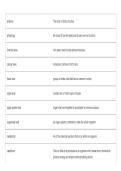
anatomy The study of body structure
physiology the study of how the body and its parts work or function
chemical level Very basic level includes atoms/molecules.
cellular level molecules combine to form cells
tissue level groups of similar cells that have a common function
organ level contains two or more types of tissues
organ system level organs that work together to accomplish a common purpose
organismal level all organ systems combined to make the whole organism
metabolism All of the chemical reactions that occur within an organism
catabolism The sum total of all processes in an organism which break down chemicals to
produce energy and simple chemical building blocks.
, anabolism The sum total of all processes in an organism which use energy and simple
chemical building blocks to produce large chemicals and structures necessary for
life.
responsiveness the body's ability to detect and respond to changes
movement includes motion of the whole body, individual organs, single cells, and even tiny
structures inside cells
growth increase in body size
differentiation the development of a cell from an unspecialized to a specialized state
reproduction the formation of new organisms of the same species
autopsy An examination of the body after death usually with such dissection as will
expose the vital organs for determining the cause of death.
physiology the study of how the body and its parts work or function
chemical level Very basic level includes atoms/molecules.
cellular level molecules combine to form cells
tissue level groups of similar cells that have a common function
organ level contains two or more types of tissues
organ system level organs that work together to accomplish a common purpose
organismal level all organ systems combined to make the whole organism
metabolism All of the chemical reactions that occur within an organism
catabolism The sum total of all processes in an organism which break down chemicals to
produce energy and simple chemical building blocks.
, anabolism The sum total of all processes in an organism which use energy and simple
chemical building blocks to produce large chemicals and structures necessary for
life.
responsiveness the body's ability to detect and respond to changes
movement includes motion of the whole body, individual organs, single cells, and even tiny
structures inside cells
growth increase in body size
differentiation the development of a cell from an unspecialized to a specialized state
reproduction the formation of new organisms of the same species
autopsy An examination of the body after death usually with such dissection as will
expose the vital organs for determining the cause of death.


