
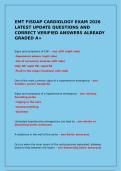
EMT FISDAP CARDIOLOGY EXAM 2026
LATEST UPDATE QUESTIONS AND
CORRECT VERIFIED ANSWERS ALREADY
GRADED A+
Signs and symptoms of CHF: - ans--JVD (right side)
-Dependent edema (right side)
-Use of accessory muscles (left side)
High BP, rapid HR, rapid RR
-Fluid in the lungs (crackles) (left side)
One of the most common signs of a hypertensive emergency: - ans-
Sudden, severe headache
Signs and symptoms of a hypertensive emergency: - ans--strong,
bounding pulse
-ringing in the ears
-nausea/vomiting
-dizziness
Untreated hypertensive emergencies can lead to: - ans-stroke or
dissecting aortic aneurysm
A weakness in the wall of the aorta: - ans-Aortic aneurysm
Occurs when the inner layers of the aorta become separated, allowing
blood to flow between the layers. - ans-Dissecting aortic aneurysm
, What is the primary cause of dissecting aortic aneurysms? - ans-
Uncontrolled hypertension
Signs and symptoms of a dissecting aortic aneurysm: - ans-Very sudden
chest pain located in the anterior part of the chest or in the back
between the shoulder blades
Nitroglycerin action: - ans-Activates the sympathetic NS, relaxes the
muscles of blood vessel walls, dilating coronary arteries, increasing blood
flow and the supply of oxygen to the heart
Contraindications of NTG: - ans-Use of ED drugs within the past 24-48
hours, maximum dose has already been given, BP is below 100
Non-shockable rhythms: - ans-Asystole, pulseless electrical activity
Only apply the AED to: - ans-Pulseless, unresponsive patients
After the shock is delivered to a cardiac arrest patient, you should: - ans-
Continue CPR for 5 cycles (2 minutes) and analyze rhythm again.
If ALS is not responding to the scene and your local protocols agree, you
should begin transport when: - ans-1. The patient regains a pulse
2. 6-9 shocks have been delivered
3. the machine gives 3 separate messages that no shock is advised
If you are traveling to the hospital and a pulse is not present: - ans-1. Stop
the vehicle
2. If the AED is not available, perform CPR
3. Call ALS
4. Analyze rhythm
5. Deliver one shock (if indicated) and resume CPR
LATEST UPDATE QUESTIONS AND
CORRECT VERIFIED ANSWERS ALREADY
GRADED A+
Signs and symptoms of CHF: - ans--JVD (right side)
-Dependent edema (right side)
-Use of accessory muscles (left side)
High BP, rapid HR, rapid RR
-Fluid in the lungs (crackles) (left side)
One of the most common signs of a hypertensive emergency: - ans-
Sudden, severe headache
Signs and symptoms of a hypertensive emergency: - ans--strong,
bounding pulse
-ringing in the ears
-nausea/vomiting
-dizziness
Untreated hypertensive emergencies can lead to: - ans-stroke or
dissecting aortic aneurysm
A weakness in the wall of the aorta: - ans-Aortic aneurysm
Occurs when the inner layers of the aorta become separated, allowing
blood to flow between the layers. - ans-Dissecting aortic aneurysm
, What is the primary cause of dissecting aortic aneurysms? - ans-
Uncontrolled hypertension
Signs and symptoms of a dissecting aortic aneurysm: - ans-Very sudden
chest pain located in the anterior part of the chest or in the back
between the shoulder blades
Nitroglycerin action: - ans-Activates the sympathetic NS, relaxes the
muscles of blood vessel walls, dilating coronary arteries, increasing blood
flow and the supply of oxygen to the heart
Contraindications of NTG: - ans-Use of ED drugs within the past 24-48
hours, maximum dose has already been given, BP is below 100
Non-shockable rhythms: - ans-Asystole, pulseless electrical activity
Only apply the AED to: - ans-Pulseless, unresponsive patients
After the shock is delivered to a cardiac arrest patient, you should: - ans-
Continue CPR for 5 cycles (2 minutes) and analyze rhythm again.
If ALS is not responding to the scene and your local protocols agree, you
should begin transport when: - ans-1. The patient regains a pulse
2. 6-9 shocks have been delivered
3. the machine gives 3 separate messages that no shock is advised
If you are traveling to the hospital and a pulse is not present: - ans-1. Stop
the vehicle
2. If the AED is not available, perform CPR
3. Call ALS
4. Analyze rhythm
5. Deliver one shock (if indicated) and resume CPR


