

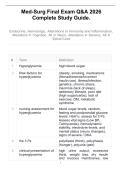
Med-Surg Final Exam Q&A 2026
Complete Study Guide.
Endocrine, Hemotolgic, Alterations in Immunity and Inflammation,
Alterations in Cognition, Alt in Neuro, Alterations in Sensory, Alt in
Spinal Cord
# Term Definition
1 Hyperglycemia high blood sugar
2 Risk factors for obesity, smoking, medications
hyperglycemia (Nonadherence/Incorrect
insulin use), illness/infection,
genetics, chronic stress,
insomnia (lack of sleep),
sedentary lifestyle, poor diet
(high sugar/carbs), lack of
exercise, DM, metabolic
syndrome
3 nursing assessment for blood sugar levels, random,
hyperglycemia fasting and postprandial glucose
levels. HbA1c. assess for 3 Ps.
Assess vital signs (Low BP,
Tachycardia), hemodynamic
stability, electrolyte levels, and
mental status (neuro changes),
signs of severe / DKA
4 the 3 Ps polydipsia (thirst), polyphasia
(hunger), polyuria (pee)
5 clinical presentation of high urine output, excessive
hyperglycemia thirst, weight loss, dry mouth
and mucous membranes, low
1
, blood pressure, increased HR,
changes in cognition
6 comorbitities for auto immune disorders,
hyperglycemia hyperlipidemia, hypertension,
gestational diabetes, PCOS,
metabolic syndrome, Cushings,
acromegally, pheochromocytoma
7 complications of metabolic syndrome, coma,
hyperglycemia death, damage to blood vessels,
nerve damage, CAD, stroke, PVD,
retinopathy, nephropathy, poor
wound healing, depression
8 IA? Which of the Insulin facilitates glucose uptake
following statements into cells, and a deficiency in
accurately describes insulin production or action can
the role of insulin? lead to hyperglycemia.
2
,MED-SURG FINAL EXAM
# Term Definition
9 IA? The nurse Gluconeogenesis The liver
anticipates that a converts stored glycogen to
client who has glucose to try to supply the
hyperglycemia may cells with the needed glucose.
have which of the Osmotic diuresis occurs in the
following kidneys as a response to excess
complications as the glucose spilling into the urine
liver begins and drawing water with it.
compensating? Insulin resistance will not
occur, and polyphagia is
excessive hunger that is
stimulated by the
hypothalamus not the liver.
10 IA? What is a potential Damage to major organs Due to
consequence of persistent high glucose levels,
chronic hyperglycemia chronic hyperglycemia can lead
and the inflammatory to an inflammatory process in the
process triggered by body. This inflammation is
excess glucose? harmful and can damage major
organs over time if
hyperglycemia is not treated.
Increased insulin sensitivity is
not a consequence of chronic
hyperglycemia; in fact, prolonged
high blood sugar levels can
cause insulin resistance. Chronic
hyperglycemia is also not
associated with a decreased risk
of cardiovascular disease; the
opposite is true, as there is an
increased risk of cardiovascular
complications. The prevention of
diabetic ketoacidosis is not a
result of chronic hyperglycemia;
rather, it is a potential acute
3
, MED-SURG FINAL EXAM
complication of uncontrolled
diabetes, which can occur if
hyperglycemia is not managed
properly.
11 IA? A client who Check a fingerstick blood
presents to the glucose level. Administration of
emergency a medication, such as insulin,
department is may be prescribed. However,
confused and combative the priority action is checking the
and has fruity breath. blood glucose level. Because this
Which of the following client is showing signs of DKA,
is the priority IV access and transfer to the
intervention for the intensive care unit will likely be
nurse? necessary. However, the first
necessary action is checking a
blood glucose level. There is no
need to obtain IV access at this
time.
12 IA? Which of the Diet changes, exercise,
following treatment Glucophage (metformin), Insulin
options are used for Hyperglycemia can be managed
clients who have with diet changes, exercise, and
hyperglycemia? Diet oral hypoglycemic medications
changes Dextrose such as metformin, in some
administration circumstances. For some
Exercise Insulin clients, treatment with insulin will
Glucophage be necessary.
(metformin) Glucagon Dextrose administration and
injection glucagon injection are
treatments for hypoglycemia,
not hyperglycemic.
4
Complete Study Guide.
Endocrine, Hemotolgic, Alterations in Immunity and Inflammation,
Alterations in Cognition, Alt in Neuro, Alterations in Sensory, Alt in
Spinal Cord
# Term Definition
1 Hyperglycemia high blood sugar
2 Risk factors for obesity, smoking, medications
hyperglycemia (Nonadherence/Incorrect
insulin use), illness/infection,
genetics, chronic stress,
insomnia (lack of sleep),
sedentary lifestyle, poor diet
(high sugar/carbs), lack of
exercise, DM, metabolic
syndrome
3 nursing assessment for blood sugar levels, random,
hyperglycemia fasting and postprandial glucose
levels. HbA1c. assess for 3 Ps.
Assess vital signs (Low BP,
Tachycardia), hemodynamic
stability, electrolyte levels, and
mental status (neuro changes),
signs of severe / DKA
4 the 3 Ps polydipsia (thirst), polyphasia
(hunger), polyuria (pee)
5 clinical presentation of high urine output, excessive
hyperglycemia thirst, weight loss, dry mouth
and mucous membranes, low
1
, blood pressure, increased HR,
changes in cognition
6 comorbitities for auto immune disorders,
hyperglycemia hyperlipidemia, hypertension,
gestational diabetes, PCOS,
metabolic syndrome, Cushings,
acromegally, pheochromocytoma
7 complications of metabolic syndrome, coma,
hyperglycemia death, damage to blood vessels,
nerve damage, CAD, stroke, PVD,
retinopathy, nephropathy, poor
wound healing, depression
8 IA? Which of the Insulin facilitates glucose uptake
following statements into cells, and a deficiency in
accurately describes insulin production or action can
the role of insulin? lead to hyperglycemia.
2
,MED-SURG FINAL EXAM
# Term Definition
9 IA? The nurse Gluconeogenesis The liver
anticipates that a converts stored glycogen to
client who has glucose to try to supply the
hyperglycemia may cells with the needed glucose.
have which of the Osmotic diuresis occurs in the
following kidneys as a response to excess
complications as the glucose spilling into the urine
liver begins and drawing water with it.
compensating? Insulin resistance will not
occur, and polyphagia is
excessive hunger that is
stimulated by the
hypothalamus not the liver.
10 IA? What is a potential Damage to major organs Due to
consequence of persistent high glucose levels,
chronic hyperglycemia chronic hyperglycemia can lead
and the inflammatory to an inflammatory process in the
process triggered by body. This inflammation is
excess glucose? harmful and can damage major
organs over time if
hyperglycemia is not treated.
Increased insulin sensitivity is
not a consequence of chronic
hyperglycemia; in fact, prolonged
high blood sugar levels can
cause insulin resistance. Chronic
hyperglycemia is also not
associated with a decreased risk
of cardiovascular disease; the
opposite is true, as there is an
increased risk of cardiovascular
complications. The prevention of
diabetic ketoacidosis is not a
result of chronic hyperglycemia;
rather, it is a potential acute
3
, MED-SURG FINAL EXAM
complication of uncontrolled
diabetes, which can occur if
hyperglycemia is not managed
properly.
11 IA? A client who Check a fingerstick blood
presents to the glucose level. Administration of
emergency a medication, such as insulin,
department is may be prescribed. However,
confused and combative the priority action is checking the
and has fruity breath. blood glucose level. Because this
Which of the following client is showing signs of DKA,
is the priority IV access and transfer to the
intervention for the intensive care unit will likely be
nurse? necessary. However, the first
necessary action is checking a
blood glucose level. There is no
need to obtain IV access at this
time.
12 IA? Which of the Diet changes, exercise,
following treatment Glucophage (metformin), Insulin
options are used for Hyperglycemia can be managed
clients who have with diet changes, exercise, and
hyperglycemia? Diet oral hypoglycemic medications
changes Dextrose such as metformin, in some
administration circumstances. For some
Exercise Insulin clients, treatment with insulin will
Glucophage be necessary.
(metformin) Glucagon Dextrose administration and
injection glucagon injection are
treatments for hypoglycemia,
not hyperglycemic.
4


