

Preview 1 out of 1 pages
Presentation
Reaction Mechanism
Preview 1 out of 1 pages
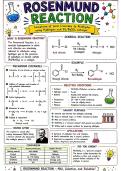
Rosenmund Reaction (Rosenmund Reduction) is an important organic name reaction in which an acid chloride (R–COCl) is selectively reduced to an aldehyde (R–CHO) using hydrogen gas (H₂) in the presence of a poisoned catalyst Pd/BaSO₄ (Palladium on Barium Sulfate). The poisoned catalyst prevents further reduction of the aldehyde into alcohol. This reaction was discovered by Karl Wilhelm Rosenmund in 1918 and is widely used in the preparation of aldehydes in organic synthesis, perfumes, pharmaceuticals, and fine chemicals.
Document information
- School year
- 1
- Uploaded on
- May 27, 2026
- Number of pages
- 1
- Written in
- 2025/2026
- Type
- Presentation
- Person
- Unknown
$10.99
Wrong document? Swap it for free
Within 14 days of purchase and before downloading, you can choose a different document. You can simply spend the amount again.
Written by students who passed
Immediately available after payment
Read online or as PDF


