

Written by students who passed Immediately available after payment Read online or as PDF Wrong document? Swap it for free 4.6 TrustPilot
logo-home
Document preview thumbnail
Preview 2 out of 10 pages
Summary

Summary A2 Unit 1: Derivatives of Carboxylic Acids

Document preview thumbnail
Preview 2 out of 10 pages

Summary of Derivatives of Carboxylic Acids for CCEA A2 Chemistry Unit 1

Content preview

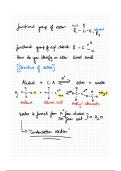
functional group of ester
Arid I o
algol

functional group ofacyl chloride R C


How do identify an ester sweet smell
you
Structure of esters


Alcohol C A ester water

cg
n
k o n n c In c
in
20
methanol ethanoic acid
methyl ethanoate

water is formed from H from alcohol
OH
from acid
3 420

Condensation reaction

, ethyl proparoate


via
c c c


ethyl 3 chlorobutanoate

c i c c


Methyl 2 hydroxypropanoate


4 Vir
In
methanoate
Methyl


to 4 or

Document information

Study Level
Subject
Uploaded on
May 18, 2026
Number of pages
10
Written in
2024/2025
Type
Summary
$6.31

Wrong document? Swap it for free Within 14 days of purchase and before downloading, you can choose a different document. You can simply spend the amount again.
Written by students who passed
Immediately available after payment
Read online or as PDF

Sold
4
Followers
0
Items
23
Last sold
2 months ago


Why students choose Stuvia

Created by fellow students, verified by reviews

Quality you can trust: written by students who passed their tests and reviewed by others who've used these notes.

Didn't get what you expected? Choose another document

No worries! You can instantly pick a different document that better fits what you're looking for.

Pay as you like, start learning right away

No subscription, no commitments. Pay the way you're used to via credit card and download your PDF document instantly.

Student with book image

“Bought, downloaded, and aced it. It really can be that simple.”

Alisha Student

Working on your references?

Create accurate citations in APA, MLA and Harvard with our free citation generator.

Working on your references?

Frequently asked questions

