

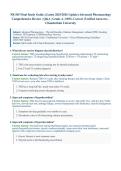
NR 565 Final Study Guide: (Latest 2025/2026 Update) Advanced Pharmacology
Comprehensive Review | Q&A | Grade A | 100% Correct (Verified Answers) –
Chamberlain University
Subject: Advanced Pharmacology – Thyroid Disorders, Diabetes Management, Asthma/COPD, Smoking
Cessation, TB Treatment, GI Pharmacology, Vaccines
Source: NR 565 Final Study Guide / Chamberlain University / Clinical Pharmacology Guidelines
(2025/2026 Update)
Format: Q&A Guide with Clinical Rationales | Grade A Guaranteed
1. What labs are used to diagnose thyroid disorders?
Correct Answer: TSH (screening/diagnosing hypothyroid, monitoring replacement), T4 (monitoring
replacement therapy), T3 (diagnosing hyperthyroidism). TSH low + T4 normal + T3 high =
hyperthyroidism.
1. TSH is the most sensitive screening test for thyroid dysfunction.
2. Free T4 and T3 confirm diagnosis.
2. Timeframe for rechecking labs after starting levothyroxine?
Correct Answer: Recheck TSH 6-8 weeks after initiating therapy and after any dosage change. Check
TSH at least once a year after serum TSH is stabilized.
1. TSH has a long half-life; steady state takes 6-8 weeks.
2. Frequent monitoring ensures therapeutic dosing.
3. Signs and symptoms of hypothyroidism?
Correct Answer: Mild may be unrecognized. Moderate to severe: pale puffy face, cold dry skin, brittle
hair loss, slowed heart rate, lethargy/fatigue, lowered temperature/cold intolerance, thyroid enlargement,
impaired mentation.
1. Symptoms develop gradually over months to years.
2. Myxedema coma is life-threatening extreme presentation.
4. Signs and symptoms of hyperthyroidism?
Correct Answer: Elevated heart rate/dysrhythmias/angina, nervousness/insomnia/rapid
speech/hyperreflexia/tremors, muscle weakness/atrophy, warm moist skin, heat intolerance, increased
appetite with weight loss (thyrotoxicosis), exophthalmos (bulging eyes).
1. Graves' disease is most common cause.
2. Thyroid storm is life-threatening exacerbation.
, 5. Treatment of thyroid storm?
Correct Answer: High-dose potassium iodide or strong iodine solution (suppress hormone release),
methimazole (suppress synthesis), beta-blocker (reduce heart rate), plus sedation, cooling,
glucocorticoids, IVF.
1. Thyroid storm is a medical emergency with hyperthermia (>105°F), severe tachycardia,
agitation, tremor.
2. Can progress to coma, hypotension, heart failure.
6. Result of not treating hypothyroidism during pregnancy?
Correct Answer: Permanent neuropsychological deficits in the child (decreased IQ). Effect is limited
largely to the first trimester when fetus cannot produce its own thyroid hormone. Women on thyroid
replacement need dose increase (up to 50% max) between weeks 4-8 of gestation.
1. Routine screening for hypothyroidism recommended as soon as pregnancy is confirmed.
2. Maternal thyroid hormone critical for fetal brain development.
7. Medication to treat symptoms of hyperthyroidism (treating symptoms, not the hyperthyroidism
itself)?
Correct Answer: Methimazole (first-line, not in pregnancy/breastfeeding) blocks synthesis;
propylthiouracil (preferred for thyroid storm); beta-blockers (for tachycardia).
1. Methimazole inhibits oxidation of iodine and coupling of iodinated tyrosine.
2. Beta-blockers mask symptoms but do not treat underlying hyperthyroidism.
8. Drug/food/supplement interactions with levothyroxine?
Correct Answer: Take on empty stomach 30-60 min before breakfast. Reduce absorption: H2 blockers,
PPIs, Carafate, Questran, Colestid, Maalox/Mylanta, Tums, iron, magnesium salts, Xenical. Accelerate
metabolism: phenytoin, carbamazepine, rifampin, sertraline, phenobarbital. May need dose adjustment
with warfarin, catecholamines, insulin, digoxin.
1. Calcium, iron, magnesium should be taken at least 4 hours apart from levothyroxine.
2. Consistency in administration timing is key.
9. Diagnostic criteria for diabetes prior to treatment?
Correct Answer: Fasting glucose ≥126 mg/dL; OR random glucose ≥200 mg/dL with symptoms
(polyuria, polydipsia, weight loss); OR OGTT 2-hour ≥200 mg/dL; OR HbA1C ≥6.5%.
1. Confirm with repeat testing unless symptomatic with random glucose ≥200.
2. HbA1C reflects average glucose over previous 2-3 months.
10. General HbA1C goal for diabetes?
Correct Answer: Below 7%. Less stringent goal (<8%) for those with history of severe hypoglycemia,
limited life expectancy, or advanced microvascular/macrovascular complications.
1. Individualize goals based on patient factors.
2. Tighter control may be appropriate for younger patients.
Comprehensive Review | Q&A | Grade A | 100% Correct (Verified Answers) –
Chamberlain University
Subject: Advanced Pharmacology – Thyroid Disorders, Diabetes Management, Asthma/COPD, Smoking
Cessation, TB Treatment, GI Pharmacology, Vaccines
Source: NR 565 Final Study Guide / Chamberlain University / Clinical Pharmacology Guidelines
(2025/2026 Update)
Format: Q&A Guide with Clinical Rationales | Grade A Guaranteed
1. What labs are used to diagnose thyroid disorders?
Correct Answer: TSH (screening/diagnosing hypothyroid, monitoring replacement), T4 (monitoring
replacement therapy), T3 (diagnosing hyperthyroidism). TSH low + T4 normal + T3 high =
hyperthyroidism.
1. TSH is the most sensitive screening test for thyroid dysfunction.
2. Free T4 and T3 confirm diagnosis.
2. Timeframe for rechecking labs after starting levothyroxine?
Correct Answer: Recheck TSH 6-8 weeks after initiating therapy and after any dosage change. Check
TSH at least once a year after serum TSH is stabilized.
1. TSH has a long half-life; steady state takes 6-8 weeks.
2. Frequent monitoring ensures therapeutic dosing.
3. Signs and symptoms of hypothyroidism?
Correct Answer: Mild may be unrecognized. Moderate to severe: pale puffy face, cold dry skin, brittle
hair loss, slowed heart rate, lethargy/fatigue, lowered temperature/cold intolerance, thyroid enlargement,
impaired mentation.
1. Symptoms develop gradually over months to years.
2. Myxedema coma is life-threatening extreme presentation.
4. Signs and symptoms of hyperthyroidism?
Correct Answer: Elevated heart rate/dysrhythmias/angina, nervousness/insomnia/rapid
speech/hyperreflexia/tremors, muscle weakness/atrophy, warm moist skin, heat intolerance, increased
appetite with weight loss (thyrotoxicosis), exophthalmos (bulging eyes).
1. Graves' disease is most common cause.
2. Thyroid storm is life-threatening exacerbation.
, 5. Treatment of thyroid storm?
Correct Answer: High-dose potassium iodide or strong iodine solution (suppress hormone release),
methimazole (suppress synthesis), beta-blocker (reduce heart rate), plus sedation, cooling,
glucocorticoids, IVF.
1. Thyroid storm is a medical emergency with hyperthermia (>105°F), severe tachycardia,
agitation, tremor.
2. Can progress to coma, hypotension, heart failure.
6. Result of not treating hypothyroidism during pregnancy?
Correct Answer: Permanent neuropsychological deficits in the child (decreased IQ). Effect is limited
largely to the first trimester when fetus cannot produce its own thyroid hormone. Women on thyroid
replacement need dose increase (up to 50% max) between weeks 4-8 of gestation.
1. Routine screening for hypothyroidism recommended as soon as pregnancy is confirmed.
2. Maternal thyroid hormone critical for fetal brain development.
7. Medication to treat symptoms of hyperthyroidism (treating symptoms, not the hyperthyroidism
itself)?
Correct Answer: Methimazole (first-line, not in pregnancy/breastfeeding) blocks synthesis;
propylthiouracil (preferred for thyroid storm); beta-blockers (for tachycardia).
1. Methimazole inhibits oxidation of iodine and coupling of iodinated tyrosine.
2. Beta-blockers mask symptoms but do not treat underlying hyperthyroidism.
8. Drug/food/supplement interactions with levothyroxine?
Correct Answer: Take on empty stomach 30-60 min before breakfast. Reduce absorption: H2 blockers,
PPIs, Carafate, Questran, Colestid, Maalox/Mylanta, Tums, iron, magnesium salts, Xenical. Accelerate
metabolism: phenytoin, carbamazepine, rifampin, sertraline, phenobarbital. May need dose adjustment
with warfarin, catecholamines, insulin, digoxin.
1. Calcium, iron, magnesium should be taken at least 4 hours apart from levothyroxine.
2. Consistency in administration timing is key.
9. Diagnostic criteria for diabetes prior to treatment?
Correct Answer: Fasting glucose ≥126 mg/dL; OR random glucose ≥200 mg/dL with symptoms
(polyuria, polydipsia, weight loss); OR OGTT 2-hour ≥200 mg/dL; OR HbA1C ≥6.5%.
1. Confirm with repeat testing unless symptomatic with random glucose ≥200.
2. HbA1C reflects average glucose over previous 2-3 months.
10. General HbA1C goal for diabetes?
Correct Answer: Below 7%. Less stringent goal (<8%) for those with history of severe hypoglycemia,
limited life expectancy, or advanced microvascular/macrovascular complications.
1. Individualize goals based on patient factors.
2. Tighter control may be appropriate for younger patients.


