

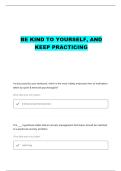
As discussed by your textbook, which is the most widely endorsed view of motivation
taken by sport & exercise psychologists?
Give this one a try later!
interactional/interactionist
The _____ hypothesis states that an anxiety management technique should be matched
to a particular anxiety problem.
Give this one a try later!
matching
, Various research studies have indicated that regular physical activity is associated with
Give this one a try later!
positive mental health and reduced probability of hypertension and
coronary heart disease
All of the following are examples of sport-specific models of burnout:
Give this one a try later!
- negative-training stress response model
- self-determination theory
- commitment and entrapment theory
- cognitive-affective stress model
The strongest and most dependable information on which to base self-efficacy
judgments comes from
Give this one a try later!
performance accomplishments
What is the least adaptive (likely to result in the worst motivational/psychological
outcomes) combination of goal orientations for an individual athlete to have when
he/she has low skill and low perceived competence (i.e., is likely to experience
perceived failure)?
taken by sport & exercise psychologists?
Give this one a try later!
interactional/interactionist
The _____ hypothesis states that an anxiety management technique should be matched
to a particular anxiety problem.
Give this one a try later!
matching
, Various research studies have indicated that regular physical activity is associated with
Give this one a try later!
positive mental health and reduced probability of hypertension and
coronary heart disease
All of the following are examples of sport-specific models of burnout:
Give this one a try later!
- negative-training stress response model
- self-determination theory
- commitment and entrapment theory
- cognitive-affective stress model
The strongest and most dependable information on which to base self-efficacy
judgments comes from
Give this one a try later!
performance accomplishments
What is the least adaptive (likely to result in the worst motivational/psychological
outcomes) combination of goal orientations for an individual athlete to have when
he/she has low skill and low perceived competence (i.e., is likely to experience
perceived failure)?


