

lOMoARcPSD|11700591
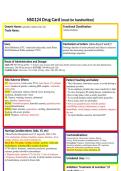
NSG124 Drug Card (must be handwritten)
Generic Name: quinidine sulfate (class IA) Functional Classification:
Trade Name: Antidysrhythmic
Uses: Mechanism of Action: (How does it work?)
Atrial fibrillation, PAT, ventricular tachycardia, atrial flutter, Prolongs duration of action potential and effective refractory
Wolff-Parkinson-White syndrome; PVST period, thus decreasing myocardial excitability;
anticholinergic properties
Route of Administration and Dosage:
Adult: PO 200-300 mg q6-8hr × 5-8 doses; may increase daily until sinus rhythm restored; max 4 g/day given only after digitalization;
maintenance 200-300 mg tid-qid or EXT REL 300-600 mg q8-12hr
Available forms: Gluconate: ext rel tabs 324 mg; sulfate: tabs 200, 300 mg
Side/Adverse Effects: Patient Teaching and Safety:
CV: Hypotension, bradycardia, PVCs, heart block, CV collapse, • That if dizziness, drowsiness occurs, to avoid driving or
arrest, torsades de pointes, widening QRS complex, ventricular hazardous activities
tachycardia • To use snglasses; product may cause sensitivity to light
EENT: Cinchonism: tinnitus, blurred vision, hearing loss, • To carry emergency ID stating disease, medication use
mydriasis, disturbed color vision • How to take pulse; when to notify prescriber
GI: Nausea, vomiting, anorexia, abdominal • To avoid all products unless approved by prescriber
pain, diarrhea, hepatotoxicity • Not to crush, chew ext rel product
HEMA: Thrombocytopenia, hemolytic anemia, agranulocytosis, • Not to use grapefruit juice with this product
hypoprothrombinemia • QuiNIDine toxicity (cinchonism): to report
INTEG: Rash, urticaria, angioedema, swelling, photosensitivity, immediately visual changes, nausea, headache, ringing in
flushing with severe pruritus the ears
RESP: Dyspnea, respiratory depression • To report diarrhea, anorexia, decreased B/P
Nursing Considerations: (labs, VS, etc)
• Blood levels (therapeutic level 2-5 mcg/mL), CBC, LFTs Contraindications:
• For cinchonism: tinnitus, headache, nausea, dizziness, fever, Hypersensitivity, idiosyncratic response, digoxin
vertigo, tremors; may lead to hearing loss toxicity, blood dyscrasias, myasthenia gravis, AV block
Black Box Warning: Cardiac toxicity: asystole, ventricular Precautions: Pregnancy, breastfeeding, children, geriatric patients,
dysrhythmias, widening QRS, torsades de pointes electrolyte imbalance, renal/hepatic disease, HF, respiratory
depression, bradycardia, hypotension, syncope
• CNS effects: dizziness, confusion, psychosis, paresthesias, Black Box Warning: Cardiac arrhythmias, MI
seizures; product should be discontinued
• Hepatotoxicity: monitor LFTs for first 1-2 mo of treatment
• Pregnancy/breastfeeding: use only if clearly needed; avoid use Unlabeled Uses: N/A
in breastfeeding, excreted in breast milk
Antidotes “treatment of overdose” (if
, lOMoARcPSD|11700591
NSG124 Drug Card (must be handwritten)
Generic Name: lidocaine (class IB) Functional Classification:
Trade Name: lidopen auto injector Antidysrhythmic
Uses: Mechanism of Action: (How does it work?)
Ventricular tachycardia, ventricular dysrhythmias during Increases electrical stimulation threshold of ventricle, His-
cardiac surgery, digoxin toxicity, cardiac catheterization Purkinje system, which stabilizes cardiac membrane,
decreases automaticity
Route of Administration and Dosage:
Ventricular arrhythmias caused by MI, cardiac manipulation/glycosides
• Adult: IV BOL 50-100 mg (1-1.5 mg/kg) 25-50 mg/min, repeat q5min until arrhythmias are controlled, max 300 mg in 1 hr; begin IV INFUSION; IV INFUSION 1-4 mg/min (20-50 mcg/kg/min)
• Child: IV/INTRAOSSEUS BOL 1 mg/kg; start infusion at 30 mcg/kg/min
Renal/hepatic dose with heart failure
• Adult <50 kg: IV reduce dose
Available forms: IV INFUSION 0.2% (2 mg/mL), 0.4% (4 mg/mL), 0.8% (8 mg/mL); IV 4% (40 mg/mL), 10% (100 mg/mL), 20% (200 mg/mL); IV dir 1% (10 mg/mL), 2% (20 mg/mL); Inj (to IV
admix) 20% (200 mg/mL)
Side/Adverse Effects: Patient Teaching and Safety:
CNS: Headache, dizziness, involuntary movement, confusion, • About the use of automatic lidocaine injection device if
tremor, drowsiness, euphoria, seizures, shivering ordered for personal use
CV: Hypotension, bradycardia, heart block, CV collapse, arrest • To report signs of toxicity immediately
EENT: Tinnitus, blurred vision
GI: Nausea, vomiting, anorexia
HEMA: Methemoglobinemia
INTEG: Rash, urticaria, edema, swelling, petechiae, pruritus Contraindications:
MISC: Febrile response, phlebitis at inj site Hypersensitivity to amides, severe heart block, supraventricular
RESP: Dyspnea, respiratory depression dysrhythmias, Adams-Stokes syndrome, Wolff-Parkinson-White
syndrome
Precautions: Pregnancy, breastfeeding, children, geriatric patients,
renal/hepatic disease, HF, respiratory depression, malignant
Nursing Considerations: (labs, VS, etc) hyperthermia, myasthenia gravis, weight <50 kg
• ECG continuously to determine increased PR or QRS segments;
if these develop, discontinue or reduce rate; watch for increased
ventricular ectopic beats, may have to rebolus; B/P
• Drug levels: therapeutic level 1.5-5 mcg/mL
• I&O ratio, electrolytes (potassium, sodium, chlorine) Unlabeled Uses: Attenuation of intracranial
• Toxicity: monitor for seizures, confusion, tremors; if these pressure increased during intubation/endotracheal tube
occur, discontinue immediately, notify prescriber; keep suctioning
emergency equipment nearby
• Malignant hyperthermia: tachypnea, tachycardia, changes in
B/P, increased temperature Antidotes “treatment of overdose” (if
• Respiratory status: rate, rhythm, lung fields for crackles, watch
for respiratory depression; lung fields, bilateral crackles may applicable):
occur with HF; increased respiration, pulse; product should be O2, artificial ventilation, ECG; administer DOPamine for
discontinued circulatory depression, diazepam or thiopental for
• CNS effects: dizziness, confusion, psychosis, paresthesias, seizures; decrease product if needed
convulsions; product should be discontinued
• Pregnancy/breastfeeding: use only if clearly needed; use caution
in breastfeeding, excreted in breast milk
, lOMoARcPSD|11700591
NSG124 Drug Card (must be handwritten)
Generic Name: amiodarone Functional Classification:
Trade Name: cordarone Antidysrhythmic (class III)
Uses: Mechanism of Action: (How does it work?)
Hemodynamically unstable ventricular tachycardia, Prolongs duration of action potential and effective refractory
supraventricular tachycardia, ventricular fibrillation not period, noncompetitive α- and β-adrenergic inhibition;
controlled by 1st-line agents increases PR and QT intervals, decreases sinus rate,
decreases peripheral vascular resistance
Route of Administration and Dosage:
Ventricular dysrhythmias
Adult: PO Loading dose 800-1600 mg/day for 1-3 wk, then 600-800 mg/day for 1 mo, maintenance 400 mg/day; IV loading dose (1st rapid) 150 mg over the first 10 min, then slow 360 mg over the
next 6 hr, maintenance 540 mg given over the remaining 18 hr, decrease rate of the slow infusion to 0.5 mg/min
Supraventricular tachycardia
• Adult: PO 600-800 mg/day × 1 wk until desired response, then decrease to 400 mg/day × 3 wk, then 200-400 mg/day (maintenance)
• Child: PO 10 mg/kg/day × 10 days or until desired response, then decrease to 5 mg/kg/day for several wk, then decrease to 2.5 mg/kg/day or lower (maintenance)
Conversion of atrial fibrillation to sinus rhythm (unlabeled)
• Adult: IV 5-7 mg/kg over 30-60 min, then 1.2-1.8 mg/kg CONT IV INFUSION or PO divided doses
Available forms: Tabs 100, 200, 400 mg; inj 50 mg/mL
Side/Adverse Effects: Patient Teaching and Safety:
CNS: Headache, dizziness, involuntary movement, tremors, peripheral • To take this product as directed; to avoid missed doses; not to use with
neuropathy, malaise, fatigue, ataxia, paresthesias, insomnia, confusion, hallucinations grapefruit juice; not to discontinue abruptly, not to use other drugs, herbs
CV: Hypotension, bradycardia, HF, dysrhythmias without prescriber approval, many interactions
EENT: Corneal microdeposits, dry eyes • To use sunscreen or stay out of sun to prevent burns; that dark glasses may
ENDO: Hypo/hyperthyroidism be needed for photophobia
GI: Nausea, vomiting, diarrhea, abdominal pain, anorexia, constipation, hepatotoxicity, • To report side effects immediately; more common at high dose and longer
pancreatitis duration
GU: Epididymitis, ED • That skin discoloration is usually reversible
INTEG: Rash, photosensitivity, bluegray skin discoloration, alopecia, spontaneous • To report vision changes, weight change, rash, blistering, numbness,
ecchymosis, toxic epidermal necrolysis, urticaria, pancreatitis, phlebitis (IV) temperature intolerance
MISC: Flushing, abnormal taste or smell, edema, abnormal salivation • Pregnancy/breastfeeding: Identify if pregnancy is planned or suspected
RESP: Pulmonary fibrosis/toxicity, ARDS or if breastfeeding; not to be used in pregnancy, breastfeeding
Nursing Considerations: (labs, VS, etc)
Black Box Warning: Cardiac dysrhythmias: ECG continuously to determine Contraindications:
effectiveness; measure PR, QRS, QT intervals; check for PVCs, other dysrhythmias, B/P
Pregnancy, breastfeeding, neonates, infants, severe sinus node
continuously for hypo/hypertension; report dysrhythmias, slowing heart rate; monitor
amiodarone level: therapeutic 1-2.5 mcg/mL; toxic >2.5 mcg/mL dysfunction, hypersensitivity to this product/iodine/benzyl alcohol,
Black Box Warning: Pulmonary toxicity: dyspnea, fatigue, cough, fever, chest pain; cardiogenic shock, 2nd- to 3rd-degree AV block, bradycardia
product should be discontinued; for ARDS, pulmonary fibrosis, crackles, tachypnea, Precautions: Children, goiter, Hashimoto’s thyroiditis, electrolyte
increased at higher doses (>400 mg/day), toxicity is common, monitor chest x-ray, imbalances, HF, respiratory disease, torsades de pointes
pulmonary function tests with diffusion capacity Black Box Warning: Hepatotoxicity, cardiac arrhythmias,
• Stevens-Johnson syndrome: monitor for rash, blistering; discontinue immediately, notify pneumonitis, pulmonary fibrosis; requires an experienced clinician
prescriber
Black Box Warning: Hepatotoxicity: monitor hepatic enzymes; rarely fatal hepatotoxicity
has occurred
• Electrolytes (sodium, potassium, chloride); hepatic studies: AST, ALT, bilirubin, alk Unlabeled Uses: Atrial fibrillation
phos; for dehydration, hypovolemia; monitor PT, INR if using warfarin
• CNS symptoms: confusion, psychosis, numbness, depression, involuntary movements;
treatment/prophylaxis, atrial flutter, cardiac arrest, cardiac
product should be discontinued surgery, CPR, heart failure, PSVT, Wolff-Parkinson-White
• Hypothyroidism: lethargy; dizziness; constipation; enlarged thyroid gland; edema of (WPW) syndrome, supraventricular tachycardia
extremities; cool, pale skin
• Hyperthyroidism: restlessness; tachycardia; eyelid puffiness; weight loss; frequent
urination; menstrual irregularities; dyspnea; warm, moist skin; may cause fatal
thyrotoxicosis, cardiac dysrhythmias; may need to discontinue product
• Ophthalmic exams at baseline and periodically (PO); to prevent corneal deposits, use
Antidotes “treatment of overdose” (if
methylcellulose
• Cardiac rate, respirations: rate, rhythm, character, chest pain; start with patient
applicable): O2, artificial ventilation, ECG, administer
NSG124 Drug Card (must be handwritten)
Generic Name: quinidine sulfate (class IA) Functional Classification:
Trade Name: Antidysrhythmic
Uses: Mechanism of Action: (How does it work?)
Atrial fibrillation, PAT, ventricular tachycardia, atrial flutter, Prolongs duration of action potential and effective refractory
Wolff-Parkinson-White syndrome; PVST period, thus decreasing myocardial excitability;
anticholinergic properties
Route of Administration and Dosage:
Adult: PO 200-300 mg q6-8hr × 5-8 doses; may increase daily until sinus rhythm restored; max 4 g/day given only after digitalization;
maintenance 200-300 mg tid-qid or EXT REL 300-600 mg q8-12hr
Available forms: Gluconate: ext rel tabs 324 mg; sulfate: tabs 200, 300 mg
Side/Adverse Effects: Patient Teaching and Safety:
CV: Hypotension, bradycardia, PVCs, heart block, CV collapse, • That if dizziness, drowsiness occurs, to avoid driving or
arrest, torsades de pointes, widening QRS complex, ventricular hazardous activities
tachycardia • To use snglasses; product may cause sensitivity to light
EENT: Cinchonism: tinnitus, blurred vision, hearing loss, • To carry emergency ID stating disease, medication use
mydriasis, disturbed color vision • How to take pulse; when to notify prescriber
GI: Nausea, vomiting, anorexia, abdominal • To avoid all products unless approved by prescriber
pain, diarrhea, hepatotoxicity • Not to crush, chew ext rel product
HEMA: Thrombocytopenia, hemolytic anemia, agranulocytosis, • Not to use grapefruit juice with this product
hypoprothrombinemia • QuiNIDine toxicity (cinchonism): to report
INTEG: Rash, urticaria, angioedema, swelling, photosensitivity, immediately visual changes, nausea, headache, ringing in
flushing with severe pruritus the ears
RESP: Dyspnea, respiratory depression • To report diarrhea, anorexia, decreased B/P
Nursing Considerations: (labs, VS, etc)
• Blood levels (therapeutic level 2-5 mcg/mL), CBC, LFTs Contraindications:
• For cinchonism: tinnitus, headache, nausea, dizziness, fever, Hypersensitivity, idiosyncratic response, digoxin
vertigo, tremors; may lead to hearing loss toxicity, blood dyscrasias, myasthenia gravis, AV block
Black Box Warning: Cardiac toxicity: asystole, ventricular Precautions: Pregnancy, breastfeeding, children, geriatric patients,
dysrhythmias, widening QRS, torsades de pointes electrolyte imbalance, renal/hepatic disease, HF, respiratory
depression, bradycardia, hypotension, syncope
• CNS effects: dizziness, confusion, psychosis, paresthesias, Black Box Warning: Cardiac arrhythmias, MI
seizures; product should be discontinued
• Hepatotoxicity: monitor LFTs for first 1-2 mo of treatment
• Pregnancy/breastfeeding: use only if clearly needed; avoid use Unlabeled Uses: N/A
in breastfeeding, excreted in breast milk
Antidotes “treatment of overdose” (if
, lOMoARcPSD|11700591
NSG124 Drug Card (must be handwritten)
Generic Name: lidocaine (class IB) Functional Classification:
Trade Name: lidopen auto injector Antidysrhythmic
Uses: Mechanism of Action: (How does it work?)
Ventricular tachycardia, ventricular dysrhythmias during Increases electrical stimulation threshold of ventricle, His-
cardiac surgery, digoxin toxicity, cardiac catheterization Purkinje system, which stabilizes cardiac membrane,
decreases automaticity
Route of Administration and Dosage:
Ventricular arrhythmias caused by MI, cardiac manipulation/glycosides
• Adult: IV BOL 50-100 mg (1-1.5 mg/kg) 25-50 mg/min, repeat q5min until arrhythmias are controlled, max 300 mg in 1 hr; begin IV INFUSION; IV INFUSION 1-4 mg/min (20-50 mcg/kg/min)
• Child: IV/INTRAOSSEUS BOL 1 mg/kg; start infusion at 30 mcg/kg/min
Renal/hepatic dose with heart failure
• Adult <50 kg: IV reduce dose
Available forms: IV INFUSION 0.2% (2 mg/mL), 0.4% (4 mg/mL), 0.8% (8 mg/mL); IV 4% (40 mg/mL), 10% (100 mg/mL), 20% (200 mg/mL); IV dir 1% (10 mg/mL), 2% (20 mg/mL); Inj (to IV
admix) 20% (200 mg/mL)
Side/Adverse Effects: Patient Teaching and Safety:
CNS: Headache, dizziness, involuntary movement, confusion, • About the use of automatic lidocaine injection device if
tremor, drowsiness, euphoria, seizures, shivering ordered for personal use
CV: Hypotension, bradycardia, heart block, CV collapse, arrest • To report signs of toxicity immediately
EENT: Tinnitus, blurred vision
GI: Nausea, vomiting, anorexia
HEMA: Methemoglobinemia
INTEG: Rash, urticaria, edema, swelling, petechiae, pruritus Contraindications:
MISC: Febrile response, phlebitis at inj site Hypersensitivity to amides, severe heart block, supraventricular
RESP: Dyspnea, respiratory depression dysrhythmias, Adams-Stokes syndrome, Wolff-Parkinson-White
syndrome
Precautions: Pregnancy, breastfeeding, children, geriatric patients,
renal/hepatic disease, HF, respiratory depression, malignant
Nursing Considerations: (labs, VS, etc) hyperthermia, myasthenia gravis, weight <50 kg
• ECG continuously to determine increased PR or QRS segments;
if these develop, discontinue or reduce rate; watch for increased
ventricular ectopic beats, may have to rebolus; B/P
• Drug levels: therapeutic level 1.5-5 mcg/mL
• I&O ratio, electrolytes (potassium, sodium, chlorine) Unlabeled Uses: Attenuation of intracranial
• Toxicity: monitor for seizures, confusion, tremors; if these pressure increased during intubation/endotracheal tube
occur, discontinue immediately, notify prescriber; keep suctioning
emergency equipment nearby
• Malignant hyperthermia: tachypnea, tachycardia, changes in
B/P, increased temperature Antidotes “treatment of overdose” (if
• Respiratory status: rate, rhythm, lung fields for crackles, watch
for respiratory depression; lung fields, bilateral crackles may applicable):
occur with HF; increased respiration, pulse; product should be O2, artificial ventilation, ECG; administer DOPamine for
discontinued circulatory depression, diazepam or thiopental for
• CNS effects: dizziness, confusion, psychosis, paresthesias, seizures; decrease product if needed
convulsions; product should be discontinued
• Pregnancy/breastfeeding: use only if clearly needed; use caution
in breastfeeding, excreted in breast milk
, lOMoARcPSD|11700591
NSG124 Drug Card (must be handwritten)
Generic Name: amiodarone Functional Classification:
Trade Name: cordarone Antidysrhythmic (class III)
Uses: Mechanism of Action: (How does it work?)
Hemodynamically unstable ventricular tachycardia, Prolongs duration of action potential and effective refractory
supraventricular tachycardia, ventricular fibrillation not period, noncompetitive α- and β-adrenergic inhibition;
controlled by 1st-line agents increases PR and QT intervals, decreases sinus rate,
decreases peripheral vascular resistance
Route of Administration and Dosage:
Ventricular dysrhythmias
Adult: PO Loading dose 800-1600 mg/day for 1-3 wk, then 600-800 mg/day for 1 mo, maintenance 400 mg/day; IV loading dose (1st rapid) 150 mg over the first 10 min, then slow 360 mg over the
next 6 hr, maintenance 540 mg given over the remaining 18 hr, decrease rate of the slow infusion to 0.5 mg/min
Supraventricular tachycardia
• Adult: PO 600-800 mg/day × 1 wk until desired response, then decrease to 400 mg/day × 3 wk, then 200-400 mg/day (maintenance)
• Child: PO 10 mg/kg/day × 10 days or until desired response, then decrease to 5 mg/kg/day for several wk, then decrease to 2.5 mg/kg/day or lower (maintenance)
Conversion of atrial fibrillation to sinus rhythm (unlabeled)
• Adult: IV 5-7 mg/kg over 30-60 min, then 1.2-1.8 mg/kg CONT IV INFUSION or PO divided doses
Available forms: Tabs 100, 200, 400 mg; inj 50 mg/mL
Side/Adverse Effects: Patient Teaching and Safety:
CNS: Headache, dizziness, involuntary movement, tremors, peripheral • To take this product as directed; to avoid missed doses; not to use with
neuropathy, malaise, fatigue, ataxia, paresthesias, insomnia, confusion, hallucinations grapefruit juice; not to discontinue abruptly, not to use other drugs, herbs
CV: Hypotension, bradycardia, HF, dysrhythmias without prescriber approval, many interactions
EENT: Corneal microdeposits, dry eyes • To use sunscreen or stay out of sun to prevent burns; that dark glasses may
ENDO: Hypo/hyperthyroidism be needed for photophobia
GI: Nausea, vomiting, diarrhea, abdominal pain, anorexia, constipation, hepatotoxicity, • To report side effects immediately; more common at high dose and longer
pancreatitis duration
GU: Epididymitis, ED • That skin discoloration is usually reversible
INTEG: Rash, photosensitivity, bluegray skin discoloration, alopecia, spontaneous • To report vision changes, weight change, rash, blistering, numbness,
ecchymosis, toxic epidermal necrolysis, urticaria, pancreatitis, phlebitis (IV) temperature intolerance
MISC: Flushing, abnormal taste or smell, edema, abnormal salivation • Pregnancy/breastfeeding: Identify if pregnancy is planned or suspected
RESP: Pulmonary fibrosis/toxicity, ARDS or if breastfeeding; not to be used in pregnancy, breastfeeding
Nursing Considerations: (labs, VS, etc)
Black Box Warning: Cardiac dysrhythmias: ECG continuously to determine Contraindications:
effectiveness; measure PR, QRS, QT intervals; check for PVCs, other dysrhythmias, B/P
Pregnancy, breastfeeding, neonates, infants, severe sinus node
continuously for hypo/hypertension; report dysrhythmias, slowing heart rate; monitor
amiodarone level: therapeutic 1-2.5 mcg/mL; toxic >2.5 mcg/mL dysfunction, hypersensitivity to this product/iodine/benzyl alcohol,
Black Box Warning: Pulmonary toxicity: dyspnea, fatigue, cough, fever, chest pain; cardiogenic shock, 2nd- to 3rd-degree AV block, bradycardia
product should be discontinued; for ARDS, pulmonary fibrosis, crackles, tachypnea, Precautions: Children, goiter, Hashimoto’s thyroiditis, electrolyte
increased at higher doses (>400 mg/day), toxicity is common, monitor chest x-ray, imbalances, HF, respiratory disease, torsades de pointes
pulmonary function tests with diffusion capacity Black Box Warning: Hepatotoxicity, cardiac arrhythmias,
• Stevens-Johnson syndrome: monitor for rash, blistering; discontinue immediately, notify pneumonitis, pulmonary fibrosis; requires an experienced clinician
prescriber
Black Box Warning: Hepatotoxicity: monitor hepatic enzymes; rarely fatal hepatotoxicity
has occurred
• Electrolytes (sodium, potassium, chloride); hepatic studies: AST, ALT, bilirubin, alk Unlabeled Uses: Atrial fibrillation
phos; for dehydration, hypovolemia; monitor PT, INR if using warfarin
• CNS symptoms: confusion, psychosis, numbness, depression, involuntary movements;
treatment/prophylaxis, atrial flutter, cardiac arrest, cardiac
product should be discontinued surgery, CPR, heart failure, PSVT, Wolff-Parkinson-White
• Hypothyroidism: lethargy; dizziness; constipation; enlarged thyroid gland; edema of (WPW) syndrome, supraventricular tachycardia
extremities; cool, pale skin
• Hyperthyroidism: restlessness; tachycardia; eyelid puffiness; weight loss; frequent
urination; menstrual irregularities; dyspnea; warm, moist skin; may cause fatal
thyrotoxicosis, cardiac dysrhythmias; may need to discontinue product
• Ophthalmic exams at baseline and periodically (PO); to prevent corneal deposits, use
Antidotes “treatment of overdose” (if
methylcellulose
• Cardiac rate, respirations: rate, rhythm, character, chest pain; start with patient
applicable): O2, artificial ventilation, ECG, administer


