

lOMoARcPSD|11700591
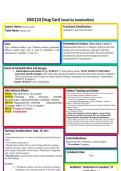
NSG124 Drug Card (must be handwritten)
Generic Name: Insulin Lispro Functional Classification:
Trade Name: HumaL OG Antidiabetic, pancreatic hormone
Uses: Mechanism of Action: (How does it work?)
Type 1 diabetes mellitus, type 2 diabetes mellitus, gestational Decreases blood glucose; by transport of glucose into cells
diabetes; insulin lispro may be used in combination with and the conversion of glucose to glycogen, indirectly
sulfonylureas in children >3 years old increases blood pyruvate and lactate, decreases phosphate
and potassium; insulin may be human (processed by
recombinant DNA technologies)
Route of Administration and Dosage:
Adult/adolescent/child ≥3 yr: SUBCUT 15 min before meals; CONT SUBCUT INFUSION
(external insulin pump): total daily dose should be based on insulin dose from previous regimen,
50% of total dose can be given as meal-related boluses, remainder as basal infusion; intermittent
SUBCUT (Lyumjev)
• Adult: SUBCUT 0.4-1 unit/kg/day
Side/Adverse Effects: Patient Teaching and Safety:
EENT: Blurred vision, dry mouth • blurred vision occurs; not to change corrective lenses until vision is stabilized
• To keep insulin, equipment available at all times
INTEG: Flushing, rash, urticaria, warmth, • That product does not cure diabetes but controls symptoms
lipodystrophy, lipohypertrophy, swelling, redness • To carry an emergency ID as diabetic
• To recognize hypoglycemia reaction: headache, tremors,
META: Hypoglycemia, rebound hyperglycemia fatigue, weakness, tachycardia
(Somogyi effect 12-72 hr or longer) • To recognize hyperglycemia reaction: frequent urination, thirst,
fatigue, hunger
MISC: Peripheral edema • About the dosage, route, mixing instructions, diet restrictions (if
SYST: Anaphylaxis any), disease process
• About the symptoms of ketoacidosis: nausea; thirst;
polyuria; dry mouth; decreased B/P; dry, flushed skin;
acetone breath; drowsiness; Kussmaul respirations
• That a plan is necessary for diet, and exercise; that all food on
the diet should be eaten; that exercise routine should not vary
• About blood glucose testing; how to determine glucose level
• To avoid OTC products unless directed by the prescriber
Nursing Considerations: (labs, VS, etc)
Assess:
• Fasting blood glucose; A1c drawn to identify treatment effectiveness
q3mo
Contraindications:
• Urine ketones during illness Hypersensitivity to protamine; creosol (aspart)
• Hypoglycemic reaction that can occur during peak time (sweating, Precautions: Pregnancy
weakness, dizziness, chills, confusion, headache, nausea, rapid weak
pulse, fatigue, tachycardia, memory lapses, slurred speech, staggering
gait, anxiety, tremors, hunger) Unlabeled Uses:
• Hyperglycemia: acetone breath; polyuria; fatigue; polydipsia; flushed, N/A
dry skin; lethargy
Evaluate:
• Therapeutic response: decrease in polyuria, polydipsia, Antidotes “treatment of overdose” (if
polyphagia; clear sensorium; absence of dizziness; stable
, lOMoARcPSD|11700591
NSG124 Drug Card (must be handwritten)
Generic Name: Regular Insulin Functional Classification:
Trade Name: Humulin R Antidiabetic, pancreatic hormone
Uses: Mechanism of Action: (How does it work?)
Type 1 diabetes mellitus, type 2 diabetes mellitus, gestational Decreases blood glucose; by transport of glucose into cells
diabetes; insulin lispro may be used in combination with and the conversion of glucose to glycogen, indirectly
sulfonylureas in children >3 years old increases blood pyruvate and lactate, decreases phosphate
and potassium; insulin may be human (processed by
recombinant DNA technologies)
Route of Administration and Dosage:
Adult: SUBCUT ½-1 hr before meals
Side/Adverse Effects: Patient Teaching and Safety:
EENT: Blurred vision, dry mouth • blurred vision occurs; not to change corrective lenses until vision is stabilized
• To keep insulin, equipment available at all times
INTEG: Flushing, rash, urticaria, warmth, • That product does not cure diabetes but controls symptoms
lipodystrophy, lipohypertrophy, swelling, redness • To carry an emergency ID as diabetic
• To recognize hypoglycemia reaction: headache, tremors,
META: Hypoglycemia, rebound hyperglycemia fatigue, weakness, tachycardia
(Somogyi effect 12-72 hr or longer) • To recognize hyperglycemia reaction: frequent urination, thirst,
fatigue, hunger
MISC: Peripheral edema • About the dosage, route, mixing instructions, diet restrictions (if
SYST: Anaphylaxis any), disease process
• About the symptoms of ketoacidosis: nausea; thirst;
polyuria; dry mouth; decreased B/P; dry, flushed skin;
acetone breath; drowsiness; Kussmaul respirations
• That a plan is necessary for diet, and exercise; that all food on
the diet should be eaten; that exercise routine should not vary
• About blood glucose testing; how to determine glucose level
• To avoid OTC products unless directed by the prescriber
Nursing Considerations: (labs, VS, etc)
Assess:
• Fasting blood glucose; A1c drawn to identify treatment effectiveness
q3mo
Contraindications:
• Urine ketones during illness Hypersensitivity to protamine; creosol (aspart)
• Hypoglycemic reaction that can occur during peak time (sweating, Precautions: Pregnancy
weakness, dizziness, chills, confusion, headache, nausea, rapid weak
pulse, fatigue, tachycardia, memory lapses, slurred speech, staggering
gait, anxiety, tremors, hunger) Unlabeled Uses:
• Hyperglycemia: acetone breath; polyuria; fatigue; polydipsia; flushed, N/A
dry skin; lethargy
Evaluate:
• Therapeutic response: decrease in polyuria, polydipsia, Antidotes “treatment of overdose” (if
polyphagia; clear sensorium; absence of dizziness; stable
NSG124 Drug Card (must be handwritten)
Generic Name: Insulin Lispro Functional Classification:
Trade Name: HumaL OG Antidiabetic, pancreatic hormone
Uses: Mechanism of Action: (How does it work?)
Type 1 diabetes mellitus, type 2 diabetes mellitus, gestational Decreases blood glucose; by transport of glucose into cells
diabetes; insulin lispro may be used in combination with and the conversion of glucose to glycogen, indirectly
sulfonylureas in children >3 years old increases blood pyruvate and lactate, decreases phosphate
and potassium; insulin may be human (processed by
recombinant DNA technologies)
Route of Administration and Dosage:
Adult/adolescent/child ≥3 yr: SUBCUT 15 min before meals; CONT SUBCUT INFUSION
(external insulin pump): total daily dose should be based on insulin dose from previous regimen,
50% of total dose can be given as meal-related boluses, remainder as basal infusion; intermittent
SUBCUT (Lyumjev)
• Adult: SUBCUT 0.4-1 unit/kg/day
Side/Adverse Effects: Patient Teaching and Safety:
EENT: Blurred vision, dry mouth • blurred vision occurs; not to change corrective lenses until vision is stabilized
• To keep insulin, equipment available at all times
INTEG: Flushing, rash, urticaria, warmth, • That product does not cure diabetes but controls symptoms
lipodystrophy, lipohypertrophy, swelling, redness • To carry an emergency ID as diabetic
• To recognize hypoglycemia reaction: headache, tremors,
META: Hypoglycemia, rebound hyperglycemia fatigue, weakness, tachycardia
(Somogyi effect 12-72 hr or longer) • To recognize hyperglycemia reaction: frequent urination, thirst,
fatigue, hunger
MISC: Peripheral edema • About the dosage, route, mixing instructions, diet restrictions (if
SYST: Anaphylaxis any), disease process
• About the symptoms of ketoacidosis: nausea; thirst;
polyuria; dry mouth; decreased B/P; dry, flushed skin;
acetone breath; drowsiness; Kussmaul respirations
• That a plan is necessary for diet, and exercise; that all food on
the diet should be eaten; that exercise routine should not vary
• About blood glucose testing; how to determine glucose level
• To avoid OTC products unless directed by the prescriber
Nursing Considerations: (labs, VS, etc)
Assess:
• Fasting blood glucose; A1c drawn to identify treatment effectiveness
q3mo
Contraindications:
• Urine ketones during illness Hypersensitivity to protamine; creosol (aspart)
• Hypoglycemic reaction that can occur during peak time (sweating, Precautions: Pregnancy
weakness, dizziness, chills, confusion, headache, nausea, rapid weak
pulse, fatigue, tachycardia, memory lapses, slurred speech, staggering
gait, anxiety, tremors, hunger) Unlabeled Uses:
• Hyperglycemia: acetone breath; polyuria; fatigue; polydipsia; flushed, N/A
dry skin; lethargy
Evaluate:
• Therapeutic response: decrease in polyuria, polydipsia, Antidotes “treatment of overdose” (if
polyphagia; clear sensorium; absence of dizziness; stable
, lOMoARcPSD|11700591
NSG124 Drug Card (must be handwritten)
Generic Name: Regular Insulin Functional Classification:
Trade Name: Humulin R Antidiabetic, pancreatic hormone
Uses: Mechanism of Action: (How does it work?)
Type 1 diabetes mellitus, type 2 diabetes mellitus, gestational Decreases blood glucose; by transport of glucose into cells
diabetes; insulin lispro may be used in combination with and the conversion of glucose to glycogen, indirectly
sulfonylureas in children >3 years old increases blood pyruvate and lactate, decreases phosphate
and potassium; insulin may be human (processed by
recombinant DNA technologies)
Route of Administration and Dosage:
Adult: SUBCUT ½-1 hr before meals
Side/Adverse Effects: Patient Teaching and Safety:
EENT: Blurred vision, dry mouth • blurred vision occurs; not to change corrective lenses until vision is stabilized
• To keep insulin, equipment available at all times
INTEG: Flushing, rash, urticaria, warmth, • That product does not cure diabetes but controls symptoms
lipodystrophy, lipohypertrophy, swelling, redness • To carry an emergency ID as diabetic
• To recognize hypoglycemia reaction: headache, tremors,
META: Hypoglycemia, rebound hyperglycemia fatigue, weakness, tachycardia
(Somogyi effect 12-72 hr or longer) • To recognize hyperglycemia reaction: frequent urination, thirst,
fatigue, hunger
MISC: Peripheral edema • About the dosage, route, mixing instructions, diet restrictions (if
SYST: Anaphylaxis any), disease process
• About the symptoms of ketoacidosis: nausea; thirst;
polyuria; dry mouth; decreased B/P; dry, flushed skin;
acetone breath; drowsiness; Kussmaul respirations
• That a plan is necessary for diet, and exercise; that all food on
the diet should be eaten; that exercise routine should not vary
• About blood glucose testing; how to determine glucose level
• To avoid OTC products unless directed by the prescriber
Nursing Considerations: (labs, VS, etc)
Assess:
• Fasting blood glucose; A1c drawn to identify treatment effectiveness
q3mo
Contraindications:
• Urine ketones during illness Hypersensitivity to protamine; creosol (aspart)
• Hypoglycemic reaction that can occur during peak time (sweating, Precautions: Pregnancy
weakness, dizziness, chills, confusion, headache, nausea, rapid weak
pulse, fatigue, tachycardia, memory lapses, slurred speech, staggering
gait, anxiety, tremors, hunger) Unlabeled Uses:
• Hyperglycemia: acetone breath; polyuria; fatigue; polydipsia; flushed, N/A
dry skin; lethargy
Evaluate:
• Therapeutic response: decrease in polyuria, polydipsia, Antidotes “treatment of overdose” (if
polyphagia; clear sensorium; absence of dizziness; stable


