

Written by students who passed Immediately available after payment Read online or as PDF Wrong document? Swap it for free 4.6 TrustPilot
logo-home
Document preview thumbnail
Preview 1 out of 3 pages
Case

MSN 550: MSN 550 Neurologic Function Case Study Pain and Neurologic Syndromes: Latest Updated Solution

Document preview thumbnail
Preview 1 out of 3 pages

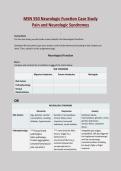
Compare and contrast the 3 conditions in one of the charts below: PAIN SYNDROME Migraine Headaches Tension Headaches Meningitis Risk Factors Pathophysiology Clinical Manifestations OR NEUROLOGIC SYNDROME Dementia Depression Anxiety Risk Factors Age, genetics, alcohol consumption, smoking, diabetes, hypertension Genetics, trauma/abuse, chronic illness, brain chemistry, hormonal imbalance, social isolation Substance abuse, trauma/abuse, genetics, stress, gender, depression, chronic illness, substance abuse Pathophysiology ***many/mixed pathologies Main pathology: Protein aggregation (amyloid-beta/tau/al pha-synuclein) *** many theories Main theory: trigger to a dysfunction in neurotransmitters (e.g., serotonin/dopamine/ norepinephrine) or decreased neuroplasticity Amygdala gets trigger, sympathetic CNS get triggered via heightened noradrenergic and low serotonergic neurotransmitters initiating the body’s fight or flight responseClinical Manifestations Amnesia, aphasia, apraxia, agnosia, ADL’s get affected Anhedonia, irritability, fatigue, anorexia, isolation, insomnia Tachycardia, diaphoresis, SOB, insomnia, feeling of loss of control, restlessness Part 2: Choose a pain or neurologic syndrome to explore. You can also choose a diagnosis not listed (that coincides with your advanced practice specialty) as long as it relates to the neurological function. Present a hypothetical case that includes the following: 1. Vital information about a person who might be predisposed to this condition (I.e., a person who may have risk factors for this condition). 2. The pathophysiology of the disease, including clinical manifestations. 3. Which diagnostic tests you’d recommend and a rationale for the one(s) you choose. 4. How this condition compares to other differentials. 5. The evidence-based recommendations from the AHRQ Guidelines or guidelines recommended from a professional organization. Based on these recommendations, discuss how to manag

Content preview

MSN 550 Neurologic Function Case Study
Pain and Neurologic Syndromes

Instructions
For this case study, you will create a case related to the Neurological Functions.

Download this document, type your answers, and include references (including in-text citations per
item). Then, upload it to this assignment page.

Neurological Function

Part 1:
Compare and contrast the 3 conditions in one of the charts below:
PAIN SYNDROME

Migraine Headaches Tension Headaches Meningitis

Risk Factors
Pathophysiology
Clinical
Manifestations


OR
NEUROLOGIC SYNDROME

Dementia Depression Anxiety
Risk Factors Age, genetics, alcohol Genetics, trauma/abuse, Substance abuse,
consumption, smoking, chronic illness, brain trauma/abuse, genetics, stress,
diabetes, hypertension chemistry, hormonal gender, depression,
imbalance, social isolation chronic illness, substance
abuse
Pathophysiology ***many/mixed *** many theories Main Amygdala gets trigger,
pathologies theory: trigger to a sympathetic CNS get triggered
Main pathology: dysfunction in via heightened noradrenergic
Protein aggregation neurotransmitters (e.g., and low serotonergic
serotonin/dopamine/ neurotransmitters initiating
(amyloid-beta/tau/al
norepinephrine) or the body’s fight or flight
pha-synuclein) response
decreased neuroplasticity


Document information

Uploaded on
May 2, 2026
Number of pages
3
Written in
2025/2026
Type
Case
Professor(s)
None
Grade
A+
$10.20

Wrong document? Swap it for free Within 14 days of purchase and before downloading, you can choose a different document. You can simply spend the amount again.
Written by students who passed
Immediately available after payment
Read online or as PDF

Seller avatar
Reputation scores are based on the amount of documents a seller has sold for a fee and the reviews they have received for those documents. There are three levels: Bronze, Silver and Gold. The better the reputation, the more your can rely on the quality of the sellers work.
Joy100
4.2
(397)
Sold
2682
Followers
2240
Items
3675
Last sold
5 days ago


Why students choose Stuvia

Created by fellow students, verified by reviews

Quality you can trust: written by students who passed their tests and reviewed by others who've used these notes.

Didn't get what you expected? Choose another document

No worries! You can instantly pick a different document that better fits what you're looking for.

Pay as you like, start learning right away

No subscription, no commitments. Pay the way you're used to via credit card and download your PDF document instantly.

Student with book image

“Bought, downloaded, and aced it. It really can be that simple.”

Alisha Student

Working on your references?

Create accurate citations in APA, MLA and Harvard with our free citation generator.

Working on your references?

Frequently asked questions
