
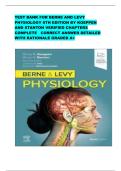
TEST BANK FOR BERNE AND LEVY
PHYSIOLOGY 8TH EDITION BY KOEPPEN
AND STANTON VERIFIED CHAPTERS
COMPLETE CORRECT ANSWER DETAILED
WITH RATIONALE GRADED A+
,TABLE OF CONTENTS
SECTION 1: Cellular Physiology
1. Principles of Cell and Membrane Function
2. Homeostasis: Volume and Composition of Body Fluid Compartments
3. Signal Transduction, Membrane Receptors, Second Messengers, and
Regulation of Gene Expression
SECTION 2: Neurophysiology
4. The Nervous System: Introduction to Cells and Systems
5. Generation and Conduction of Action Potentials
6. Synaptic Transmission
7. The Somatosensory System
8. The Special Senses
9. Organization of Motor Function
10. Integrative Functions of the Nervous System
11. The Autonomic Nervous System and Its Central Control
SECTION 3: Muscle Physiology
12. Skeletal Muscle Physiology
13. Cardiac Muscle
14. Smooth Muscle
SECTION 4: Cardiovascular Physiology
15. Overview of Circulation
,16. Elements of Cardiac Function
17. Properties of the Vasculature
18. Regulation of the Heart and Vasculature
19. Integrated Control of the Cardiovascular System
SECTION 5: Respiratory Physiology
20. Introduction to the Respiratory System
21. Static Lung and Chest Wall Mechanics
22. Dynamic Lung and Chest Wall Mechanics
23. Ventilation, Perfusion, and Ventilation/Perfusion Relationships
24. Oxygen and Carbon Dioxide Transport
25. Control of Respiration
26. Host Defense and Metabolism in the Lung
SECTION 6: Gastrointestinal Physiology
27. Functional Anatomy and General Principles of Regulation in the
Gastrointestinal Tract
28. The Cephalic, Oral, and Esophageal Phases of the Integrated Response to a
Meal
29. The Gastric Phase of the Integrated Response to a Meal
30. The Small Intestinal Phase of the Integrated Response to a Meal
31. The Colonic Phase of the Integrated Response to a Meal
32. Transport and Metabolic Functions of the Liver
, SECTION 7: Renal Physiology
33. Elements of Renal Function
34. Solute and Water Transport Along the Nephron: Tubular Function
35. Control of Body Fluid Osmolality and Volume
36. Potassium, Calcium, and Phosphate Homeostasis
37. Role of the Kidneys in the Regulation of Acid-Base Balance
SECTION 8: Endocrine Physiology
38. Introduction to the Endocrine System
39. Hormonal Regulation of Energy Metabolism
40. Hormonal Regulation of Calcium and Phosphate Metabolism
41. The Hypothalamus and Pituitary Gland
42. The Thyroid Gland
43. The Adrenal Gland
44. The Male and Female Reproductive Systems
CHAPTER 1: PRINCIPLES OF CELL AND MEMBRANE FUNCTION
This chapter introduces the basic principles of cell and membrane functions,
focusing on cellular structure, membrane transport mechanisms, and energy
utilization. It explores the processes of diffusion, osmosis, and active transport,
along with the role of proteins, lipids, and carbohydrates in membrane function.
The chapter emphasizes the importance of maintaining homeostasis through
PHYSIOLOGY 8TH EDITION BY KOEPPEN
AND STANTON VERIFIED CHAPTERS
COMPLETE CORRECT ANSWER DETAILED
WITH RATIONALE GRADED A+
,TABLE OF CONTENTS
SECTION 1: Cellular Physiology
1. Principles of Cell and Membrane Function
2. Homeostasis: Volume and Composition of Body Fluid Compartments
3. Signal Transduction, Membrane Receptors, Second Messengers, and
Regulation of Gene Expression
SECTION 2: Neurophysiology
4. The Nervous System: Introduction to Cells and Systems
5. Generation and Conduction of Action Potentials
6. Synaptic Transmission
7. The Somatosensory System
8. The Special Senses
9. Organization of Motor Function
10. Integrative Functions of the Nervous System
11. The Autonomic Nervous System and Its Central Control
SECTION 3: Muscle Physiology
12. Skeletal Muscle Physiology
13. Cardiac Muscle
14. Smooth Muscle
SECTION 4: Cardiovascular Physiology
15. Overview of Circulation
,16. Elements of Cardiac Function
17. Properties of the Vasculature
18. Regulation of the Heart and Vasculature
19. Integrated Control of the Cardiovascular System
SECTION 5: Respiratory Physiology
20. Introduction to the Respiratory System
21. Static Lung and Chest Wall Mechanics
22. Dynamic Lung and Chest Wall Mechanics
23. Ventilation, Perfusion, and Ventilation/Perfusion Relationships
24. Oxygen and Carbon Dioxide Transport
25. Control of Respiration
26. Host Defense and Metabolism in the Lung
SECTION 6: Gastrointestinal Physiology
27. Functional Anatomy and General Principles of Regulation in the
Gastrointestinal Tract
28. The Cephalic, Oral, and Esophageal Phases of the Integrated Response to a
Meal
29. The Gastric Phase of the Integrated Response to a Meal
30. The Small Intestinal Phase of the Integrated Response to a Meal
31. The Colonic Phase of the Integrated Response to a Meal
32. Transport and Metabolic Functions of the Liver
, SECTION 7: Renal Physiology
33. Elements of Renal Function
34. Solute and Water Transport Along the Nephron: Tubular Function
35. Control of Body Fluid Osmolality and Volume
36. Potassium, Calcium, and Phosphate Homeostasis
37. Role of the Kidneys in the Regulation of Acid-Base Balance
SECTION 8: Endocrine Physiology
38. Introduction to the Endocrine System
39. Hormonal Regulation of Energy Metabolism
40. Hormonal Regulation of Calcium and Phosphate Metabolism
41. The Hypothalamus and Pituitary Gland
42. The Thyroid Gland
43. The Adrenal Gland
44. The Male and Female Reproductive Systems
CHAPTER 1: PRINCIPLES OF CELL AND MEMBRANE FUNCTION
This chapter introduces the basic principles of cell and membrane functions,
focusing on cellular structure, membrane transport mechanisms, and energy
utilization. It explores the processes of diffusion, osmosis, and active transport,
along with the role of proteins, lipids, and carbohydrates in membrane function.
The chapter emphasizes the importance of maintaining homeostasis through


