
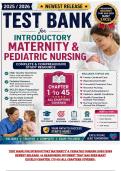
TEST BANK FOR INTRODUCTORY MATERNITY & PEDIATRIC NURSING 2025/2026
NEWEST RELEASE <A REASSURING DOCUMENT THAT HAS SEEN MANY
EXCEL!!>CHAPTER 1TO 45|ALL CHAPTERS COVERED|
,INTRODUCTION
The Test Bank for Introductory Maternity & Pediatric Nursing (Chapters 1–45) is a comprehensive and
structured resource designed to support nursing students in mastering the essential principles of maternal,
newborn, and pediatric care. This carefully developed compilation integrates in-depth, exam-style
questions and answers that reflect the complexity, critical thinking demands, and clinical judgment
required in modern nursing education.
Covering the full scope of content from Chapter 1 through Chapter 45, this test bank provides a
systematic approach to learning, reinforcing foundational concepts such as family-centered care, growth
and development, reproductive health, prenatal and postnatal care, neonatal assessment, pediatric
disorders, and nursing interventions across the lifespan of infants and children. Each section is
thoughtfully aligned with key learning objectives to ensure both conceptual understanding and
application in clinical scenarios.
What distinguishes this resource is its emphasis on high-quality, scenario-based questions that challenge
learners to analyze patient situations, prioritize nursing actions, and apply evidence-based knowledge. The
accompanying answers are enhanced with clear, detailed rationales, enabling students to understand not
only the correct choice but also the reasoning behind it—promoting deeper comprehension and long-term
retention.
This test bank is ideal for:
• Preparing for midterm and final examinations
• Strengthening clinical decision-making skills
• Enhancing readiness for NCLEX-style questions
• Supporting both independent study and instructor-led review
Additionally, the material is organized in a user-friendly format and is suitable for PDF accessibility,
allowing for convenient study anytime, anywhere. Whether used as a primary revision tool or a
supplemental guide, this resource serves as a reliable companion for achieving academic excellence and
building confidence in maternity and pediatric nursing practice.
Ultimately, this test bank is more than just a collection of questions—it is a comprehensive learning tool
designed to guide students toward competence, confidence, and success in both examinations and real-
world clinical settings.
TABLE OF CONTENTS
Test Bank for Introductory Maternity & Pediatric Nursing (2025/2026 Newest Release)
A Reassuring Document That Has Seen Many Excel!!
Chapters 1–45 | All Chapters Covered
UNIT I: FOUNDATIONS OF MATERNITY & PEDIATRIC NURSING
Chapter 1: Introduction to Maternity & Pediatric Nursing
Chapter 2: The Nursing Process in Maternal and Child Health
Chapter 3: Family-Centered Care and Cultural Considerations
Chapter 4: Health Promotion and Disease Prevention in Families
Chapter 5: Growth, Development, and Developmental Theories
,UNIT II: REPRODUCTIVE HEALTH & PRENATAL CARE
Chapter 6: Female and Male Reproductive Systems
Chapter 7: Conception, Fertilization, and Genetic Influences
Chapter 8: Prenatal Development and Fetal Growth
Chapter 9: Maternal Adaptations to Pregnancy
Chapter 10: Prenatal Assessment and Care
Chapter 11: Nutrition During Pregnancy
Chapter 12: High-Risk Pregnancy and Complications
UNIT III: LABOR, DELIVERY & POSTPARTUM CARE
Chapter 13: The Labor and Birth Process
Chapter 14: Pain Management During Labor
Chapter 15: Nursing Care During Labor and Delivery
Chapter 16: Cesarean Birth and Surgical Interventions
Chapter 17: Postpartum Physiological Changes
Chapter 18: Postpartum Nursing Care
Chapter 19: Postpartum Complications
UNIT IV: NEWBORN CARE
Chapter 20: Transition to Extrauterine Life
Chapter 21: Newborn Assessment and Vital Signs
Chapter 22: Routine Newborn Care and Procedures
Chapter 23: Feeding the Newborn (Breastfeeding & Formula)
Chapter 24: High-Risk Newborns and Complications
UNIT V: PEDIATRIC NURSING FOUNDATIONS
Chapter 25: Pediatric Nursing Principles and Safety
Chapter 26: Communication with Children and Families
Chapter 27: Pediatric Physical Assessment
Chapter 28: Pain Management in Children
Chapter 29: Pediatric Nutrition
UNIT VI: GROWTH & DEVELOPMENT ACROSS CHILDHOOD
Chapter 30: The Infant (Birth to 1 Year)
Chapter 31: The Toddler (1–3 Years)
Chapter 32: The Preschool Child (3–6 Years)
Chapter 33: The School-Age Child (6–12 Years)
Chapter 34: The Adolescent (12–18 Years)
UNIT VII: PEDIATRIC HEALTH CONDITIONS & DISORDERS
, Chapter 35: Pediatric Infectious Diseases
Chapter 36: Respiratory Disorders in Children
Chapter 37: Cardiovascular Disorders in Children
Chapter 38: Gastrointestinal Disorders in Children
Chapter 39: Neurological Disorders in Children
Chapter 40: Endocrine and Metabolic Disorders
UNIT VIII: SPECIAL TOPICS IN PEDIATRIC CARE
Chapter 41: Pediatric Emergencies and Trauma
Chapter 42: Chronic Illness and Disability in Children
Chapter 43: Pediatric Mental Health and Behavioral Disorders
Chapter 44: Child Abuse and Neglect
Chapter 45: End-of-Life Care in Pediatric Nursing
UNIT I
1. Foundations of Care – Scope of Practice
A newly licensed nurse begins working in a maternal-child unit and is caring for a postpartum client and her
newborn. The nurse focuses primarily on completing physical assessments and administering medications
but spends minimal time interacting with the family or providing education. Which statement best reflects
the most appropriate understanding of maternity and pediatric nursing practice?
A. The nurse’s primary responsibility is to focus on physiological stability, as emotional and educational
needs are secondary
B. Maternity and pediatric nursing emphasizes holistic, family-centered care that includes physical,
emotional, developmental, and educational needs
C. The nurse should avoid involving family members in care to reduce risk of interference with clinical
procedures
D. Nursing care in this setting should be task-oriented to ensure efficiency and timely completion of
interventions
Answer: B
Rationale: Maternity and pediatric nursing is holistic and family-centered, integrating physical care with
emotional support, education, and developmental considerations.
2. Nursing Process Application
A nurse is caring for a hospitalized toddler with dehydration. After completing an assessment, the nurse
identifies fluid imbalance and develops a care plan. Which action best represents the evaluation phase of
the nursing process?
A. Monitoring intake and output every 4 hours
B. Reassessing hydration status after interventions and comparing outcomes with expected goals
C. Identifying dehydration as a priority nursing diagnosis
D. Administering IV fluids as prescribed
Answer: B
Rationale: Evaluation involves determining if goals were met after interventions.
NEWEST RELEASE <A REASSURING DOCUMENT THAT HAS SEEN MANY
EXCEL!!>CHAPTER 1TO 45|ALL CHAPTERS COVERED|
,INTRODUCTION
The Test Bank for Introductory Maternity & Pediatric Nursing (Chapters 1–45) is a comprehensive and
structured resource designed to support nursing students in mastering the essential principles of maternal,
newborn, and pediatric care. This carefully developed compilation integrates in-depth, exam-style
questions and answers that reflect the complexity, critical thinking demands, and clinical judgment
required in modern nursing education.
Covering the full scope of content from Chapter 1 through Chapter 45, this test bank provides a
systematic approach to learning, reinforcing foundational concepts such as family-centered care, growth
and development, reproductive health, prenatal and postnatal care, neonatal assessment, pediatric
disorders, and nursing interventions across the lifespan of infants and children. Each section is
thoughtfully aligned with key learning objectives to ensure both conceptual understanding and
application in clinical scenarios.
What distinguishes this resource is its emphasis on high-quality, scenario-based questions that challenge
learners to analyze patient situations, prioritize nursing actions, and apply evidence-based knowledge. The
accompanying answers are enhanced with clear, detailed rationales, enabling students to understand not
only the correct choice but also the reasoning behind it—promoting deeper comprehension and long-term
retention.
This test bank is ideal for:
• Preparing for midterm and final examinations
• Strengthening clinical decision-making skills
• Enhancing readiness for NCLEX-style questions
• Supporting both independent study and instructor-led review
Additionally, the material is organized in a user-friendly format and is suitable for PDF accessibility,
allowing for convenient study anytime, anywhere. Whether used as a primary revision tool or a
supplemental guide, this resource serves as a reliable companion for achieving academic excellence and
building confidence in maternity and pediatric nursing practice.
Ultimately, this test bank is more than just a collection of questions—it is a comprehensive learning tool
designed to guide students toward competence, confidence, and success in both examinations and real-
world clinical settings.
TABLE OF CONTENTS
Test Bank for Introductory Maternity & Pediatric Nursing (2025/2026 Newest Release)
A Reassuring Document That Has Seen Many Excel!!
Chapters 1–45 | All Chapters Covered
UNIT I: FOUNDATIONS OF MATERNITY & PEDIATRIC NURSING
Chapter 1: Introduction to Maternity & Pediatric Nursing
Chapter 2: The Nursing Process in Maternal and Child Health
Chapter 3: Family-Centered Care and Cultural Considerations
Chapter 4: Health Promotion and Disease Prevention in Families
Chapter 5: Growth, Development, and Developmental Theories
,UNIT II: REPRODUCTIVE HEALTH & PRENATAL CARE
Chapter 6: Female and Male Reproductive Systems
Chapter 7: Conception, Fertilization, and Genetic Influences
Chapter 8: Prenatal Development and Fetal Growth
Chapter 9: Maternal Adaptations to Pregnancy
Chapter 10: Prenatal Assessment and Care
Chapter 11: Nutrition During Pregnancy
Chapter 12: High-Risk Pregnancy and Complications
UNIT III: LABOR, DELIVERY & POSTPARTUM CARE
Chapter 13: The Labor and Birth Process
Chapter 14: Pain Management During Labor
Chapter 15: Nursing Care During Labor and Delivery
Chapter 16: Cesarean Birth and Surgical Interventions
Chapter 17: Postpartum Physiological Changes
Chapter 18: Postpartum Nursing Care
Chapter 19: Postpartum Complications
UNIT IV: NEWBORN CARE
Chapter 20: Transition to Extrauterine Life
Chapter 21: Newborn Assessment and Vital Signs
Chapter 22: Routine Newborn Care and Procedures
Chapter 23: Feeding the Newborn (Breastfeeding & Formula)
Chapter 24: High-Risk Newborns and Complications
UNIT V: PEDIATRIC NURSING FOUNDATIONS
Chapter 25: Pediatric Nursing Principles and Safety
Chapter 26: Communication with Children and Families
Chapter 27: Pediatric Physical Assessment
Chapter 28: Pain Management in Children
Chapter 29: Pediatric Nutrition
UNIT VI: GROWTH & DEVELOPMENT ACROSS CHILDHOOD
Chapter 30: The Infant (Birth to 1 Year)
Chapter 31: The Toddler (1–3 Years)
Chapter 32: The Preschool Child (3–6 Years)
Chapter 33: The School-Age Child (6–12 Years)
Chapter 34: The Adolescent (12–18 Years)
UNIT VII: PEDIATRIC HEALTH CONDITIONS & DISORDERS
, Chapter 35: Pediatric Infectious Diseases
Chapter 36: Respiratory Disorders in Children
Chapter 37: Cardiovascular Disorders in Children
Chapter 38: Gastrointestinal Disorders in Children
Chapter 39: Neurological Disorders in Children
Chapter 40: Endocrine and Metabolic Disorders
UNIT VIII: SPECIAL TOPICS IN PEDIATRIC CARE
Chapter 41: Pediatric Emergencies and Trauma
Chapter 42: Chronic Illness and Disability in Children
Chapter 43: Pediatric Mental Health and Behavioral Disorders
Chapter 44: Child Abuse and Neglect
Chapter 45: End-of-Life Care in Pediatric Nursing
UNIT I
1. Foundations of Care – Scope of Practice
A newly licensed nurse begins working in a maternal-child unit and is caring for a postpartum client and her
newborn. The nurse focuses primarily on completing physical assessments and administering medications
but spends minimal time interacting with the family or providing education. Which statement best reflects
the most appropriate understanding of maternity and pediatric nursing practice?
A. The nurse’s primary responsibility is to focus on physiological stability, as emotional and educational
needs are secondary
B. Maternity and pediatric nursing emphasizes holistic, family-centered care that includes physical,
emotional, developmental, and educational needs
C. The nurse should avoid involving family members in care to reduce risk of interference with clinical
procedures
D. Nursing care in this setting should be task-oriented to ensure efficiency and timely completion of
interventions
Answer: B
Rationale: Maternity and pediatric nursing is holistic and family-centered, integrating physical care with
emotional support, education, and developmental considerations.
2. Nursing Process Application
A nurse is caring for a hospitalized toddler with dehydration. After completing an assessment, the nurse
identifies fluid imbalance and develops a care plan. Which action best represents the evaluation phase of
the nursing process?
A. Monitoring intake and output every 4 hours
B. Reassessing hydration status after interventions and comparing outcomes with expected goals
C. Identifying dehydration as a priority nursing diagnosis
D. Administering IV fluids as prescribed
Answer: B
Rationale: Evaluation involves determining if goals were met after interventions.


