
Exam #1 - Vital Signs UPDATED ACTUAL Questions and
CORRECT Answers
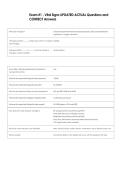
What are vital signs? Clinical measurements that include blood pressure, pulse, body temperature,
respiration, & oxygen saturation
Vital signs provide a ______ of data upon which to compare baseline
future findings.
Vital signs identify ______ or _______ that may indicate a trends, patterns
change is a clients condition.
true or false: vital signs guide treatment decisions & true
nursing interventions
What are the expected findings for blood pressure? 120/80
What are the expected findings for pule rate? 60-100 BPM
What are the expected findings for body temperature? 36C and 38C (96.8F and 100.4F)
What are the expected findings for respiratory rate? 12-20 breaths per minute
What are the expected findings for pulse oxygen? 95-100% (place on O2 under 92%)
How does the nurse measure vital signs? BP: sphygmometer and stethoscope PRN
Pulse: feel with hand or vital sign machine
Respiratory rate: observe chest rise and fall
Body Temp: thermometer (oral,rectal,axillary,temporal,tympanic)
O2: finger probe (pulse oximeter)
What may cause vital signs to be abnormal? Illness (chronic/acute), anxiety infection, medications, shock, lifestyle choices, etc.
What is a pulse? the rhythmic dilation of the arteries that occurs with the beating of the heart
CORRECT Answers
What are vital signs? Clinical measurements that include blood pressure, pulse, body temperature,
respiration, & oxygen saturation
Vital signs provide a ______ of data upon which to compare baseline
future findings.
Vital signs identify ______ or _______ that may indicate a trends, patterns
change is a clients condition.
true or false: vital signs guide treatment decisions & true
nursing interventions
What are the expected findings for blood pressure? 120/80
What are the expected findings for pule rate? 60-100 BPM
What are the expected findings for body temperature? 36C and 38C (96.8F and 100.4F)
What are the expected findings for respiratory rate? 12-20 breaths per minute
What are the expected findings for pulse oxygen? 95-100% (place on O2 under 92%)
How does the nurse measure vital signs? BP: sphygmometer and stethoscope PRN
Pulse: feel with hand or vital sign machine
Respiratory rate: observe chest rise and fall
Body Temp: thermometer (oral,rectal,axillary,temporal,tympanic)
O2: finger probe (pulse oximeter)
What may cause vital signs to be abnormal? Illness (chronic/acute), anxiety infection, medications, shock, lifestyle choices, etc.
What is a pulse? the rhythmic dilation of the arteries that occurs with the beating of the heart


