

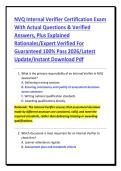
NVQ Internal Verifier Certification Exam
With Actual Questions & Verified
Answers, Plus Explained
Rationales/Expert Verified For
Guaranteed 100% Pass 2026/Latest
Update/Instant Download Pdf
1. What is the primary responsibility of an Internal Verifier in NVQ
assessment?
A. Delivering training sessions
B. Ensuring consistency and quality of assessment decisions
across assessors
C. Writing national qualification standards
D. Awarding qualifications directly
Rationale: The Internal Verifier ensures that assessment decisions
made by different assessors are consistent, valid, and meet the
required standards, rather than delivering training or awarding
qualifications.
2. Which document is most important for an Internal Verifier to
check first?
A. Learner attendance register
B. Assessment plan and standards criteria
, C. Marketing brochure
D. Staff holiday schedule
Rationale: The assessment plan and standards criteria define what
must be assessed and are the basis for verification activities.
3. What is the key purpose of standardisation meetings?
A. To reduce assessor workload
B. To discipline underperforming learners
C. To ensure consistent interpretation of assessment criteria
D. To replace external verification
Rationale: Standardisation meetings ensure all assessors apply
assessment criteria consistently across learners.
4. Internal verification primarily ensures which quality principle?
A. Profitability
B. Recruitment efficiency
C. Reliability and validity of assessment decisions
D. Marketing compliance
Rationale: Internal verification focuses on ensuring assessment
decisions are valid, reliable, and consistent.
5. Which of the following is NOT an Internal Verifier duty?
A. Sampling assessed work
B. Providing feedback to assessors
C. Monitoring assessment processes
D. Designing qualification frameworks
, Rationale: Qualification frameworks are designed by awarding
bodies, not Internal Verifiers.
6. What is sampling in internal verification?
A. Testing learners randomly
B. Observing teaching sessions
C. Selecting a portion of assessed work for quality review
D. Choosing training materials
Rationale: Sampling involves reviewing a selection of assessed work
to ensure quality and consistency.
7. What should an Internal Verifier do if inconsistencies are found?
A. Ignore them
B. Fail the learners
C. Provide corrective feedback and action plan for assessors
D. Immediately report to media
Rationale: The IV supports improvement through feedback and
corrective action rather than punitive measures.
8. Which principle ensures fairness in assessment?
A. Profitability
B. Speed
C. Equality and consistency of assessment decisions
D. Marketing strategy
Rationale: Fairness in assessment is achieved through consistent and
unbiased application of criteria.
With Actual Questions & Verified
Answers, Plus Explained
Rationales/Expert Verified For
Guaranteed 100% Pass 2026/Latest
Update/Instant Download Pdf
1. What is the primary responsibility of an Internal Verifier in NVQ
assessment?
A. Delivering training sessions
B. Ensuring consistency and quality of assessment decisions
across assessors
C. Writing national qualification standards
D. Awarding qualifications directly
Rationale: The Internal Verifier ensures that assessment decisions
made by different assessors are consistent, valid, and meet the
required standards, rather than delivering training or awarding
qualifications.
2. Which document is most important for an Internal Verifier to
check first?
A. Learner attendance register
B. Assessment plan and standards criteria
, C. Marketing brochure
D. Staff holiday schedule
Rationale: The assessment plan and standards criteria define what
must be assessed and are the basis for verification activities.
3. What is the key purpose of standardisation meetings?
A. To reduce assessor workload
B. To discipline underperforming learners
C. To ensure consistent interpretation of assessment criteria
D. To replace external verification
Rationale: Standardisation meetings ensure all assessors apply
assessment criteria consistently across learners.
4. Internal verification primarily ensures which quality principle?
A. Profitability
B. Recruitment efficiency
C. Reliability and validity of assessment decisions
D. Marketing compliance
Rationale: Internal verification focuses on ensuring assessment
decisions are valid, reliable, and consistent.
5. Which of the following is NOT an Internal Verifier duty?
A. Sampling assessed work
B. Providing feedback to assessors
C. Monitoring assessment processes
D. Designing qualification frameworks
, Rationale: Qualification frameworks are designed by awarding
bodies, not Internal Verifiers.
6. What is sampling in internal verification?
A. Testing learners randomly
B. Observing teaching sessions
C. Selecting a portion of assessed work for quality review
D. Choosing training materials
Rationale: Sampling involves reviewing a selection of assessed work
to ensure quality and consistency.
7. What should an Internal Verifier do if inconsistencies are found?
A. Ignore them
B. Fail the learners
C. Provide corrective feedback and action plan for assessors
D. Immediately report to media
Rationale: The IV supports improvement through feedback and
corrective action rather than punitive measures.
8. Which principle ensures fairness in assessment?
A. Profitability
B. Speed
C. Equality and consistency of assessment decisions
D. Marketing strategy
Rationale: Fairness in assessment is achieved through consistent and
unbiased application of criteria.


