
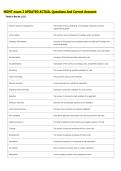
MGMT exam 2 UPDATED ACTUAL Questions And Correct Answers
Terms in this set (111)
Human resource management The process of hiring, developing, and managing employees to achieve
organizational goals
Human capital The economic value of employees' knowledge, skills, and abilities
Strategic HR planning A process for forecasting future employee needs and aligning HR strategy with
business strategy
Job analysis The process of identifying job tasks and required knowledge, skills, and abilities
Job description A summary of the duties and tasks required for a job
Job specification A description of the minimum knowledge, skills, and abilities needed for a job
Recruiting The process of attracting qualified candidates for a job
Internal recruiting Filling positions using current employees
External recruiting Hiring employees from outside the organization
Employee referral recruiting Employees recommend candidates for open positions
Selection The process of choosing the best candidate from applicants
Structured interview Interview with standardized questions for all candidates
Unstructured interview Interview where questions vary between candidates
Work sampling A test where applicants demonstrate how they would perform job tasks
Realistic job preview Providing candidates with both positive and negative aspects of the job
Training The process of improving employee skills for current jobs
Development The process of preparing employees for future roles
Orientation Training that introduces new employees to the organization
Job rotation Moving employees between jobs to broaden experience
Mentorship A senior employee guiding a less experienced worker
, Performance appraisal Evaluating employee performance compared to standards
Objective appraisal Evaluating performance using measurable results
Subjective appraisal Evaluating performance using opinions or ratings
360-degree feedback Performance evaluation from supervisors, peers, and subordinates
Compensation The pay and rewards employees receive
Incentive pay Pay tied to performance goals
Benefits Non-wage compensation like insurance and retirement plans
Promotion Moving an employee to a higher position
Transfer Moving an employee sideways to a different position
Dismissal Termination of employment
Labor union An organization that represents workers in negotiations with management
Collective bargaining Negotiation between unions and management about working conditions
Strike Workers refusing to work to pressure management
Civil Rights Act (1964) Law prohibiting employment discrimination
Equal Pay Act (1963) Law requiring equal pay for equal work regardless of gender
Sexual harassment Unwanted sexual attention that creates a hostile work environment
Innovation The development and implementation of new ideas, products, or processes
Creative destruction The replacement of old technologies by innovative new ones
Radical innovation Innovation that introduces something completely new to an industry
Incremental innovation Small improvements to existing products or processes
Product innovation Developing a new or improved product
Process innovation Improvements in how products are created or delivered
Exploration Searching for new opportunities and innovations
Exploitation Improving efficiency in existing operations
Terms in this set (111)
Human resource management The process of hiring, developing, and managing employees to achieve
organizational goals
Human capital The economic value of employees' knowledge, skills, and abilities
Strategic HR planning A process for forecasting future employee needs and aligning HR strategy with
business strategy
Job analysis The process of identifying job tasks and required knowledge, skills, and abilities
Job description A summary of the duties and tasks required for a job
Job specification A description of the minimum knowledge, skills, and abilities needed for a job
Recruiting The process of attracting qualified candidates for a job
Internal recruiting Filling positions using current employees
External recruiting Hiring employees from outside the organization
Employee referral recruiting Employees recommend candidates for open positions
Selection The process of choosing the best candidate from applicants
Structured interview Interview with standardized questions for all candidates
Unstructured interview Interview where questions vary between candidates
Work sampling A test where applicants demonstrate how they would perform job tasks
Realistic job preview Providing candidates with both positive and negative aspects of the job
Training The process of improving employee skills for current jobs
Development The process of preparing employees for future roles
Orientation Training that introduces new employees to the organization
Job rotation Moving employees between jobs to broaden experience
Mentorship A senior employee guiding a less experienced worker
, Performance appraisal Evaluating employee performance compared to standards
Objective appraisal Evaluating performance using measurable results
Subjective appraisal Evaluating performance using opinions or ratings
360-degree feedback Performance evaluation from supervisors, peers, and subordinates
Compensation The pay and rewards employees receive
Incentive pay Pay tied to performance goals
Benefits Non-wage compensation like insurance and retirement plans
Promotion Moving an employee to a higher position
Transfer Moving an employee sideways to a different position
Dismissal Termination of employment
Labor union An organization that represents workers in negotiations with management
Collective bargaining Negotiation between unions and management about working conditions
Strike Workers refusing to work to pressure management
Civil Rights Act (1964) Law prohibiting employment discrimination
Equal Pay Act (1963) Law requiring equal pay for equal work regardless of gender
Sexual harassment Unwanted sexual attention that creates a hostile work environment
Innovation The development and implementation of new ideas, products, or processes
Creative destruction The replacement of old technologies by innovative new ones
Radical innovation Innovation that introduces something completely new to an industry
Incremental innovation Small improvements to existing products or processes
Product innovation Developing a new or improved product
Process innovation Improvements in how products are created or delivered
Exploration Searching for new opportunities and innovations
Exploitation Improving efficiency in existing operations


