QUESTION 1
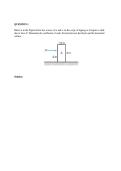
Block A in the Figure below has a mass of m and is on the verge of tipping as it begins to slide
due to force P. Determine the coefficient of static friction between the block and the horizontal
surface.
Solution
, W
F
N
For tipping
𝑃(2) = 𝑚g(0.75)
𝑚g(0.75)
𝑃=
2
If it slides at that instant, ∑𝐹𝑥 = 0
𝑃 − 𝜇𝑚g = 0
𝑚g(0.75) 1
𝜇= ×
2 𝑚g
𝜇 = 0.375 ≈ 0.4
QUESTION 2
,Determine the location d of the minimum force P so that the 100-lb bar shown in the Figure
below is in equilibrium with impendi ng motion downward at the lower end.
Solution
𝑚g sin 40°
𝜇𝑚g cos 40°
If it slides at that instant, ∑𝐹𝑥 = 0
−𝑃 − 𝜇𝑚g cos 40° + 𝑚g sin 40° = 0
For tipping
∑𝑀 = 0
𝑃(𝑑) = (20 in. )𝑚g sin 40°
(20 in. )𝑚g sin 40°
𝑑=
𝑚g sin40° − 𝜇𝑚g cos 40°
, (20 in. ) tan 40°
𝑑=
tan 40° − 0.4
QUESTION 3
The block shown in the Figure below has a mass of 34.7 kg. Determine the horizontal
force P for impending motion down the plane.
Solution
R
W
𝜃
𝛼
𝜑
W
R
P
Block A in the Figure below has a mass of m and is on the verge of tipping as it begins to slide
due to force P. Determine the coefficient of static friction between the block and the horizontal
surface.
Solution
, W
F
N
For tipping
𝑃(2) = 𝑚g(0.75)
𝑚g(0.75)
𝑃=
2
If it slides at that instant, ∑𝐹𝑥 = 0
𝑃 − 𝜇𝑚g = 0
𝑚g(0.75) 1
𝜇= ×
2 𝑚g
𝜇 = 0.375 ≈ 0.4
QUESTION 2
,Determine the location d of the minimum force P so that the 100-lb bar shown in the Figure
below is in equilibrium with impendi ng motion downward at the lower end.
Solution
𝑚g sin 40°
𝜇𝑚g cos 40°
If it slides at that instant, ∑𝐹𝑥 = 0
−𝑃 − 𝜇𝑚g cos 40° + 𝑚g sin 40° = 0
For tipping
∑𝑀 = 0
𝑃(𝑑) = (20 in. )𝑚g sin 40°
(20 in. )𝑚g sin 40°
𝑑=
𝑚g sin40° − 𝜇𝑚g cos 40°
, (20 in. ) tan 40°
𝑑=
tan 40° − 0.4
QUESTION 3
The block shown in the Figure below has a mass of 34.7 kg. Determine the horizontal
force P for impending motion down the plane.
Solution
R
W
𝜃
𝛼
𝜑
W
R
P